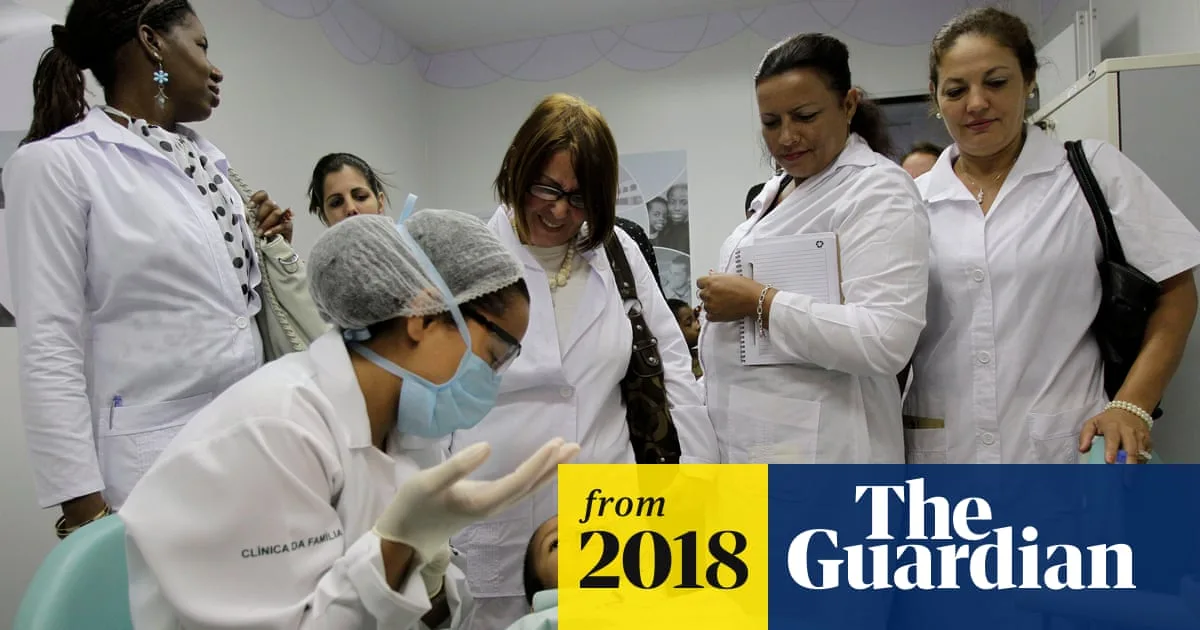
Cuba has begun pulling out 8,300 doctors working in poor and remote regions of Brazil after far-right president-elect Jair Bolsonaro demanded changes to the contract terms of a longstanding medical cooperation programme. The move has raised fears that indigenous villages, small towns and isolated rural communities could soon be left without medical care.
The dispute centres on the Mais Medicos (More Doctors) programme, a five-year-old agreement between Brazil, Cuba and the World Health Organisation. Bolsonaro had threatened to cut relations with Cuba and insisted that Cuban doctors validate their diplomas and sign individual contracts, rather than working under the existing state-level arrangement. Cuba announced its withdrawal on 14 November, accusing Bolsonaro of making “direct, contemptuous and threatening comments.”
Chartered flights have begun carrying the Cuban doctors home, causing queues and cancelled appointments where they worked. Medical experts are concerned that the Brazilian government will be unable to fill all the vacancies before the doctors leave by the WHO’s expected final date of 12 December. “I am extremely concerned about the potential health impact of this and how Brazil will be able to fill those positions,” said Albert Ko, a professor of epidemiology at the Yale School of Public Health.
Under the programme, Cuba kept around 75% of the doctors’ £2,400 monthly allowance, though housing and food were paid by local authorities. For Cuban doctors, the opportunity to earn abroad can be life-changing. Yanet Rosales Rojas, who spent three years in Brazil, said she earned more than ten times her Cuban salary and was able to buy an apartment in Havana. Leasing medical professionals is Cuba’s main export, bringing in $11bn last year, compared to $3bn from tourism.
Bolsonaro has been a fierce critic of the programme since it was introduced by leftist President Dilma Rousseff in 2013. “We can’t allow Cuban slaves in Brazil and we can’t keep feeding the Cuban dictatorship,” he told reporters. However, some Cuban doctors disagree. One doctor working in an indigenous reserve said, “I don’t think it’s right the government kept most of the money but the Brazilian people are also slaves to high taxes. We are in a cross fire between two political ideals.”