Bad Bunny's Super Bowl Halftime Show: A Cultural Landmark for Latino Representation
The Super Bowl halftime show represents one of the most iconic global stages, and this Sunday, international superstar Bad Bunny is poised to command it. Fresh from his historic Grammy victory for Debí Tirar Más Fotos, his heartfelt tribute to Puerto Rico, the artist's performance is anticipated to become a defining moment for Latino culture on a worldwide platform.
Anticipation Builds for a Party Atmosphere
Expectations are soaring, though specific details about his setlist remain closely guarded secrets. During a recent interview with Apple Music's Zane Lowe, it was confirmed that Bad Bunny's performance will last approximately 13 minutes, aligning with the typical 12 to 15-minute duration of previous shows. In the same discussion, Bad Bunny offered limited insights into what audiences will witness on Sunday.
"It's going to be a huge party," he declared, skillfully evading questions about surprise guests and other particulars. "What people can expect from me ... I want to bring to the stage, of course, a lot of my culture. But I really don't, I don't want to give any spoilers. It's going to be fun."
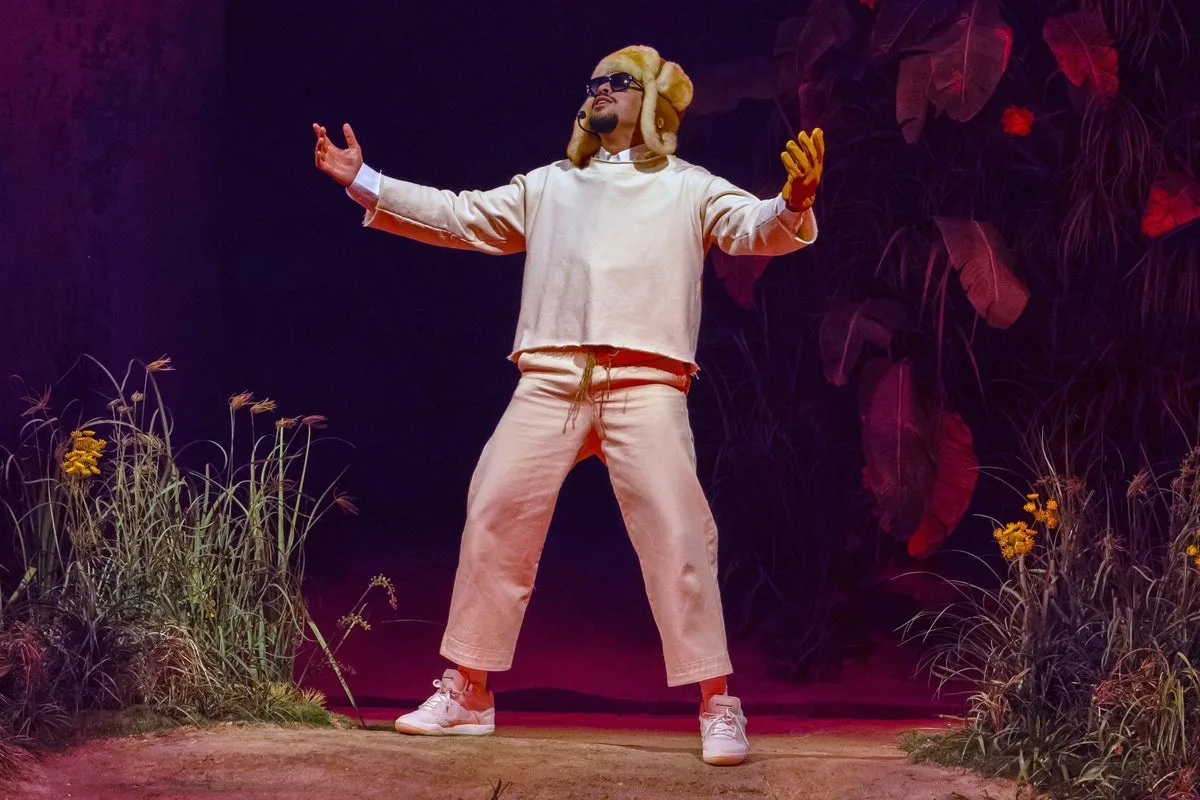
Additionally, a minute-and-a-half long trailer for the halftime show, released last month, established a jovial tone for his performance. In the clip, Bad Bunny approaches a Flamboyan tree and initiates his single "Baile Inolvidable" ("Unforgettable Dance"). The song is a modern salsa piece, performed alongside students at el Libre de Música San Juan. It is a featured track from "Debí Tirar Más Fotos," an album that blends folkloric traditions in local Borinquen genres like bomba, plena, salsa, and música jíbara with contemporary styles such as reggaeton, trap, and pop.
In the trailer, Bad Bunny sways rhythmically as he is joined by diverse dancers across genders, races, and ages. These include a traditional salsa dancer in a red dress, a firefighter, a cowboy, and a viejito wearing a pava (where "viejito" is an affectionate term for an older man and a "pava" is a type of straw hat). This diversity reflects the superstar's immense international appeal; he currently holds the title of the most-streamed artist globally on Spotify.
Language and Symbolism in the Performance
Will Bad Bunny perform entirely in Spanish? All of his music is recorded in Spanish, making this a likely scenario. If English is incorporated, it would probably appear as a spoken interjection or featured in text. In October, Bad Bunny hosted Saturday Night Live and delivered a few sentences in Spanish during his opening monologue. Upon concluding, he humorously remarked in English, "If you didn't understand what I just said, you have four months to learn," a clear reference to the Super Bowl and his critics.
On Thursday, he joked that fans do not actually need to learn Spanish to enjoy his set, but they should be prepared to dance enthusiastically. While exact symbols cannot be confirmed, here are several educated predictions based on his cultural heritage and previous performances.
Key Puerto Rican Symbols to Watch For
Puerto Rican Flags: In his song "La Mudanza," Bad Bunny sings, "Aquí mataron gente por sacar la bandera / Por eso es que ahora yo la llevo donde quiera." Translated to English: "Here they killed people for showing the flag / That's why I bring it everywhere I want now." This appears to reference Law 53 of 1948, known as the Gag Law, a ruling by the Puerto Rican Legislative Assembly that aimed to suppress the independence movement and criminalized displaying the Puerto Rican flag. It was repealed in 1952. This history is one reason Puerto Ricans wave their flag with immense pride. It is almost certain that the flag of Puerto Rico will appear on the Super Bowl stage. Notably, its colors carry significance: red, white, and blue represent the current flag since 1952; light blue reflects the Puerto Rican independence movement; a black and white version symbolizes Puerto Rican struggle and resilience; and a flag resembling the Dominican Republic's flag is known as El Grito de Lares, representing the Lares revolution against Spanish rule in the 19th century.
Puerto Rican Expressions: Beyond his lyrics, Bad Bunny may utter Puerto Rican expressions on stage. These could include "Wepa!" used in moments of excitement, similar to exclaiming "Wow!" It gained popularity after Alfonso Vélez's 1974 salsa song "El Jolgorio (Wepa Wepa Wepa)." Another possibility is "Acho, PR es otra cosa," a phrase that became a fan chant during his performance of "Voy a llevarte pa' PR" during his residency, translating to "Damn, PR is something else."
Casita: At Bad Bunny's residency in Puerto Rico last summer, he performed across two stages. One was constructed to resemble a casita ("little house"), representing the pari de marquesina, a traditional house party. These structures are synonymous with Puerto Rico and the broader Caribbean region.
Pavas: A symbol familiar to Bad Bunny fans worldwide, a pava is a straw hat traditionally worn by jíbaros, or Puerto Rican rural farmers. It has evolved into a symbol of island pride. The singer even wore a leather version of the hat on the red carpet at the 2025 Met Gala.
Flamboyan Tree: The second stage at Bad Bunny's residency highlighted the island's natural beauty with flamboyan and plantain trees. Flamboyan trees, commonly featured in Puerto Rican art for their vibrant red, orange, and yellow flowers, evoke Puerto Rico as immediately as the sound of its national nocturnal resident, el coquí (a frog with a distinctive sing-song call heard only at night).
El Sapo Concho: Not to be confused with el coquí, el sapo concho is the endangered Puerto Rican crested toad. Bad Bunny has used an animated version of this toad in visuals for "Debí Tirar Más Fotos."
Traditional Puerto Rican Instruments: Since much of Bad Bunny's music draws from bomba and plena, traditional instruments may appear on stage. Look for a cuatro (a small, four-stringed guitar), güiro/güira (a percussive instrument made from a hollow gourd), palitos (percussive sticks), cencerro (cow bell), and maracas. For bomba songs, there might be a barriel (a barrel), and for plena, a pandereta (tambourine).
Potential Special Guests and Political Undertones
Will there be special guests during the halftime show? While impossible to predict with certainty, it would be surprising if Bad Bunny was not joined by other performers, particularly giants of Latin music and likely other Puerto Rican artists. The band Chuwi accompanied Benito for every night of his San Juan residency; their collaboration "Weltita" could feature on stage. Other potential guests, if the residency serves as a framework, might include Marc Anthony, Ricky Martin, Jennifer Lopez, Young Miko, Wisin y Yandel, Gilberto Santa Rosa, and Alfonso Vélez, among others.
Will the performance carry political messages? That lies in the eye of the beholder, but historical precedent exists at the Super Bowl. In 2020, the NFL requested Jennifer Lopez to remove a segment featuring children in cages during her halftime show, a critique of U.S. immigration policies. She refused. Notably, Bad Bunny was a guest performer during that halftime show, headlined by Lopez and Shakira.
Last year, Kendrick Lamar's set presented an artful confrontation of American history and racial dynamics through metaphor, with actor Samuel L. Jackson, dressed as Uncle Sam, complaining of a performance that was "too loud, too reckless, too ghetto" and reminding Lamar to "play the game."
Bad Bunny has never avoided political messaging. He has criticized former President Donald Trump on issues ranging from hurricane response in Puerto Rico to treatment of immigrants. At the Grammys on Sunday, he stated "ICE out" while accepting his first televised award. His latest tour skipped the continental U.S.; in an interview, he indicated this was partly inspired by concerns that his fans could be targeted by immigration agents.
Trump, a Republican, has stated he does not plan to attend this year's game, unlike last year, and has derided Bad Bunny as a "terrible choice." This context adds layers of potential political resonance to Bad Bunny's highly anticipated performance, blending celebration with cultural assertion on one of the world's biggest stages.






