An Australian government minister has firmly rejected growing speculation that fuel rations could be imposed in the coming weeks, as tensions between Australia and the United States escalate over the ongoing war in the Middle East. Multiple experts have issued warnings that Australia might be forced to ration fuel supplies within a short timeframe, contradicting official assurances from the Albanese administration that fuel security has been extended.
Trump's Criticism and Diplomatic Strains
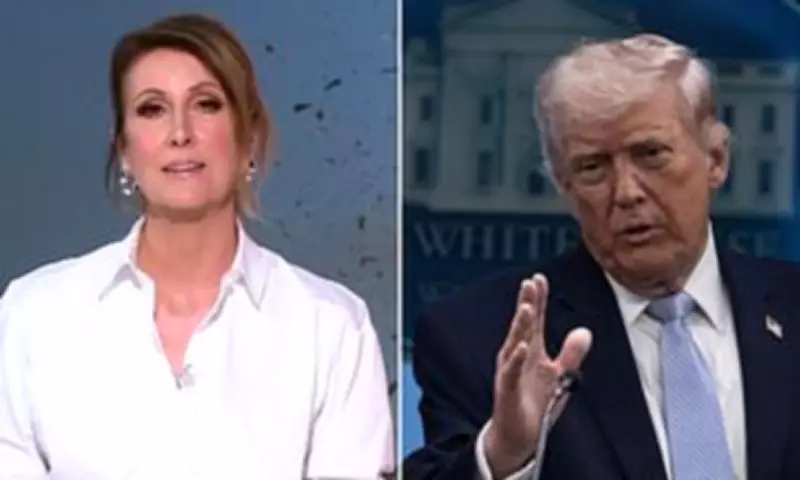
The speculation arises amid fresh attacks from US President Donald Trump, who publicly criticised Australia for not joining the military conflict against Iran. During a White House press briefing early Wednesday Australian Eastern Standard Time, Trump expressed frustration, stating, "You know who else didn't help us? Australia didn't help us. Japan didn't help us, Australia didn't help us, South Korea didn't help us!"
Government Response to Fuel Concerns
On Tuesday morning, Sunrise host Nat Barr questioned federal Attorney General Michelle Rowland about Trump's remarks and the potential for fuel rationing. Rowland responded unequivocally, "We are not considering that (rations). We are focused on security of supply." She elaborated that extensive work has been conducted across industry sectors and with international partners to maintain fuel availability.

Rowland highlighted that fuel supply security, previously assured until April, has now been extended to May. "Every ship that was supposed to arrive has arrived," she noted, emphasising strengthened arrangements with key trading partners like Japan and Singapore as critical measures to ensure ongoing supply stability.
Australia's Stance on the Iran Conflict
When pressed about the state of Australia-US relations, Rowland delivered a defiant message. "The US is one of our longest and most important allies, but I will say this - Australia is not taking offensive action in this war," she asserted. "We will not be deploying troops. The actions that we have taken are defensive ones."
Rowland reiterated the importance of maintaining strong ties with the United States while calling for de-escalation. "I think all of your viewers would agree that this war cannot end soon enough. We will continue as a country to call for a de-escalation of this conflict. Your viewers are being impacted adversely by events on the other side of the world that they did not cause, and Australia did not cause."
Addressing Public Anxiety and Supply Chain Issues
Barr further questioned whether the Australian government could resolve the fuel crisis without US support. Rowland acknowledged that Australians are increasingly concerned about the war's impact during a cost-of-living crisis. "You've got viewers tuning in today who are on school holidays, who are rightfully anxious about what is going on and the impact of the closure of the Strait of Hormuz and what that's doing to our supply chains, to our agriculture stocks and so forth," she said.
The minister stressed the urgency of ending the conflict, stating, "But again, I think I should just reiterate that we cannot see an end to this conflict soon enough."
Communication Between Leaders
Rowland declined to comment on whether Prime Minister Anthony Albanese and President Trump have had direct contact recently. The last known communication occurred on March 10, when Trump publicly urged Albanese to intervene in granting asylum to five players from an Iranian women's team who escaped their Gold Coast hotel. This prompted a late-night phone call where Albanese assured Trump he "was on it."
"I'll leave the Prime Minister to answer that for himself accurately," Rowland said regarding recent communications. "I understand that communications with the White House are a matter of course, not only between our diplomats, but also between our senior officials. But what I will say is that there is constant contact between our officials, between our people in Washington and also at a ministerial level as well."
Despite fears of potential fuel rationing, Australians continued to travel during the Easter long weekend, with heavy traffic reported leaving Melbourne on Thursday afternoon, indicating public resilience amid the uncertainty.