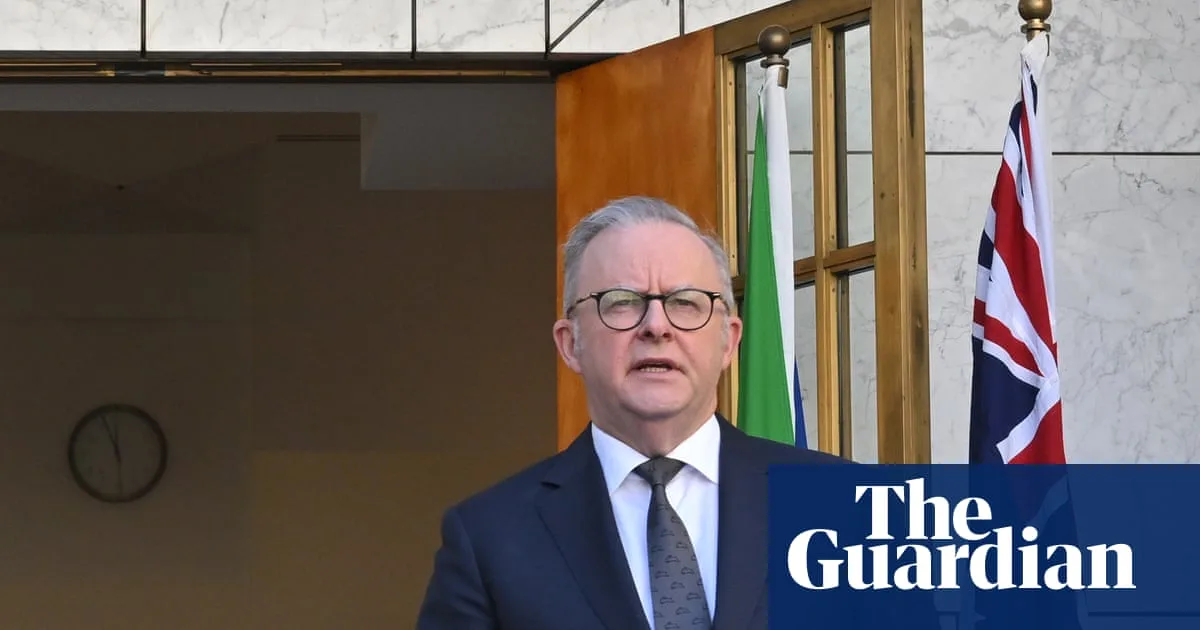
Albanese Races to Singapore in High-Stakes Bid to Secure Australia's Fuel Supply
Albanese's Urgent Singapore Trip to Secure Australian Fuel Supply

Prime Minister's Urgent Singapore Mission to Safeguard Australian Fuel Supply

Prime Minister Anthony Albanese has embarked on an urgent, high-stakes diplomatic mission to Singapore, racing to shore up Australia's critical fuel supply chains as the Middle East conflict continues to disrupt global energy markets. The emergency trip comes despite a two-week ceasefire agreement between the United States and Iran, with the vital Strait of Hormuz shipping route remaining closed, sparking fears that fuel disruptions could persist for months.

Australia's Critical Dependence on Singaporean Fuel

Australia's vulnerability to international fuel market volatility has been starkly exposed, with the nation relying on overseas markets for approximately 90 percent of its liquid fuels including petrol, diesel, and jet fuel. Most of these essential shipments originate from Asian suppliers, with Singapore playing an overwhelmingly dominant role in Australia's energy security framework.

Singapore currently provides Australia with 55 percent of its petrol consumption and a substantial percentage of its diesel requirements. Approximately half of the 80 monthly fuel shipments arriving at Australian ports originate from Singapore's refineries, creating a relationship of critical importance during periods of global instability.

Wide Pickt banner — collaborative shopping lists app for Telegram, phone mockup with grocery list

The Reciprocal Energy Relationship

This dependence, however, operates as a two-way street that Prime Minister Albanese is strategically positioned to leverage. As of April 2026, Australia supplies nearly one-third of Singapore's liquefied natural gas imports, which the city-state relies upon for approximately 90 percent of its electricity generation. This mutual energy interdependence forms the foundation of Canberra's diplomatic approach to securing continued fuel shipments during the current crisis.

Singapore's three major refineries, all situated on Jurong Island, possess the capacity to process up to 1.5 million barrels of crude oil daily. However, this sophisticated system has come under severe strain as most crude oil feeding these refineries normally transits through the now-closed Strait of Hormuz. With supplies tightening significantly, refineries have been compelled to temporarily scale back production, threatening fuel availability across the entire Asia-Pacific region including Australia.

Strategic Energy Diplomacy in Action

Canberra is now deploying strategic energy diplomacy, leaning heavily on Australia's position as a major LNG exporter to ensure Singapore continues prioritizing Australian fuel needs throughout the crisis. This approach has gained additional urgency as approximately 25 percent of Singapore's LNG imports previously originated from Qatar, another supply line now under pressure due to regional instability.

Speaking at the Ampol Lytton Refinery in Brisbane before his departure, Prime Minister Albanese warned that the fallout from the Middle East conflict would not dissipate quickly, even with a permanent cessation of hostilities. "An end to the conflict doesn't mean that the Strait of Hormuz is automatically reopened and that it's back to business as usual," Albanese cautioned. "This will have a long tail, which is why after this we will travel to Singapore."

The Prime Minister emphasized that years of diplomatic relationship-building were now proving crucial to Australia's energy security. "We have spent four years building relationships in our region, particularly with ASEAN leaders, Prime Minister Wong and Singapore," Albanese stated. "The relationship that we have is a critical one, and of course Singapore is a major supplier of fuel to Australia."

National Fuel Shortage Situation

Meanwhile, new government figures reveal that while fuel shortages are gradually easing across Australia, supply remains unevenly distributed nationwide. Energy Minister Chris Bowen confirmed that New South Wales continues to experience the most severe impacts, with 112 service stations reporting diesel shortages and 24 sites completely devoid of fuel.

The national breakdown reveals a patchwork of fuel availability challenges:

Pickt after-article banner — collaborative shopping lists app with family illustration
  • Victoria: 43 service stations without diesel, 26 outlets without unleaded petrol
  • Queensland: 32 stations without diesel, 23 without unleaded
  • South Australia: 4 stations without diesel, 5 without petrol
  • Western Australia: 11 stations without diesel, 20 without unleaded
  • Tasmania: 8 stations without diesel, 6 without unleaded
  • Northern Territory: 4 stations without diesel, 6 without petrol
  • Australian Capital Territory: 2 stations without diesel

Prime Minister Albanese's high-stakes meeting with Singaporean Prime Minister Lawrence Wong represents a critical juncture in Australia's efforts to navigate the complex global energy landscape disrupted by Middle Eastern conflict. The outcome of these discussions will significantly influence Australia's fuel security and economic stability in the coming months as the nation works to mitigate the prolonged impacts of international supply chain disruptions.




