Germany's Far-Right AfD Shifts Stance on Trump Ahead of Critical Elections
In a significant strategic pivot, Germany's far-right Alternative for Germany (AfD) party is actively distancing itself from former US president Donald Trump and his MAGA movement. This recalibration comes as the ongoing war in Iran continues to create global repercussions and with crucial German elections scheduled for September 2026.
Scaling Back Transatlantic Trips
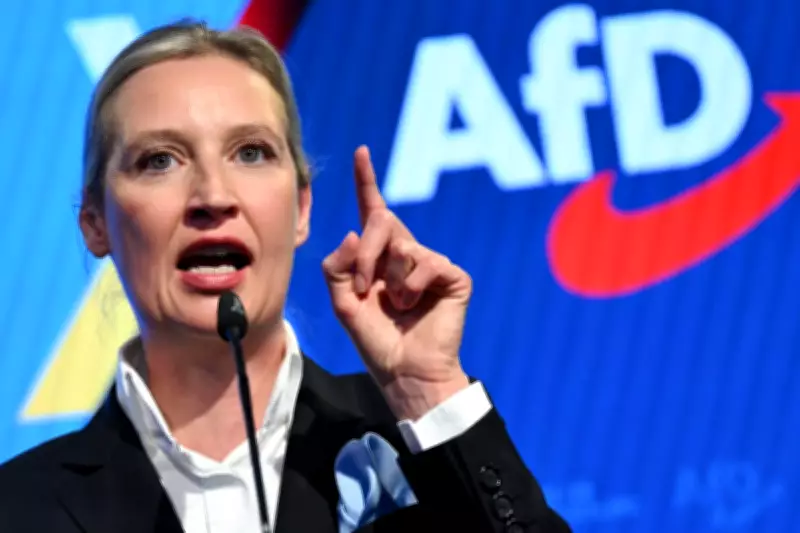
According to a Politico report citing four sources present at a private meeting, AfD co-leader Alice Weidel instructed senior party lawmakers on Monday to substantially reduce the number of high-profile trips to the United States. The directive explicitly aims to curtail efforts to cultivate relationships with MAGA Republicans, marking a departure from the party's previously enthusiastic engagement.
"There have been a big many trips to the U.S. in quick succession," explained AfD lawmaker Torben Braga from Thuringia. "Our goal has always been to maintain balanced and good relations with all international players—including Russia, China, India, and countries in the Global South."

From Praise to Criticism
This new stance represents a dramatic shift for the AfD, which has long been viewed as one of Trump's strongest European allies. Weidel was among the first international politicians to publicly congratulate Trump on his 2024 election victory. The party had also warmly embraced endorsements from tech billionaire Elon Musk, who declared "only AfD can save Germany," and from US vice president JD Vance, who suggested Berlin should collaborate with the AfD on migration policy.
However, recent polling reveals a stark change in German public sentiment toward the United States. A January survey found only 15% of Germans consider the US a trustworthy partner—a historic low. Furthermore, early March polling indicated:
- Over three-quarters of Germans feel threatened by US-Israeli strikes on Iran
- Six out of ten Germans do not consider the US-Israeli offensive justified
Public Condemnation and Strategic Realignment
The AfD has responded to this public mood with uncharacteristic criticism of Trump's administration. The party issued an official statement on X condemning US-Israeli strikes on Iran, warning that "renewed destabilization of the Middle East is not in Germany's interest and must be stopped."
In a television interview, AfD co-leader Tino Chrupalla offered a blunt assessment: "Donald Trump started off as a peace president. Now he will end up as a president of war."
This critical posture actually began emerging earlier in the year following Trump's capture of Venezuelan President Nicolás Maduro and threats to take control of Greenland. Weidel commented in January that Trump "has violated a fundamental election promise, namely not to interfere in other countries."
European Far-Right Consensus
The AfD's repositioning aligns with similar movements among far-right parties across Europe where Trump's popularity has waned. In France, National Rally leader Jordan Bardella accused the US president of harboring "imperial ambitions," while Marine Le Pen criticized what she described as US-backed "regime change" in Venezuela, emphasizing that state sovereignty is "non-negotiable."
As Germany approaches its September elections, the AfD appears to be calculating that overt association with Trump and his policies—particularly regarding Middle Eastern military actions—could prove politically damaging. The party's attempt to present itself as maintaining "balanced relations" with global powers rather than as a dedicated Trump ally reflects both domestic political strategy and response to Germany's evolving geopolitical anxieties.