US Military Conducts Lethal Strike on Suspected Drug-Trafficking Vessel in Eastern Pacific
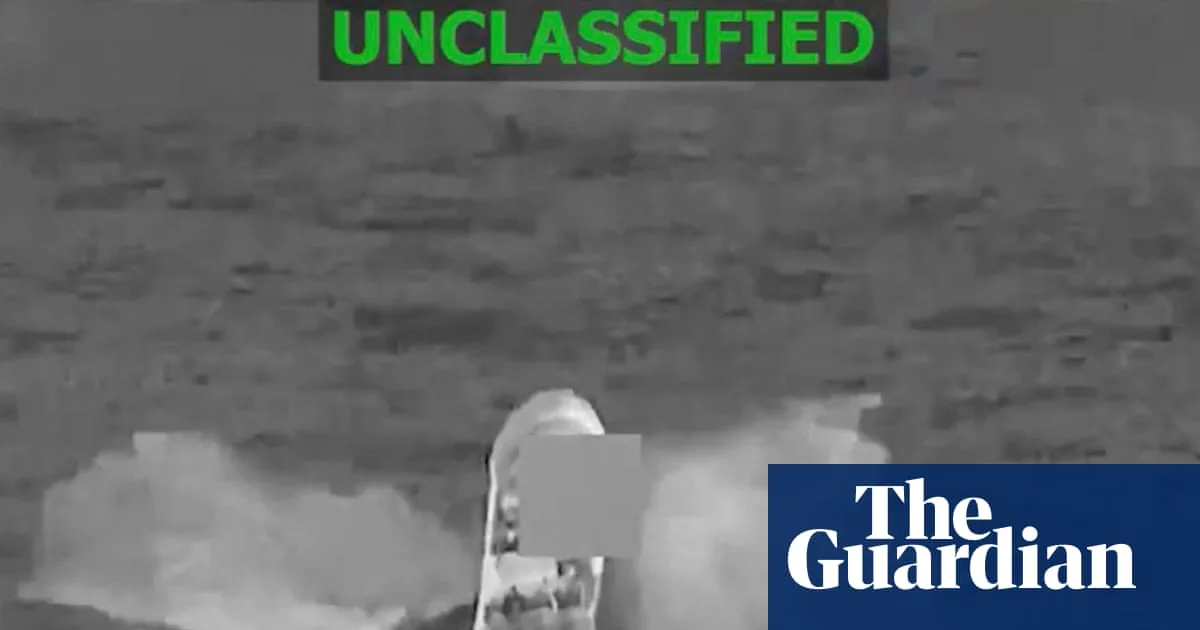
The United States military has executed a lethal kinetic strike against a suspected drug-trafficking boat in the vast expanse of the eastern Pacific Ocean, resulting in the deaths of two individuals and leaving a single survivor. This aggressive action, carried out on Monday under the direct authority of US Southern Command, specifically targeted what military officials have described as a vessel with clear links to narco-trafficking organisations operating along well-established smuggling corridors between South America and North America.
Official Confirmation and Rescue Efforts
In a formal public statement released on the social media platform X, US Southern Command confirmed the details of this deadly encounter. The statement read: 'On Feb. 9, at the direction of #SOUTHCOM commander Gen. Francis L. Donovan, Joint Task Force Southern Spear conducted a lethal kinetic strike on a vessel operated by Designated Terrorist Organizations.' The military further elaborated that 'two narco-terrorists were killed and one survived the strike,' and emphasised that US forces acted swiftly to initiate comprehensive rescue efforts for the lone survivor.
'Following the engagement, USSOUTHCOM immediately notified US Coast Guard to activate the Search and Rescue system for the survivor,' the command stated. In the immediate aftermath, rescue authorities scrambled to locate and recover the individual, triggering a complex multinational search operation across the open waters of the eastern Pacific. A spokesperson for the US Coast Guard confirmed to CNN that Ecuadorian authorities had subsequently assumed control of the rescue mission.
'Maritime Rescue Coordination Center Ecuador has assumed coordination of search and rescue operations,' the Coast Guard spokesperson declared in an official statement, adding that the US Coast Guard would provide ongoing technical assistance throughout the process.
Intelligence and Operational Context
US Southern Command asserted that the strike was executed on February 9 by Joint Task Force Southern Spear. Military intelligence had reportedly tracked the vessel along routes widely utilised by drug smugglers, with officials describing it as actively engaged in narcotics trafficking at the precise moment of the strike. 'Intelligence confirmed the vessel was transiting along known narco-trafficking routes in the Eastern Pacific and was engaged in narco-trafficking operations,' Southern Command stated unequivocally.
This deadly encounter represents the latest chapter in the highly controversial military campaign known as Operation Southern Spear, which is explicitly aimed at disrupting drug trafficking across critical maritime routes. The Trump administration has vigorously defended these aggressive tactics, characterising those targeted as 'unlawful combatants' and asserting that military force can be deployed without traditional judicial oversight, based on classified legal findings provided by the Justice Department.
Pattern of Strikes and Mounting Casualties
Monday's strike marks the third publicly reported attack of its kind this year and notably the second to leave a survivor following an engagement. A strikingly similar strike in January also resulted in the deaths of two individuals while leaving one survivor. The frequency of these boat attacks, which commenced in September 2025, has reportedly slowed since January—a month that witnessed only one strike following the high-profile raid that captured Venezuelan President Nicolas Maduro. This contrasts sharply with December 2025, when the Pentagon struck more than a dozen boats.
Last week, the military disclosed that the cumulative death toll from the Trump administration's strikes on alleged drug boats had risen to 128 people. This figure includes those presumed dead after being lost at sea. Specifically, US Southern Command stated that 116 individuals were killed immediately in at least 36 attacks carried out since early September in both the Caribbean Sea and the eastern Pacific Ocean. An additional ten people are believed dead because searchers failed to locate them following a strike.
Legal Scrutiny and Human Rights Concerns
Despite the administration's firm assertions, these strikes have drawn mounting scrutiny from lawmakers, legal experts, and human rights advocates worldwide. Particular controversy surrounds an earlier strike last September, where a follow-up attack killed two crew members who had survived an initial strike. Critics have raised profound concerns regarding whether sufficient evidence exists to conclusively link those targeted to specific drug trafficking operations, and whether the use of lethal military force is justified under such circumstances.
CNN has reported that the administration has presented limited public evidence connecting those killed in Operation Southern Spear to specific narcotics shipments or identifiable criminal organisations. The legality of the strikes has also been seriously questioned by military lawyers and independent legal experts. Multiple current and former military attorneys have stated that the operations 'do not appear lawful,' raising significant alarms about the dangerous precedent set by using military force against suspected smugglers outside traditional war zones.
Legal Challenges and Political Justification
In a significant development, the families of two Trinidadian nationals killed in a Trump administration boat strike in October sued the federal government earlier this month. The lawsuit characterises the attack as a war crime and part of an 'unprecedented and manifestly unlawful US military campaign.' This suit is believed to be the first wrongful death case arising from the campaign and will critically test the legal justification for the attacks, which many experts argue constitute a brazen violation of the established laws of armed conflict.
President Donald Trump has consistently argued that the United States is in a state of 'armed conflict' with cartels in Latin America and has justified the attacks as a necessary escalation to stem the relentless flow of drugs into the country. However, his administration has offered little concrete evidence to substantiate its claims of killing designated 'narcoterrorists,' further fuelling the ongoing debate over the campaign's legitimacy and efficacy.






