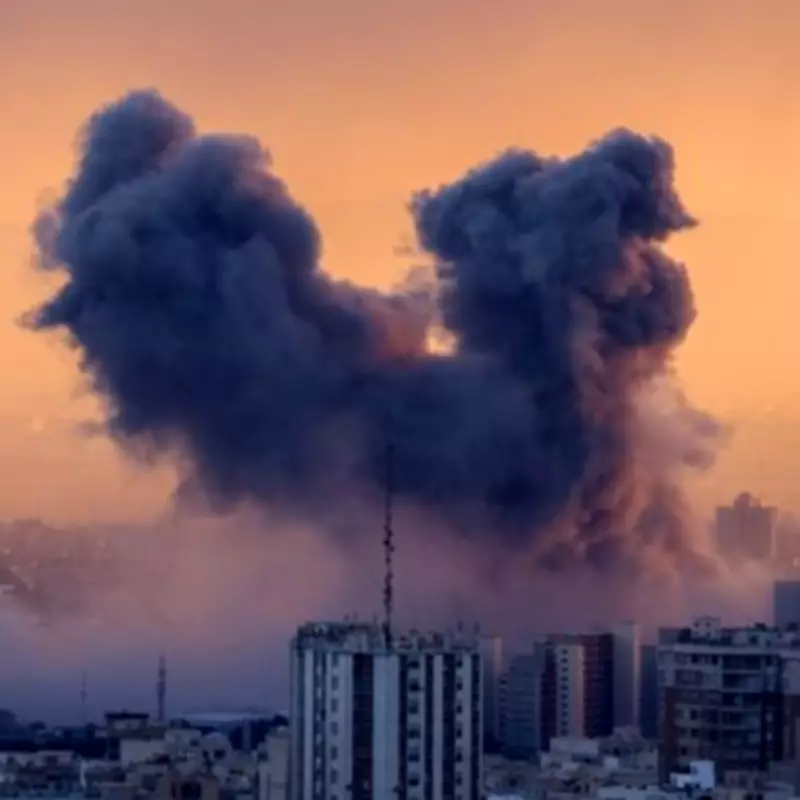
US-Israeli War on Iran Reaches Critical Stage in Costly Missile-Drone Attrition
The US-Israeli military campaign against Iran has entered a pivotal and dangerous phase, with all combatants meticulously calculating their rates of fire concerning missiles, bombs, drones, and defensive munitions. Iran has unequivocally committed to a strategy of attrition, a conflict defined by endurance regardless of consequences, even as casualties have tragically surged beyond one thousand.
Iran's Strategy of Economic and Military Pressure
Iran's objectives extend beyond direct military engagement. The regime has deliberately targeted the economies of neighbouring Gulf States, aiming to exert political leverage. This has involved strikes on residential areas, hotels, and industrial sites, resulting in significant loss of life and widespread destruction. However, Iran's arsenal is not limitless. Its stockpile of missiles, rockets, and drones is constrained, and the generally low sophistication of these weapons presents unique challenges for defence forces.
For instance, slow, low-flying drones might be neutralised with simple machine gun fire, costing perhaps a few hundred pounds. In stark contrast, deploying a sophisticated £1 million AMRAAM missile to intercept such a target represents a profoundly unsustainable economic calculation for the US and Israel.

The Unsustainable Cost of High-Tech Defence
Recent operations have seen UK Typhoon and F-35B fighter jets successfully engaging incoming drones over Jordan. While effective, this utilises extremely costly interceptor technology. Military analysts note that an attack helicopter could achieve similar results using machine gun rounds worth a fraction of the cost. The US and Israel possess a finite number of these advanced defensive missiles, forcing them to economise as the battle's tempo fluctuates.
Furthermore, the operational costs are staggering. Maintaining the US aircraft carrier USS Abraham Lincoln and its accompanying fleet of three guided missile destroyers in a theatre of active conflict costs approximately £8 million per day, adding immense financial pressure to the military campaign.
Iran's Depleting Arsenal and Asymmetric Threats
It is evident that Iran's missile reserves have been significantly reduced since the conflict began five days ago. The regime is now deliberately attempting to slow its rate of fire to prolong the conflict. Conversely, the US and Israel are keen to avoid a protracted war that could deplete their defensive missile supplies, potentially forcing a strategic withdrawal.
Western officials assess that Iran likely retains the capacity to launch missile barrages for several more days, with some concerns this estimate may be conservative, and supplies could last weeks. Should conventional capabilities wane, intelligence indicates the Islamic Revolutionary Guard Corps is prepared to resort to asymmetric warfare, including terror attacks across the region.
The Calculus of Attrition and Hollow Victories
Iran's central hope appears to be that it can outlast the rate at which the US, Israel, and their allies expend their expensive interceptor missiles. The regime calculates this could force a cessation of hostilities, allowing all parties to claim some form of victory. Former US President Donald Trump might highlight inflicted casualties and strikes on Iranian ballistic and nuclear sites. Israeli Prime Minister Benjamin Netanyahu could claim a successful pre-emptive action.
Iran would likely proclaim it stood firm against America, the "Great Satan," and attacked Israel. However, any such victories would be hollow, achieved at an immense cost in human life, with severe repercussions for the global economy and international stability.

Expert Analysis on Iranian Capabilities
Former Israeli military intelligence operative Danny Citrinowicz provided a detailed assessment of Iran's starting position: "Iran began this war with an estimated 2,000 to 3,000 medium-range missiles, over 5,000 short-range missiles, and between 8,000 and 10,000 drones. The critical unknown is the number of launchers available. They must carefully regulate usage to sustain a war of attrition without exhausting their arsenal. I believe they are planning for a conflict lasting several weeks or more. Despite damage, they retain capacity to launch barrages at Israel and use drones against Gulf States."
Citrinowicz warned of potential escalation: "The next level could involve attacks on energy facilities in Gulf countries. Iran likely hopes we will deplete our interceptor missiles. If that depletion reaches a critical, harmful level, it may compel Israel to consider ending the war." This statement underscores the precarious balance and high-stakes calculations defining this devastating conflict.