In an unprecedented military intervention, United States forces have captured Venezuelan President Nicolás Maduro following a series of airstrikes on the South American nation. The dramatic overnight operation on Saturday, 3 January 2026, involved approximately 150 aircraft and sent shockwaves across the global political landscape.
Operation Details and Confirmed Strike Locations
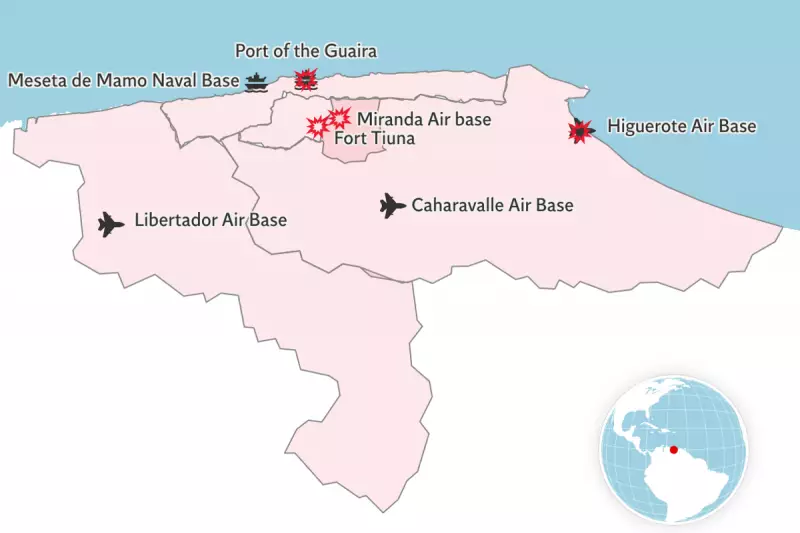
The "large-scale" attack commenced around 2am local time, with residents reporting at least seven major explosions and sightings of low-flying aircraft over the capital, Caracas. Plumes of smoke were visible across several regions as the operation unfolded.
According to analysis by the Institute for the Study of War, the US airstrikes precisely targeted critical infrastructure. The primary locations hit were La Guaira Port, a vital maritime hub, and the Higuerote Airport in Miranda state. Furthermore, geolocated footage from 3 January confirms that US forces also struck telecommunication towers situated southeast of Caracas, likely to disrupt command and control networks.

Flight radar data showed a complete absence of civilian air traffic over Venezuelan airspace during the assault, underscoring the operation's scale and intensity.
Background: Escalating Tensions and Narco-Terrorism Charges
This extraordinary action follows months of escalating tensions between Washington and Caracas. The Trump administration has repeatedly accused Maduro's government of colluding with drug cartels, alleging state-sponsored narcotics smuggling.
In September, the US began launching military strikes against vessels it labelled as "drug smuggling" boats in Venezuelan coastal waters. This campaign later expanded into the eastern Caribbean and Pacific, with 110 fatalities reported so far from these maritime actions.
President Donald Trump had openly threatened strikes on Venezuelan soil. The US has also confiscated two oil tankers and pursued a third, while imposing sanctions on three of Maduro's nephews and six oil-shipping companies.
Maduro, indicted on "narco-terrorism" charges by the US, has consistently claimed that Washington's true objective is to oust him and seize control of Venezuela's vast oil reserves and rare earth mineral deposits.
Aftermath and Political Uncertainty
In a press conference on Saturday, President Trump declared that the US would be running Venezuela in the interim. However, a clear political vacuum has emerged. Secretary of State Marco Rubio pointedly refused to confirm who is currently governing the nation during an appearance on NBC's Meet the Press on Sunday, 4 January.
Rubio did state that the US would maintain pressure, vowing to continue targeting alleged drug boats and seizing sanctioned oil tankers. "We will continue to do that, and potentially other things, until the things we need to see addressed are addressed," he asserted.
The capture of a sitting head of state by foreign military forces marks a severe escalation in international relations, with profound and uncertain consequences for regional stability in Latin America and for global diplomatic norms.