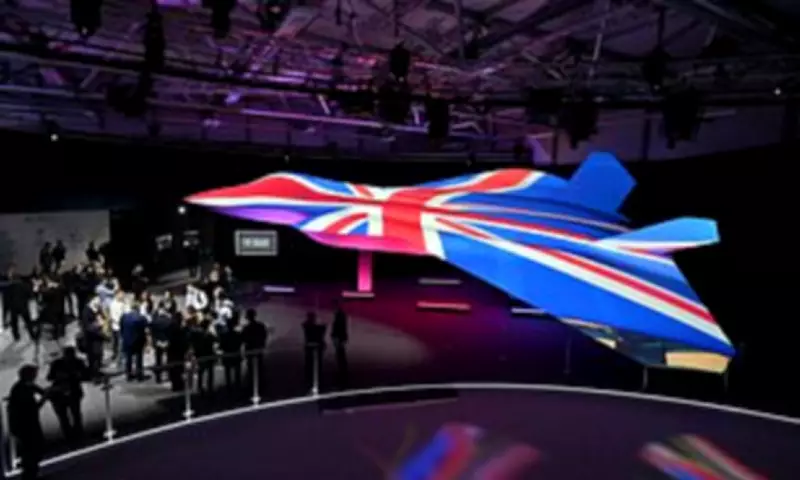
A £60 billion sixth-generation stealth jet project is in jeopardy because Britain cannot afford it, a former Defence Secretary has warned. Ben Wallace has raised fears over the trilateral Global Combat Air Programme (GCAP), claiming the cash-strapped UK government secretly wants to bail out.
GCAP Partnership Under Threat
GCAP is an international partnership with Italy and Japan to design and manufacture a crewed combat aircraft to replace the RAF's Typhoons in the 2030s. Uncertainty regarding GCAP's long-term financing has increased due to Labour's failure to publish its Defence Investment Plan. Japan needs GCAP to replace its ageing jets and, reportedly, its officials are growing impatient with the UK.
Wallace's Warning
Wallace told the Mail: 'The government is preparing to push GCAP to the right and string it out with incremental work and no clear guarantees to commit to it. They will be hoping that Japan, who cannot tolerate an extended timeline, will pull out and the blame can be avoided.' He added: 'The Treasury will be looking for a reduction from either the Army, the AUKUS submarine alliance or GCAP. The MOD cannot have all three.'

Defence Spending Concerns
The long overdue Defence Investment Plan is expected to be published next week, with ministers tipped to make the announcement at an equipment factory. The DIP should have been published last year around the time of the Strategic Defence Review – a blueprint for future security requirements. The authors of the SDR calculated the UK requires a spending increase of £28 billion to meet the threat posed by Russia. When they publish the DIP, ministers are expected to announce a defence spending increase of £18 billion - £10 billion shy of what is required.
Political Reactions
Despite sitting on the DIP for a year, Sir Keir Starmer said yesterday the government had a 'duty' to fund national security. The Prime Minister told colleagues that threats to the UK were 'changing faster than at any point in our lifetime' and that this country and its allies must 'face up to the Russian threat, which is increasingly hybrid in nature'. Those threats include cyber attacks, threats of sabotage of undersea cables, harassing UK aircraft over the Black Sea and, conventionally, Russia's long-range missile capability.
Labour MP Fred Thomas admitted repeated delays to the DIP were harming the UK's defences and its defence industry. Thomas, a member of the Defence Select Committee, told Radio 4's Today programme: 'It does speak to a government that is too slow to take decisions and too keen to consider all options. A paralysis then emerges that harms our ability to carry out our job in terms of defence. It is widely understood how this is damaging our defence industry. It is less understood how it is damaging our armed forces and capability.'
One of the authors of the SDR, Lord Robertson, a former Secretary General of NATO, said yesterday he was confident the DIP would be published before next month's summit of member states.
Last night the MOD said: 'The UK remains committed to GCAP, working closely with our partners. We are working to finalise the DIP. As the Defence Secretary has told parliament, the Prime Minister is determined to publish it before the NATO Summit.'