Union Leader Threatens Chancellor's Position Over Defence Funding Delays
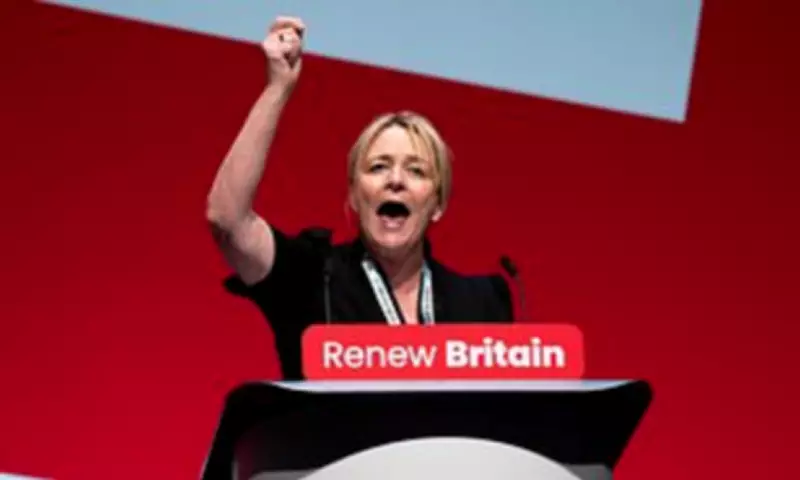
Sharon Graham, the formidable general secretary of Britain's largest union Unite, has issued a stark ultimatum to Chancellor Rachel Reeves: publish the long-awaited multibillion-pound defence investment plan immediately or face calls for her resignation. In a blistering intervention, Graham accused both Reeves and Prime Minister Keir Starmer of dangerous dithering over Labour's strategy to revitalise Britain's armed forces, warning that continued delays are putting tens of thousands of British manufacturing jobs at serious risk.
"She Should Go": Union Boss Issues Stark Warning
Speaking with characteristic bluntness, Graham declared: 'If Rachel Reeves can't grasp that concept and doesn't care where things are made then she should go.' The union leader emphasised that merely being in government isn't sufficient, stating: 'Actually, you have to have a vision for Britain. You can't just be in government, you can't just say today's a new day.'
Graham's intervention comes amid growing frustration across the defence sector about the repeated postponement of the Defence Investment Plan (DIP), which was originally scheduled for publication last autumn. The comprehensive strategy is intended to outline funding for approximately £67 billion worth of commitments identified in last summer's strategic defence review, providing crucial certainty for both military planners and defence industry contractors.

Defence Spending Targets Under Scrutiny
The Unite leader also directly challenged Sir Keir to honour his previous commitments, urging him to 'do what he said he would do' by increasing annual military spending to 2.5 percent of GDP by 2027. This demand comes as government figures reveal that defence spending is actually projected to account for a smaller share of GDP in 2027-28 than previously estimated, potentially undermining Labour's efforts to meet crucial NATO targets.
While the Prime Minister pledged last year to reach a new NATO benchmark of five percent of GDP allocated to national security by 2035, ministers are reportedly considering accelerating key milestones to achieve three percent by 2029. However, without the concrete financial roadmap provided by the DIP, industry representatives argue these targets remain theoretical rather than actionable.
Industry Voices Express Growing Frustration
A spokesperson for ADS, the trade organisation representing aerospace, defence, security and space industries, told the Daily Mail: 'Neither industry nor military planners can do their jobs appropriately without the certainty provided by the financial backing of the DIP.' They added that while announcements and intentions are appreciated, 'without the follow through businesses of all shapes and sizes are actively suffering with the in-year slowdown in spending.'
The spokesperson emphasised that further delays are 'frustrating at best, and disruptive to business at worst,' highlighting how the defence sector requires stable, long-term planning to maintain Britain's industrial capabilities and military readiness.
Political Fallout and Defence Readiness Concerns
Shadow Defence Secretary James Cartlidge seized upon Graham's intervention as evidence of what he called 'the gaping chasm on Labour's defence spending rhetoric.' He stated: 'Labour supporting Unions are now calling for the chancellor to resign if she doesn't properly fund defence - this is chaos.' Cartlidge urged the Ministry of Defence to 'urgently get a grip and finally publish their long overdue Defence Investment Plan.'
These political tensions coincide with alarming assessments of Britain's military preparedness. Sir Keir's own armed forces minister, former marine Al Carns, warned this week that Britain has less than three years to prepare for potential conflict but remains inadequately ready. Carns told The Times: 'When it comes to deterring Russia, we have three to five years before we have to fight a significant confrontation with a major state.'

Broader Concerns About Labour's Industrial Strategy
Speaking to The Guardian, Graham expressed broader disillusionment with Labour's approach to industrial policy, stating: 'Labour is supposed to be in for workers in the working class. I'm seeing very little evidence of that.' She pointed to what she perceives as a lack of regard for workers across Labour's Whitehall operation and urged ministers to demonstrate their commitment by 'backing British industry' through timely approval of future defence contracts.
The DIP, which had been expected before Christmas, has now been delayed until March or April at the earliest, with Treasury officials reportedly scrutinising every line of expenditure. This penny-pinching approach has drawn criticism from across the political and industrial spectrum, with concerns mounting that Britain's defence capabilities and manufacturing base are being compromised by financial indecision at the highest levels of government.