Russia has issued a direct nuclear threat against the United Kingdom and mainland Europe, prompting urgent questions about how Britons should prepare for the unthinkable. The chilling warning came just days after the Kremlin rejected a peace deal for Ukraine, significantly escalating global tensions.
Escalating Threats and a Call for Preparedness
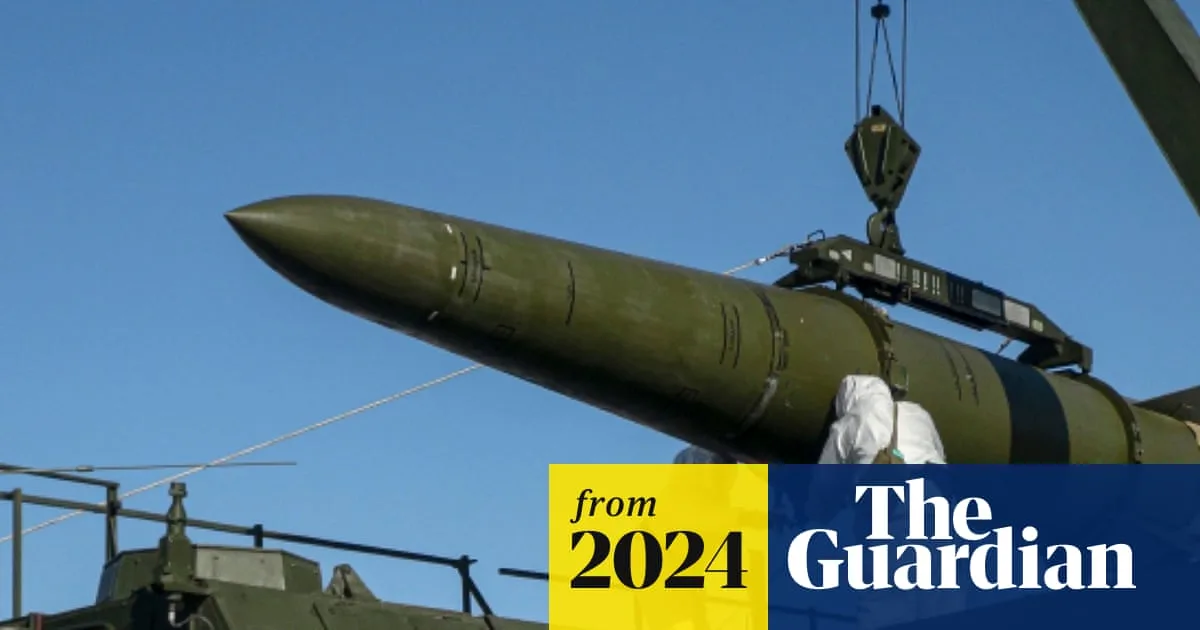
Sergey Karaganov, head of Russia's Council for Foreign and Defence Policy, stated that if Russia faces defeat in Ukraine, President Vladimir Putin "would use nuclear weapons and Europe would be finished physically". This stark language followed a major military escalation on 8 January 2026, when Russia launched a massive drone and missile barrage on Ukraine, including the second-ever combat use of the nuclear-capable Oreshnik hypersonic missile.
The missile strike targeted Lviv, a city only 70km from the Polish border, sending a deliberate message to the West. This development coincided with Prime Minister Keir Starmer signing a historic deal to deploy British soldiers to Ukraine should a peace agreement with Russia be reached. The Kremlin has branded these soldiers "legitimate military targets".
With NATO warning citizens to prepare for war and Prime Minister Starmer describing the current climate as the "greatest military threat of a generation", security experts are urging the UK government to follow the lead of other European nations by issuing official public guidance on survival.
The European Blueprint for Survival
Professor Anthony Glees, a security and defence academic at the University of Buckingham, is advocating for the UK to produce "a short, decently written booklet" to inform the public. He argues that while deterrence is the core of national defence, public preparedness is crucial.
Several European countries have already taken this step. Sweden distributed five million copies of a 32-page booklet titled If Crisis or War Comes to households, advising on stockpiling supplies and finding shelter. Finland and Norway have launched similar public information campaigns.
The European Union has also issued continent-wide guidance, encouraging all citizens in its 27 member states to be equipped for 72 hours of self-reliance. EU crisis management commissioner Hadja Lahbib presented the preparedness strategy, advising people to stockpile essentials including food, bottled water, torches, matches, energy bars, and ID documents in a waterproof pouch.
Practical Steps: From 72-Hour Kits to Community Building
According to experts, the immediate priority for individuals is assembling a basic survival kit. The EU's recommended 72-hour kit is a foundational start. Doomsday preppers, who have spent years planning for catastrophes, suggest a more extensive list of 15 key items for longer-term survival:
- Stored water (at least one gallon per person per day)
- Portable water filters and emergency food
- Fire-starting tools and a comprehensive first-aid kit
- Warm clothing, insulation, and a tent or tarp for shelter
- A multi-tool or survival knife
- Light sources with backup batteries
- Navigation tools like a compass and paper maps
- Portable power sources and communication kits like radios
- Hygiene products, important ID documents, and cash
Dr Arnab Basu, CEO of Kromek Group plc and author of a white paper on nuclear incident readiness, provided specific advice for a nuclear scenario. He stated that those outside the immediate blast zone should seek shelter quickly in the most central part of a building, seal windows and doors with tape to block radioactive dust, and fill all containers with water before supplies become contaminated.
He strongly advised against fleeing, recommending people remain indoors for two to three days, shielded from fallout. "Survival depends less on fleeing and more on shielding yourself from fallout," Dr Basu emphasised.
Beyond stockpiling, professional prepper Dan Goss, 33, from Liverpool, highlights the critical importance of community and practical skills. He argues that a "bunker mentality" is ineffective and that rebuilding society requires social cohesion. "Disaster studies found that the people most likely to survive afterwards when resources were scarce were the ones with the strongest social networks," he noted.
Goss recommends learning skills like gardening, foraging, first aid, bushcraft, and crucially, conflict resolution. "Being able to de-escalate problems – like stopping neighbours from stabbing each other over a tin of beans – will be vital," he said. For foraging, he recommends resources like The Forager's Calendar by John Wright to identify edible plants.
Identifying the Safest Locations in the UK
In the event of an attack, major cities would be the most at-risk targets. Analysis by property portal EMoov, cited by experts, identifies 19 locations situated outside the immediate blast range of major British cities. These suggested safer areas include:
- Cornwall, Weymouth, and Bideford in the South West
- Folkestone, Dover, and Margate in the South East
- Clacton-on-Sea, Felixstowe, and Skegness in the East
- Brixworth in the Midlands
- Aberystwyth and the Isle of Anglesey in Wales
- Barrow in Furness, Lancaster, Carlisle, and Whitby in the North
- Dumfries, Berwick-upon-Tweed, and Inverness in Scotland
As geopolitical tensions reach a generational peak, the conversation in the UK is shifting from pure deterrence to a blend of defence and public preparedness, mirroring steps already taken by its European neighbours.




