A leading defence expert has moved to calm fears that Britain's military power could be crippled by the United States, as a major diplomatic rift opens over the future of Greenland.
Greenland Crisis Sparks Defence Dependency Debate
The extraordinary clash was triggered by former US President Donald Trump's announcement that he would impose tariffs of 10% on all UK goods from February 1, rising to 25% from June 1, unless a deal is struck for Washington to purchase Greenland from Denmark. In response, Prime Minister Keir Starmer insisted the British people would "stand up for our values".
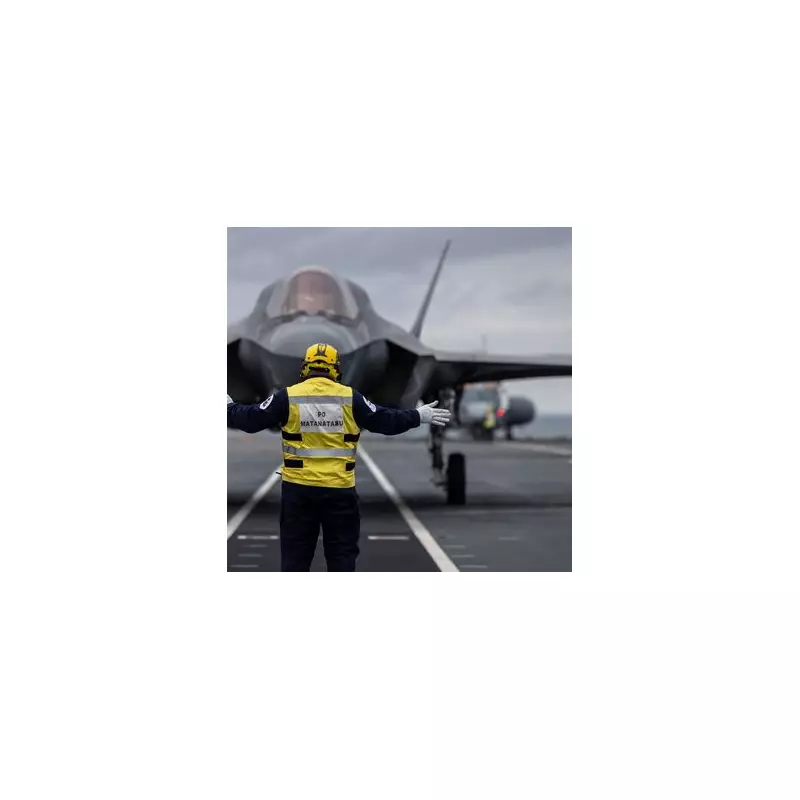
This escalating row has cast a spotlight on the UK's reliance on American technology within its armed forces, specifically the RAF's fleet of 37 F-35 Lightning II stealth fighter jets. Concerns have been raised that the US could theoretically activate a so-called 'kill switch', rendering the advanced aircraft inoperable by withdrawing critical software updates, logistics support, and parts.

Interdependence, Not Dependence: The UK's Power to Retaliate
Professor Anthony Glees, a professor of politics at the University of Buckingham, provided crucial context to the debate. While acknowledging the F-35's American origins, he emphasised the relationship is one of mutual interdependence.
"In fact we currently only have 37 F-35 jets... which is not much," Professor Glees stated. "So these are American jets, American technology, etcetera. However, we have 137 Eurofighter Typhoons."
He highlighted that the Typhoons, built by a European consortium including BAE Systems, Airbus, and Italy's Leonardo, are "completely independent of America". Furthermore, the UK holds a powerful countermeasure: it manufactures essential components for the global F-35 programme, including the rear fuselage and ejection seats. Halting these shipments would eventually bring US production lines to a standstill.
Sovereign Future: The Tempest and Nuclear Independence
Looking ahead, the UK is taking steps to ensure greater autonomy with its next-generation fighter programme, Tempest. Developed in partnership with Italy and Japan and aiming for a 2035 launch, it promises full 'sovereign ownership'. This means the RAF will control its own software and weapon integration, free from reliance on US-hosted military servers.
Professor Glees also addressed concerns over the UK's nuclear deterrent, Trident. While the missiles are maintained under a contract with American firm Lockheed Martin, he was unequivocal: "We control them and we can fire them if we ever needed to - there is no US veto on his doing so."
His concluding message was one of robust assurance. "At this moment in time we are very strong and we shouldn't talk ourselves into thinking we are very weak - we're not," he told the Mirror. "We need to stop talking down our strength and whining that we cannot live without holding Nanny's hand. Because we can."