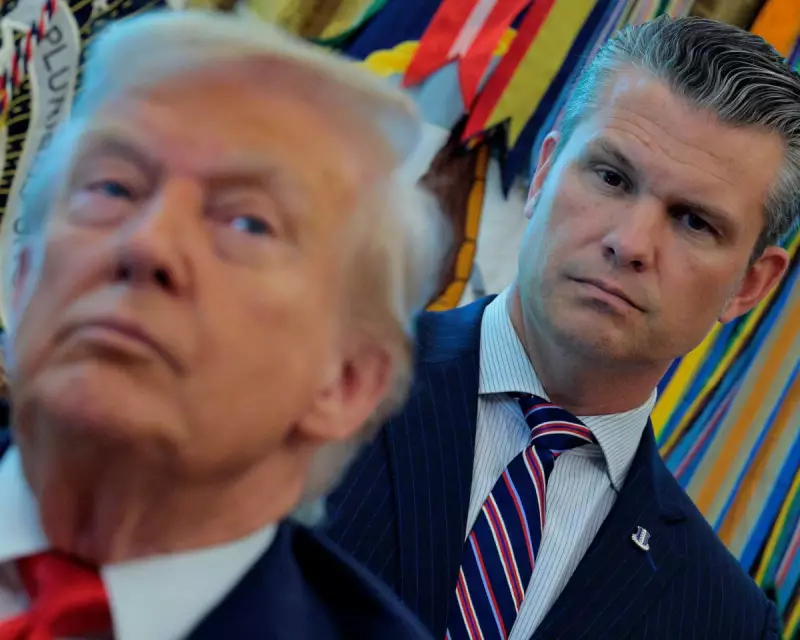
Former US President Donald Trump has publicly stated he would not have wanted a second military strike to be carried out against survivors of an initial attack on a boat in the Caribbean, directly addressing allegations surrounding a controversial operation.
Contradiction Over Command Directive
The controversy stems from a report by The Washington Post, which alleged that in September, a senior official, Pete Hegseth, gave a spoken directive to "kill everybody" on board a specific vessel. According to the newspaper, when two men survived the initial, highly lethal strike, a commander within the US Special Operations community ordered a follow-up attack to comply with Hegseth's original command.
Speaking to reporters aboard Air Force One, President Trump defended Hegseth, saying he believed his denial "100%". Trump insisted that Hegseth did not order the second strike that led to the deaths of the two men. "I'm going to find out about it, but Pete said he did not order the death of those two men," the president stated.

President's Personal Stance on the Operation
When pressed on whether he personally would have desired a second attempt to eliminate the survivors, Trump was clear. "We'll look into it, but no, I wouldn't have wanted that – not a second strike. The first strike was very lethal," he told journalists. This declaration places his personal position at odds with the reported actions taken by the military unit on the ground.
In response to The Washington Post's investigation, Hegseth issued a strong denial. He labelled the report as "fabricated, inflammatory, and derogatory". Furthermore, he asserted that all US strikes on boats in the Caribbean region have been "lawful under both US and international law", framing the operations within a legal and defensive context.
Unanswered Questions and Legal Scrutiny
The incident raises significant questions about the chain of command, rules of engagement, and operational accountability in complex military theatres. The discrepancy between the reported actions of Special Operations forces and the stated intentions of both the commanding official and the President suggests a potential breakdown in communication or procedure.
While the White House has pledged to investigate the specifics of the event, the legal and ethical implications of targeted strikes, especially against survivors of an initial engagement, are likely to face continued scrutiny from defence analysts and international observers. The core facts of the event—the initial strike, the reported directive, the follow-up action, and the subsequent denials—remain central to understanding this contentious episode in US military policy.