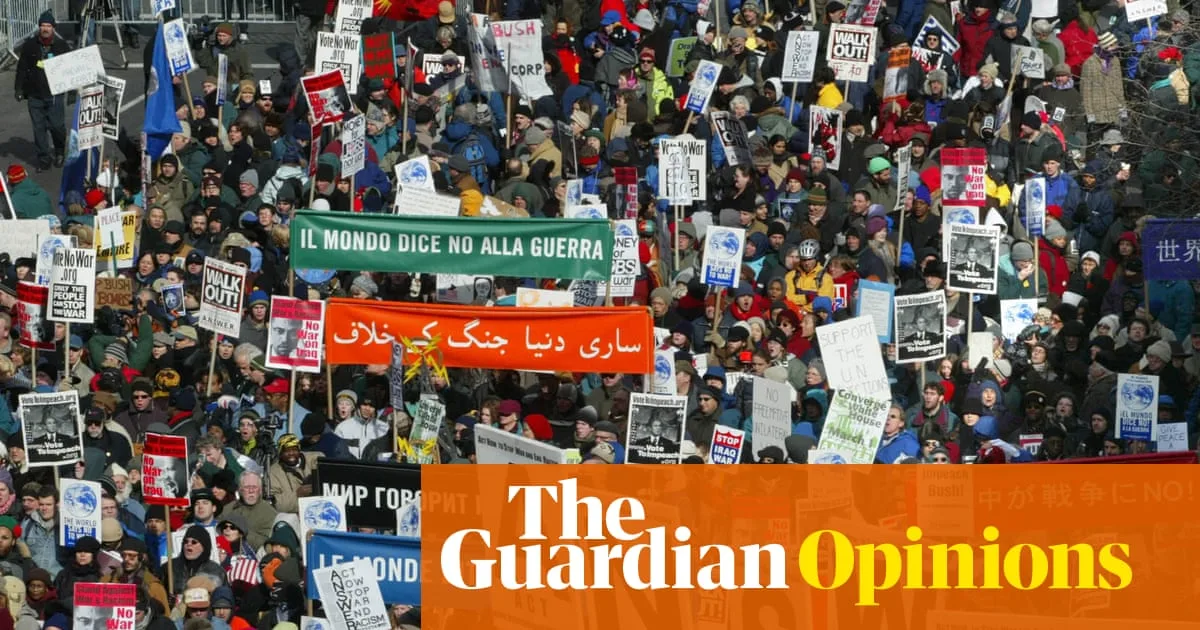
In the spring of 2004, a chilling historical parallel was drawn by General Anthony Zinni regarding the unfolding catastrophe in Iraq. "I spent two years in Vietnam," he stated, "and I've seen this movie before." This declaration came a year after President George W. Bush's premature "mission accomplished" pronouncement, as the conflict descended into a bloody quagmire marked by the Abu Ghraib scandal and a rising US death toll. For the first time, a majority of the American public concluded the invasion had been a "mistake," a sentiment anti-war protesters had voiced from the outset.
The Iraq Syndrome and a Warning for Today
Public support eroded steadily as Iraq plunged into civil war. By 2006, Democrats capitalising on anti-war sentiment secured major midterm victories. The bipartisan Iraq Study Group later concluded the war must end, a fate sealed by Barack Obama's election and the subsequent troop withdrawal. The legacy is profound: by 2019, 62% of American adults and 58% of Iraq and Afghanistan veterans deemed the war "not worth fighting," cementing a broad, if often unspoken, consensus that it was a catastrophic error.
This "Iraq syndrome," a palpable skittishness about major military interventions, now faces its sternest test. The Trump administration's aggressive posture towards Venezuela, including the capture of President Nicolás Maduro, presents the opening scenes of what could be a dismal sequel. Unlike Bush, who sought congressional and UN approval for Iraq, Trump openly boasts, "I don't need international law," daring the world to constrain him.
Can Protest Catalyse Change? Lessons from the 2000s
The earlier anti-war movement did not single-handedly end the Iraq war; its palpable failure on the ground was the primary cause. However, steadfast protest played a crucial catalytic role, shaping public narrative and conscience. The emotional power of Gold Star mother Cindy Sheehan's demand to know the "noble cause" for her son's death resonated deeply. As veterans began speaking out and public opinion shifted, the political class followed.
In late 2005, the dramatic about-face of Representative John Murtha—a decorated Vietnam veteran and former hawk—signalled the change. After visiting wounded soldiers, he declared the American public was "way ahead" of Congress in wanting troops home, a sentiment the movement had nurtured. The core lesson is that persistent protest can erode a war's legitimacy and hasten its conclusion, even if it cannot always prevent the first shot.
The Daunting Task of Building a New Coalition
The urgent task today mirrors that of 2002-03: to halt a war before it escalates irreversibly. Success requires a bipartisan coalition, a significant challenge. The political left, while likely to lead, cannot alone restrain Trump, who views it purely as an enemy. Voices from within the MAGA sphere, such as Steve Bannon and Marjorie Taylor Greene, have also invoked Iraq as a warning, creating potential, if uneasy, common ground.
Alliances will be ideologically messy. For many on the left, Iraq was a neo-imperialist project based on deceit. For some "America First" critics, it was a well-intentioned but misguided nation-building exercise. Neither side has the luxury of demanding full affinity. The anti-Iraq movement only gained decisive political traction when a sliver of Republicans finally broke with Bush.
Facing this reality, the immediate goal may be limiting Trump to "imperialism lite"—relying on blockades, remote strikes, and special ops over large-scale troop deployments—thus preventing greater bloodshed. This sober realism finds precedent in the 1980s, when protest helped constrain Reagan's interventions in Central America to proxy forces, averting even more devastating direct US military involvement.
The fundamental lesson of Iraq remains: the time to stop a war is before it starts. Once the machinery of destruction is unleashed, it becomes fiendishly difficult to halt. With Trump's propensity to double down on violence, the stakes could not be higher. A new, visible, and broad-based anti-war movement must make the case, appealing to the nation's heart and mind, that this is a movie America cannot afford to watch again.




