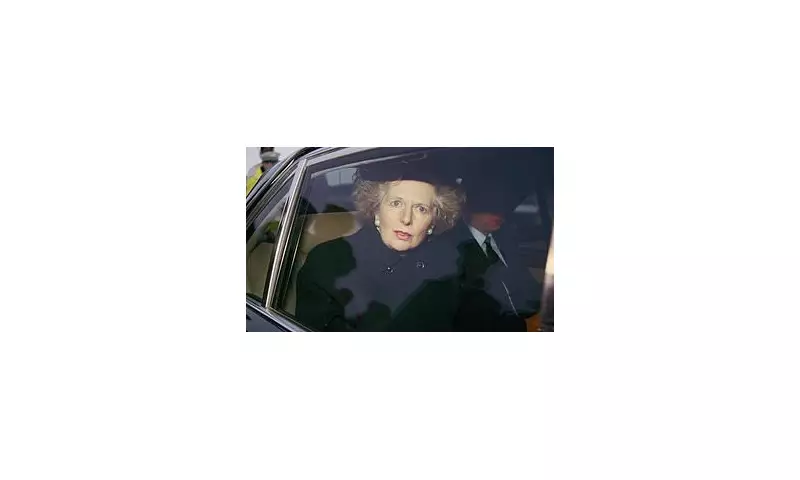
Margaret Thatcher once disregarded a high-risk assassination warning from British intelligence to attend a summit in Paris, newly declassified government papers have exposed.
The High-Stakes Warning
The former Prime Minister was scheduled to meet French President Francois Mitterrand in early November 1982. The agenda included critical discussions on Europe's budget, defences against the Soviet Union, and plans for the Channel Tunnel.
However, MI5 raised a serious alarm ahead of the trip. Security services assessed that the visit posed a substantial threat to Thatcher's life. This warning came against a backdrop of severe terrorist violence in the French capital.

Paris had endured a series of deadly attacks from Middle Eastern terrorist organisations and radical far-Left French groups. In under a year, six people were shot at a Jewish restaurant, a train bomb killed five, and an American military attache was assassinated.
Most recently, a car bomb in September 1982 – just two months before Thatcher's trip – had injured more than 50 people.
Frantic Diplomatic Exchanges
The UK's ambassador to France, Sir John Fretwell, explicitly 'expressed concern' for the PM's safety 'in the light of recent terrorist incidents in the city'.
Cabinet ministers exchanged urgent letters in the days before The Iron Lady was due to cross the Channel. Roger Bone, private secretary to Foreign Secretary Francis Pym, relayed the ambassador's caution to John Coles, Thatcher's private secretary for defence and foreign affairs.
The Foreign Office subsequently ordered MI5 to evaluate the threat level, which was deemed 'substantial'. In his correspondence, Mr Bone noted that 'The advance publicity which her visit is likely to receive increases that risk.'
This assessment was passed to the PM's close protection team and the British Embassy in Paris. A protection officer even flew to the French capital in advance to liaise with local security services. Bone suggested Coles might consider informing Thatcher herself of the danger.
The Summit and Subsequent Plots
Despite the grave warnings, the meeting on Europe's budget and defences went ahead without incident in early November 1982.
This episode occurred just two years before a real attempt on Thatcher's life was made on home soil. In 1984, the IRA bombed the Brighton Grand Hotel during the Conservative Party conference, killing five people and injuring 31. Thatcher survived.
Furthermore, The Mail on Sunday recently revealed another near-miss five years later. In March 1989, while on a diplomatic mission to Africa, Thatcher's RAF VC-10 aircraft was targeted by several surface-to-air missiles over war-torn Mozambique. The missiles missed, and the incident was kept secret for decades to avoid destabilising relations.
Thatcher referred to this aerial attack with typical bluntness in her autobiography, mistakenly attributing the fire to rebels: 'The journey was short and so my VC10 was flying lower than usual – too low for comfort, since at one point we were fired on with missiles by RENAMO. Fortunately they missed.'
The declassified papers on the 1982 Paris scare now fully illuminate the constant dangers Thatcher faced and her resolute determination to proceed with her duties despite them.