
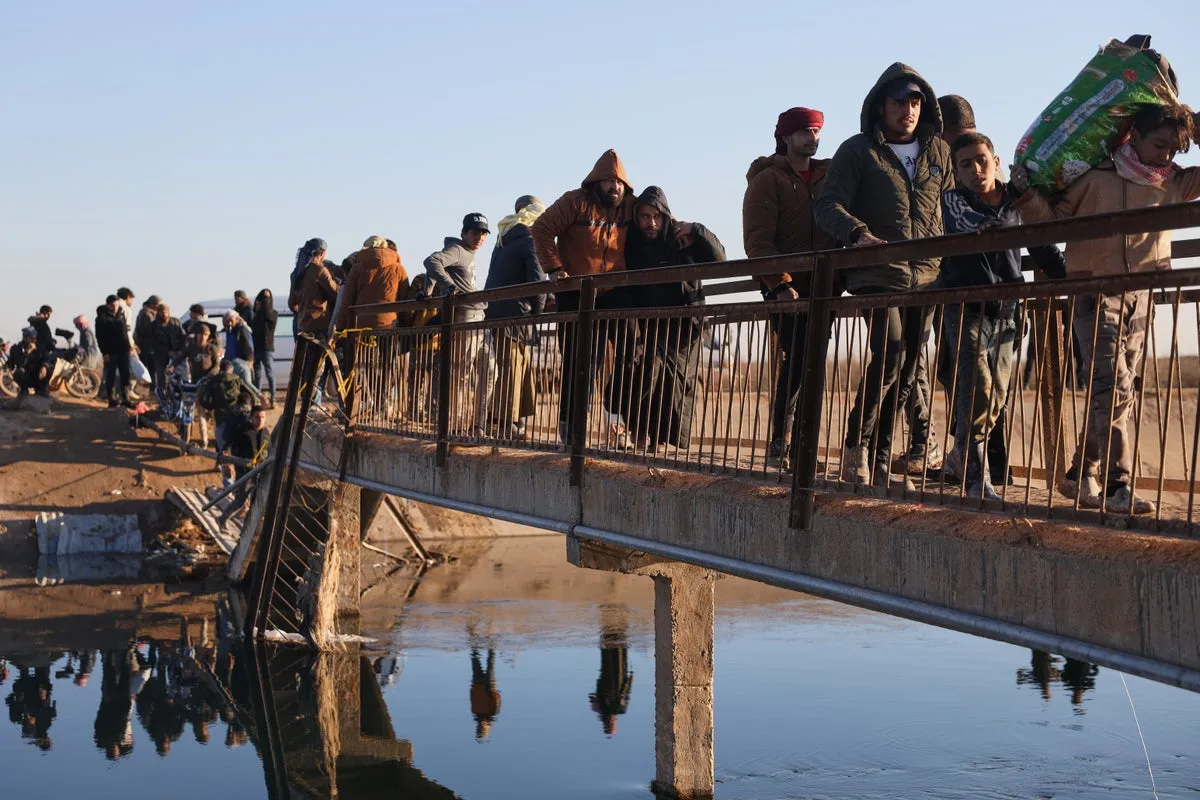
A trickle of civilians fled the contested area east of Aleppo on Thursday following a Syrian military warning to evacuate ahead of an anticipated government offensive against Kurdish-led forces. The Syrian army had designated a humanitarian corridor along the main road from Maskana through Deir Hafer to Hamima, but many residents said Kurdish-led Syrian Democratic Forces (SDF) prevented them from leaving via that route.
Some families escaped by taking back roads or walking part of the distance. Saleh al-Othman said he fled Deir Hafer with more than 50 relatives after SDF blocked their exit, forcing them to walk seven to eight kilometres to the main road where civil defence teams assisted them. Yasser al-Hasno also said he and his family left via back roads and crossed a small river on foot to reach safety.
An SDF spokesman denied the allegations, calling them “baseless” and suggested government shelling was deterring residents. Farhad Shami said the claims that the group had blocked civilians were unfounded. Meanwhile, government officials gathered in Hamima, waiting to receive evacuees, but few arrived.
The Syrian military’s announcement late Wednesday appeared to signal plans for an offensive against the SDF in the area. The army called on the SDF and other armed groups to withdraw east of the Euphrates River. Tensions have risen after stalled negotiations between Damascus and the SDF over an agreement last March to integrate forces and for central government control over institutions in the northeast.
The fighting comes after intense clashes in Aleppo city last week, ending with Kurdish fighters evacuating three contested neighbourhoods and government forces taking control. Some factions in the new Syrian army, formed after the fall of former President Bashar Assad in December 2024, are Turkey-backed groups with a history of clashing with Kurdish forces.




