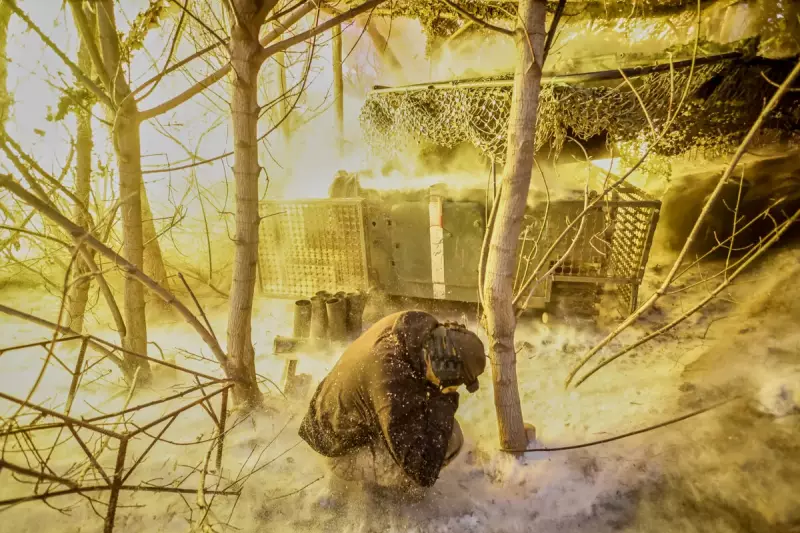
Ukrainian President Volodymyr Zelenskyy has reported a massive new overnight assault by Russian forces, targeting the nation's already battered energy infrastructure with a barrage of over 300 drones and missiles.
Winter Assault on Critical Infrastructure
The attack, which took place in the early hours of Tuesday, 20 January 2026, represents a significant escalation in Moscow's campaign to cripple Ukraine's power grid during one of the coldest winters in recent years. Temperatures in the capital, Kyiv, have plummeted to a bitter -20°C (-4°F).
Kyiv Mayor Vitali Klitschko stated that the strikes knocked out heating to more than 5,600 apartment buildings in the city. This comes as a devastating blow, as nearly 80% of those buildings had only just had their heating restored following a previous major Russian bombardment on 9 January, which left thousands without power for days.

Air Defence Strain and Diplomatic Efforts
According to Ukraine's air force command, air defences managed to intercept or jam 27 missiles and 315 drones. However, five missiles and 24 drones struck 11 different locations, highlighting the challenge of defending against such large-scale, coordinated attacks.
President Zelenskyy confirmed that the relentless assaults have stretched Ukraine's air defences thin, with some systems recently exhausting their ammunition before new shipments could arrive. In response, a new deputy air force commander, Pavlo Yelizarov, has been appointed to oversee a transformation of the air defence system, though specific details remain undisclosed.
This military pressure coincides with crucial diplomatic movements. A Ukrainian negotiating team arrived in the United States on Saturday with a key mission: to convey to American officials how Russia's continuous strikes are actively undermining peace efforts.
The Push for a Peace Settlement
Zelenskyy indicated last week that the delegation aims to finalise documents related to a proposed peace settlement, focusing on postwar security guarantees and economic recovery. Should US officials approve the proposals, there is potential for the US and Ukraine to sign the documents at the World Economic Forum in Davos, Switzerland, this week.
This diplomatic push seeks to maintain momentum in US-led peace talks, even as Moscow shows no public indication of willingness to end the war, which began with its full-scale invasion on 24 February 2022. The strategy of targeting energy infrastructure is widely seen as an attempt to break Ukrainian morale and resistance by denying civilians heat and running water during the harsh winter.
Ukraine continues to depend heavily on sophisticated air defence systems supplied by Western allies, particularly the United States, to counter these relentless missile and drone attacks.