Russia has announced the capture of the strategically vital city of Pokrovsk, marking what would be its most substantial battlefield victory in Ukraine for more than a year. The claim arrives just as US President Donald Trump's special envoy, Steve Witkoff, touched down in Moscow for critical talks with Russian leader Vladimir Putin scheduled for Tuesday.
Strategic Shift on the Battlefield
The Kremlin stated that its forces have raised the Russian flag over Pokrovsk's central square, with Putin reportedly informed of the city's capture on Sunday. Ukrainian officials have not acknowledged the loss, and their latest military update reported 43 separate Russian attacks in the Pokrovsk sector on Monday, indicating fierce fighting may still be ongoing.
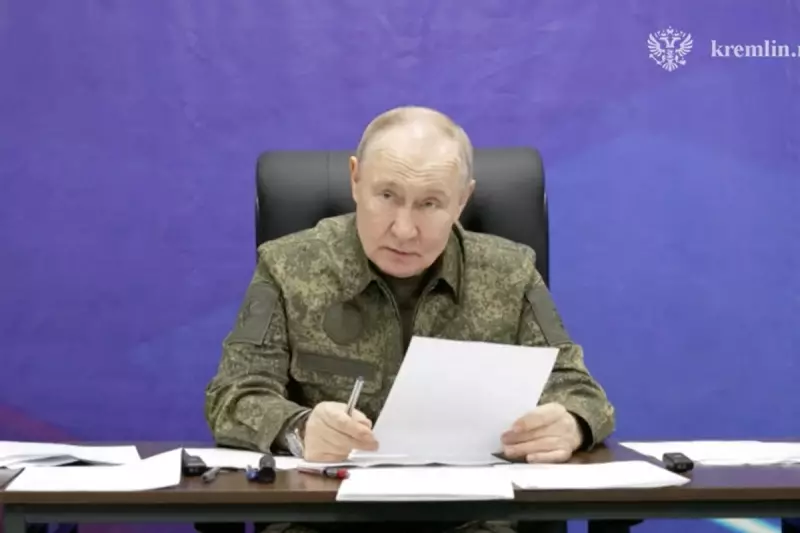
In comments carried by Russian news agencies, President Putin framed the capture as a pivotal development. "This is an important direction. We all understand just how important. It will ensure solutions going forward to the tasks we initially set," he said during a visit to a military command post.

Diplomatic Flurry Amidst Continued Conflict
Steve Witkoff's mission to Moscow follows a weekend of discussions between US and Ukrainian officials in Florida, where they worked on a framework for a potential peace deal. Ukrainian President Volodymyr Zelensky has struck an optimistic note, stating the revised US-authored peace terms now "look better" for Kyiv after recent negotiations.
However, significant hurdles remain, with little indication that Moscow and Kyiv are any closer to resolving core issues, particularly concerning territorial control. Zelensky has called the topic of Ukraine's sovereignty over its lands "the most complicated" part of the dialogue.
The diplomatic push has seen Zelensky embark on a European tour, meeting with French President Emmanuel Macron in Paris. Macron praised the US-led efforts but emphasised that any final peace plan "can only be finalised with Europeans around the table." He described the current phase as "preliminary" but a potential "turning point" for European security.
NATO Considers 'Pre-emptive' Action on Hybrid Threats
As ground fighting intensifies, NATO is grappling with an escalating campaign of Russian hybrid warfare against Europe. Admiral Giuseppe Cavo Dragone, chair of the NATO Military Committee, warned the alliance is considering "pre-emptive" and more "aggressive" action to deter Moscow.
This follows a series of incidents, including a Financial Times investigation revealing NATO is on high alert after 11 recorded incidents of vessels in the Baltic Sea allegedly damaging undersea energy and communication cables. The alliance is also contending with frequent cyber attacks and drone incursions into NATO airspace.
Meanwhile, a sobering report from the Landmine Monitor 2025 revealed that deaths and injuries from landmines and unexploded ordnance hit a four-year high in 2024. The surge is attributed to conflicts in Syria and Myanmar, as well as Ukraine's withdrawal from the international mine ban treaty in June, a move analysts say is aimed at slowing Russian advances.