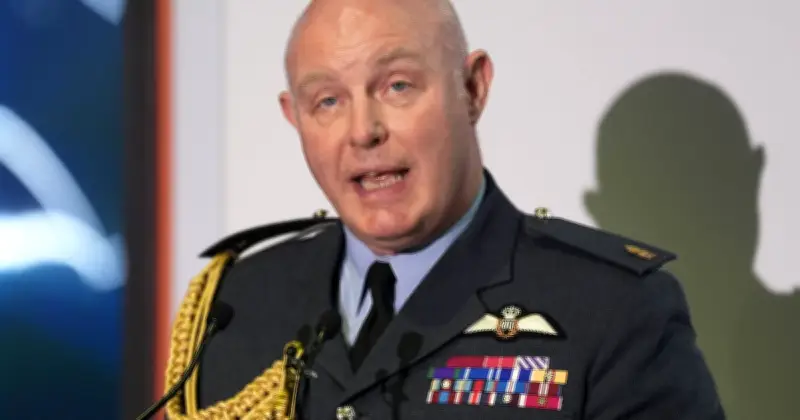
The head of the RAF has warned that the UK faces "rapidly evolving" and potentially "existential" threats from foreign adversaries. Air Chief Marshal Sir Harv Smyth said the "international rules-based order" that has "secured our sanctuary and prosperity for generations" is being "actively challenged and dismantled" by hostile powers.
Military must embrace new technology
Delivering the Lord Trenchard Memorial Lecture at the Royal United Services Institute on Monday, Sir Harv said the modern military must adapt and embrace "the emergent technology of the day" in line with a doctrine of "autonomy, not flesh". He said this should involve deploying planes and tanks to avoid the "bloody" and "costly" nature of trench warfare, as well as accepting that artificial intelligence (AI) will be "fundamental to the changing character of war".
"The threats we face are no longer distant storm clouds on the far horizon," he added. "They are proximate, they are rapidly evolving, they are multifaceted and, if left unchecked, could prove existential."
Defence readiness warnings
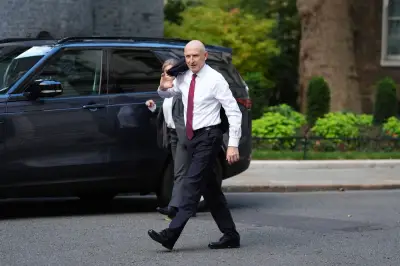
The warning comes just days after Defence Secretary Wes Streeting said that Britain must be ready for war by 2030. Writing in the Telegraph, he said: "That gives us a little over 1,000 days to complete our mission: to be ready with our allies to fight and win. This Government will make sure it is mission accomplished."
Mr Streeting also urged the public to stockpile emergency supplies in case of "sophisticated cyber attacks" or "disruption to essential supply chains caused by hostile state actors" last week.
Russia and hybrid warfare
It also follows warnings from defence figures about the threat posed by Russia to allies of Ukraine through so-called hybrid warfare, including drone and cyber attacks. Head of the Royal Navy Sir Gwyn Jenkins said last month that Moscow poses "the greatest threat to our security today" and was "probing" for weakness, including the UK's vital undersea cables.
Meanwhile, Russia is continuing to bombard Ukraine with ballistic missiles and drones, as Kyiv grapples with recent decisions from Washington that have benefited President Vladimir Putin, including waiving US sanctions on Moscow and signing a deal to import Russian diesel.
Ukraine's war efforts were also recently undermined by disruption in satellite support for its drones after rejecting a call by Mr Trump to halt strikes on Russian oil infrastructure. The US leader went on to heap pressure on Ukrainian President Volodymyr Zelensky, accusing him of being an obstacle to peace.
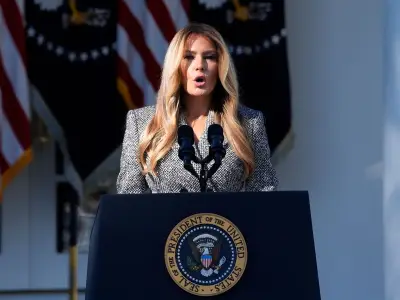
Moscow agreed last week to resume three-way negotiations with Washington and Kyiv in November, and the two countries also agreed to a localised ceasefire brokered by first lady Melania Trump around Oleshky, in Ukraine's southern Kherson region, on Friday.
Mr Zelensky said on Sunday that Russia had launched almost 2,300 drones targeting the country's cities over the past week, affecting nine regions of the country and damaging power plants, grain stores, commercial facilities and civilian homes.