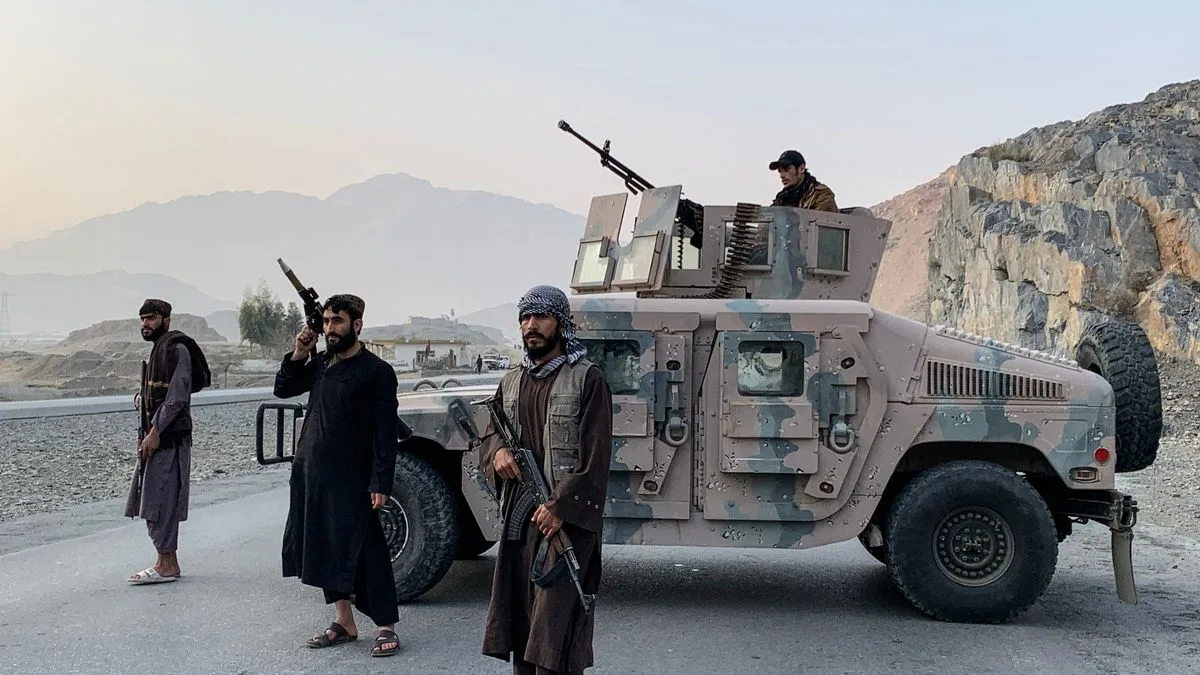
Pakistan-Afghanistan Conflict: The Most Dangerous Regional War in Decades
The outbreak of war between Pakistan and Afghanistan represents the most volatile and dangerous regional flare-up witnessed in over thirty years, arriving at what could not be a worse moment for global stability. This conflict emerges after months of escalating tensions, primarily driven by Pakistan's accusations that the Taliban government in Afghanistan has been exporting terrorism across their shared border.
A Terrible Global Backdrop
This regional war unfolds against a dreadful international backdrop of Russia's ongoing invasion of Ukraine and the United States threatening imminent air strikes against Iran. The irony is palpable as both Russia and Iran have publicly urged Pakistan and Afghanistan to stand down and cease hostilities, even as their own actions contribute to worldwide instability.
The window for a US decision regarding military action against Iran has narrowed significantly, with war in the Middle East now considered a real and immediate possibility. Iran has refused to comply with American demands concerning its nuclear strategy, prompting a major US naval deployment. The aircraft carrier USS Gerald R. Ford is arriving near Israel, while the USS Abraham Lincoln carrier strike group prepares for potential operations against Iran in the Arabian Sea. Multiple squadrons of fighter jets are also on high alert across the Middle East.
The Immediate Trigger and Military Reality
Pakistan launched overnight air strikes targeting Kabul and other Afghan cities, marking a dramatic escalation following months of border clashes between Pakistani forces and the Taliban. Pakistan has endured a year of exceptionally violent terrorist attacks, which it attributes to groups operating from within Afghan territory with Taliban support.
The military balance is starkly asymmetrical. The Afghan Taliban possess tanks, artillery, and light arms, but Pakistan is a nuclear-armed state with a large, conventional military. This disparity makes it likely that Kabul will resort to guerrilla warfare and terrorist tactics rather than direct confrontation. Pakistan has historically maintained a dual policy toward its war-torn neighbor, publicly advocating for peace while unofficially benefiting from the extension of Islamic militant influence in the region.
Core Issues: Terrorism and Strategic Depth
Central to this conflict is Pakistan's firm allegation that Afghanistan is providing sanctuary to Tehreek-e-Taliban Pakistan (TTP), a powerful terrorist organization that Islamabad claims is responsible for attacks inside Pakistan. The Taliban government denies these accusations, but affiliated networks like the Haqqani group—often described as the Sopranos of Afghanistan—continue to thrive under Taliban rule.
Historically, these groups have maintained varying degrees of contact and even received support from Pakistan's shadowy Inter-Services Intelligence (ISI) agency. For decades, Pakistan has viewed Afghanistan as a strategic backyard, an extension of Islamic influence that pivots away from its primary regional rival, India.
One regional security source explained: "Pakistan needs Afghanistan as a strategic buffer, preventing what it fears most—complete encirclement by India. It also provides Pakistan with ideological comfort as a fellow Islamic nation that naturally resists outside interference. Even though Pakistan is currently suffering from terrorism, it has previously benefited from Afghanistan's chaos, as it allowed Pakistan to maintain a degree of covert control."
Historical Context and Recent Developments
Contacts within Pakistani intelligence have revealed that the ISI traditionally considered Afghanistan almost as a backdoor escape route and an extension of Islamic power, diverting attention from tensions with India. The recent air strikes on Kabul and Kandahar are the latest in a series of clashes, despite a fragile ceasefire agreement between the two nations in October 2025.
This conflict follows the Taliban's takeover of Afghanistan in 2021, an event largely supported by Pakistan as it signaled the end of Western influence in the country. Amid rising tensions with India, Pakistan viewed its links to Afghanistan as vital for national security. However, the current priority is to clamp down on the terrorist threat emanating from Afghan soil, even at the cost of open warfare.
The critical question remains: how will this new war between Pakistan and Afghanistan affect the already tense global situation? Will it distract major powers from other flashpoints, or will it add another layer of dangerous instability to an increasingly volatile world? The coming days will provide grim answers.




