Pakistan Declares War on Afghanistan in Dramatic Border Escalation
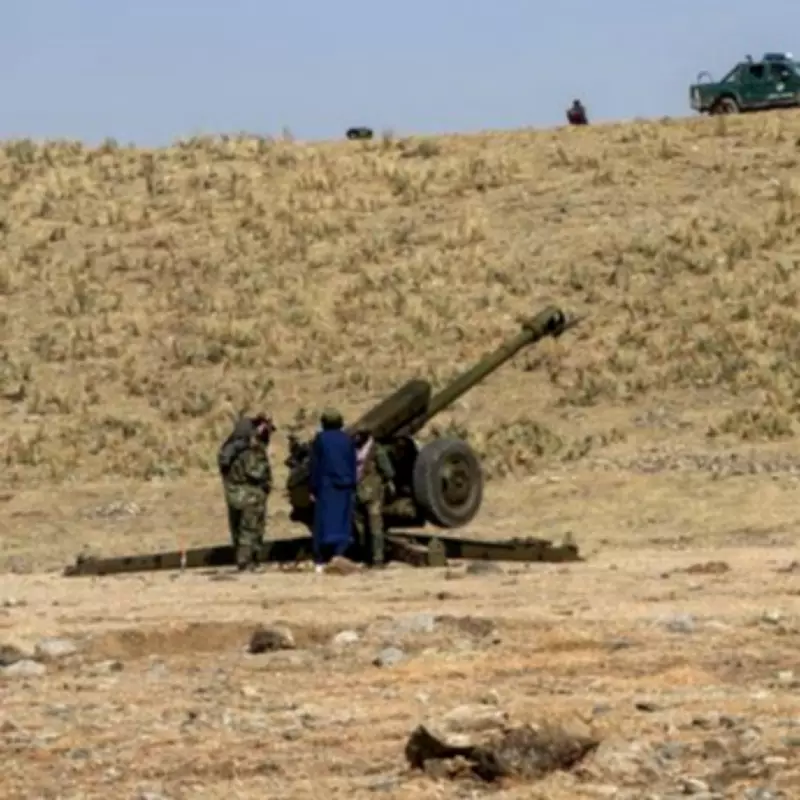
Pakistan has formally declared war on Afghanistan following a series of bloody cross-border attacks that have dramatically escalated tensions between the two neighbouring nations. The outbreak of violence has triggered major international alarm, with security experts warning that the conflict could further destabilise the region and create lawless areas where terror groups could freely plot attacks against Western targets.
UK Faces Increased Terror Threat from Regional Chaos
A Western security source has explicitly warned that the escalating conflict between Pakistan and Afghanistan could directly impact British security. "Clearly Afghanistan and areas in Pakistan returning to chaos and anarchy will act as a magnet for terror groups," the source stated. "They are already present in the region, and this deteriorating situation will further increase the risk of these groups being free to plot against the West - and the UK could well suffer as a direct consequence."
Britain, as a longstanding junior partner to the United States, has historically been a primary target for extremist organisations like al-Qaeda and Islamic State, both of which have previously thrived in Afghanistan's unstable environment.

Major Cities Targeted in Aerial Bombardment
The conflict intensified when Pakistani warplanes conducted air-strikes against several Afghan cities, including the capital Kabul and the second city of Kandahar. These attacks came in direct response to an Afghan frontier assault on Thursday. According to Pakistani military reports, at least 274 Taliban officials and militant fighters were killed during the bombing sorties, which targeted approximately 22 Afghan military installations.
Pakistani Defence Minister Khawaja Mohammad Asif declared unequivocally: "Our patience has now run out. Now it is open war between us." This statement followed hours of intense aerial bombardment that rocked Kabul and surrounding areas.
Conflicting Narratives and Casualty Claims
The two governments have issued sharply contradictory accounts of the fighting and resulting casualties. Pakistan's army spokesperson, Lieutenant General Ahmed Sharif Chaudhry, claimed that Pakistani air and ground operations killed at least 274 members of Afghan forces while wounding more than 400 others. Pakistan acknowledges that twelve of its own soldiers died in the fighting, with twenty-seven others wounded and one soldier missing in action.
Afghan government spokesman Zabiullah Mujahid firmly rejected these figures as "false," instead claiming that fifty-five Pakistani soldiers were killed with "many" others captured. He stated that thirteen Afghan soldiers had been killed and twenty-two wounded, with thirteen civilians also injured in the cross-border exchanges.
Historical Tensions and Regional Alliances
The current conflict represents a significant departure from previous engagements, marking what appears to be the first instance where Pakistan has deliberately targeted Afghan Taliban officials rather than focusing exclusively on fighting groups. Pakistan has consistently blamed the Afghan Taliban regime for planning and launching terror attacks from within Afghanistan's borders.
Defence Minister Asif expressed particular frustration with Afghanistan's growing relationship with India, Pakistan's historical rival. "Pakistan had hoped for peace in Afghanistan after the withdrawal of NATO forces in 2021 and expected the Taliban to focus on the welfare of the Afghan people," Asif stated. "But they have turned Afghanistan into a colony of India."
India's improving ties with Afghanistan, including offers of enhanced bilateral trade, have significantly annoyed Islamabad and contributed to regional tensions.
Ongoing Border Clashes and Civilian Impact
Fighting continued into Friday morning in the strategic Torkham border area within Afghanistan's eastern Nangarhar province. Afghan authorities reported that Pakistani mortar fire struck civilian areas, including a refugee camp that had been evacuated overnight. In response, Afghanistan targeted Pakistani army posts across the contested frontier.

The conflict has its roots in the controversial Durand Line frontier, established in 1893 by British diplomat Walter Durand as a buffer between the British Indian empire and Russia. This artificial border divided the Pashtun tribe, who constitute the majority of the Taliban, as well as the Baloch community, whose separatist groups have also been active in Pakistan.
Accusations of Terrorism Export and External Interference
Pakistan has repeatedly accused Afghanistan of "exporting terrorism" by harbouring militant groups that stage attacks across the border. Specifically, Islamabad alleges that Kabul supports the Pakistani Taliban (TTP) - which is separate from but closely allied with Afghanistan's Taliban - along with outlawed Baloch separatist organisations.
Militant violence has surged across Pakistan in recent months, with Afghanistan consistently blamed for supporting these destabilising elements. Pakistan has also frequently accused neighbouring India of backing both the Baloch Liberation Army and the Pakistani Taliban, allegations that New Delhi consistently denies.
Failed Diplomacy and Escalating Drone Warfare
Several rounds of peace talks held in Istanbul during November failed to produce any lasting agreement between the two nations. Although a Qatari-mediated ceasefire temporarily ended fighting in October - which had killed dozens of soldiers, civilians, and suspected militants - the two sides have continued to periodically exchange fire.
In a related development, Pakistan's Information Minister Attaullah Tarar reported that the country's anti-drone systems shot down several small drones over the northwestern cities of Abbottabad, Swabi, and Nowshera on Friday. Tarar stated that these drones appeared to be part of a failed attack orchestrated by the Pakistani Taliban, though fortunately there were no casualties reported from these incidents.
The escalating conflict between Pakistan and Afghanistan represents one of the most serious security developments in South Asia in recent years, with implications that extend far beyond the region's borders to potentially affect global security architecture and Western nations including the United Kingdom.