Norway's Defence Chief Issues Stark Warning on Potential Russian Invasion
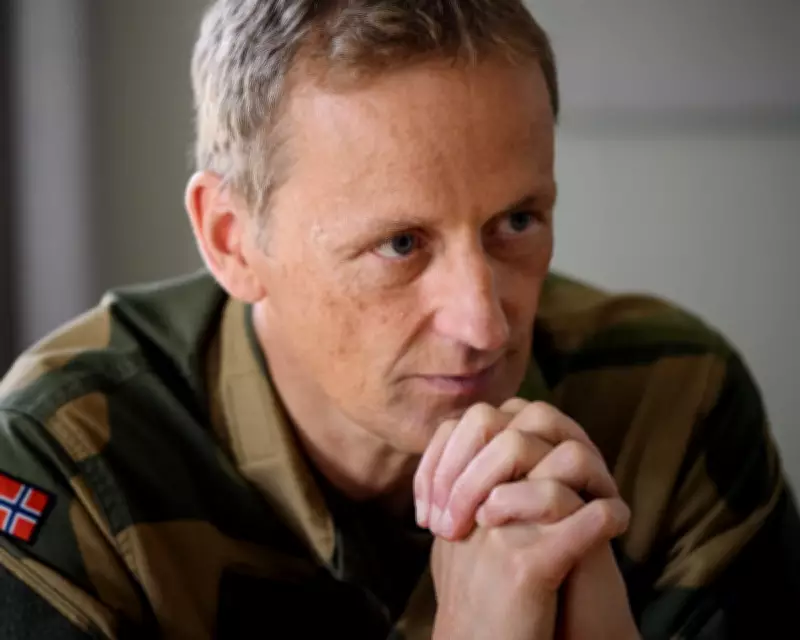
General Eirik Kristoffersen, Norway's chief of defence since 2020, has delivered a sobering assessment of the security landscape in northern Europe. In an exclusive interview, he revealed that Oslo cannot rule out the possibility of a future Russian invasion aimed at protecting Moscow's critical nuclear assets stationed perilously close to the Norwegian border.
Nuclear Deterrent as a Potential Catalyst for Conflict
"We don't exclude a land grab from Russia as part of their plan to protect their own nuclear capabilities," stated General Kristoffersen with measured gravity. "This is the only thing they have left that actually threatens the United States." While acknowledging that Russia lacks the same conquest ambitions for Norway as it holds for Ukraine or former Soviet territories, the general highlighted the strategic significance of the Kola peninsula.
This Russian territory, situated a mere stone's throw from Norway, houses a formidable arsenal including nuclear submarines, land-based intercontinental ballistic missiles, and nuclear-capable aircraft. These assets constitute Russia's crucial second-strike capability, which would be pivotal in any potential conflict with NATO forces elsewhere.

"We don't take that off the table, because it's still an option for Russia to do that in order to make sure their nuclear capabilities are protected," Kristoffersen explained. "That's sort of the scenario in the high north that we plan for."
Scathing Critique of Trump's Afghanistan Comments
In a wide-ranging discussion, General Kristoffersen, a career army officer with multiple tours in Afghanistan, offered sharp criticism of recent remarks by former US President Donald Trump. He labelled as "unacceptable" Trump's claims that allied nations avoided frontline positions during the Afghanistan conflict while American troops shouldered the bulk of combat duties.
"It didn't make sense what he said and I know that all my American friends from Afghanistan know that," Kristoffersen asserted with evident frustration. "We were definitely in the frontline. We did all the full spectrum of missions, from arresting Taliban leaders to training Afghans to doing surveillance."
The Norwegian general revealed the personal toll of these operations, noting "We lost 10 Norwegians. I lost friends there." He expressed particular concern for Norwegian veterans and families of fallen soldiers who might be distressed by such inaccurate characterisations of their service and sacrifice.
Navigating a Transformed Security Environment
General Kristoffersen's tenure as defence chief has coincided with profound geopolitical shifts following Russia's full-scale invasion of Ukraine. This event has catalysed a comprehensive re-evaluation of European security architecture, with neighbouring Sweden and Finland joining Norway within the NATO alliance.
Norway has responded by reinforcing its border regions with Russia in the far north, while maintaining that current Russian tactics in the area tend toward more diffuse hybrid threats rather than conventional invasion preparations. "If you prepare for the worst, there is nothing that prevents you from also being able to counter sabotage and more hybrid threats," Kristoffersen noted pragmatically.
Despite heightened tensions, Norway and Russia maintain some operational contacts, including coordination on search and rescue missions in the Barents Sea and regular military meetings at their shared border. Kristoffersen has advocated for establishing a direct military hotline between Oslo and Moscow to prevent misunderstandings that could lead to dangerous escalation.
Arctic Diplomacy and Dismissing Greenland Speculation
Regarding Norway's northern territory of Svalbard, which hosts a Russian settlement and remains demilitarised under a 1920 treaty, Kristoffersen stated that Russia continues to respect the agreement. He dismissed Moscow's accusations of Norwegian stealth militarisation as mere propaganda with no substantive basis.

When questioned about Donald Trump's assertions regarding Chinese and Russian military designs on Greenland, Kristoffersen characterised these claims as "very strange." "We have a very good overview of what is happening in the Arctic from our intelligence service and we don't see anything like that in Greenland," he clarified.
The general acknowledged Russian submarine activity in traditional Arctic waters but emphasised this relates to Atlantic access rather than Greenland specifically. On the hypothetical scenario of a US military takeover of Greenland under a future Trump administration, Kristoffersen offered both reassurance and a broader strategic warning.
"They won't do it, so it's a hypothetical question," he stated initially. However, he added a pointed observation drawn from current conflicts: "If Russia is learning something from the war in Ukraine, I think it's that it's never a good idea to occupy a country. If the people don't want it, it's going to cost you a lot of money and a lot of effort and in the end you will actually lose."
General Kristoffersen's comprehensive assessment underscores Norway's delicate balancing act: preparing for worst-case scenarios while maintaining pragmatic communication channels, all within an Arctic region growing increasingly strategic and contested.