Fort Campbell Communities Grapple with Mixed Emotions Over Iran Conflict
In the military-heavy communities surrounding Fort Campbell, a sprawling U.S. Army base straddling the Tennessee-Kentucky border, the war in Iran dominates daily conversations and concerns. The base, home to the historic 101st Airborne Division known as "the Screaming Eagles," has been a cornerstone of American military operations since World War II. Following the September 11 attacks, tens of thousands of troops from this post were regularly deployed to Afghanistan and Iraq, with combat casualties during surges sometimes exceeding the division's deadliest years in Vietnam.
A Community Built Around Military Service
The towns of Oak Grove, Kentucky, and Clarksville, Tennessee, encircle the base and cater extensively to soldiers and their families. Military clothing stores, barbershops, and fast-food restaurants line the streets, while war memorials and monuments fill public green spaces. American Legion and Veterans of Foreign Wars posts are common, alongside military support centers. At Austin Peay State University in Clarksville, approximately one-third of students are either active military personnel or veterans, highlighting the deep integration of military life into the local fabric.
Pride and Concern Intertwined
Juan Munoz, an Army veteran who served in Afghanistan and now works as a career counselor in Clarksville for those transitioning out of the military, describes families in the area as experiencing "mixed emotions" about the new conflict. Many younger soldiers express excitement about deploying, while their spouses, parents, and siblings grapple with persistent safety worries. "You can’t ever give up the concern for your loved one, who’s potentially putting themselves in harm’s way," Munoz noted. However, this anxiety does not diminish their support for the military mission. "At the end of the day, they’re going to support their service member." Munoz personally views the war as a "great move," citing Iran's role in equipping enemies and endangering U.S. troops and allies in the region. "It’s what needs to be done," he asserted.

Trust in Leadership Amid Uncertainty
Edward Bauman, a veteran with 23 years of Army service including deployments to Iraq, Kuwait, and Afghanistan, voiced his support for the war based on trust in President Donald Trump. Speaking outside an Oak Grove box store, Bauman reasoned, "My takeaway is there had to have been some reason for him to bomb them. I don’t think he would have just went out of his way to just, ‘I’m going to bomb these people’." He remains optimistic that this conflict will not escalate into another prolonged Middle East engagement like Afghanistan or Iraq, emphasizing, "We’re not going to go in and try to occupy them." This sentiment echoes Defense Secretary Pete Hegseth's recent statement that the conflict "is not endless," though he warned of likely American casualties in the coming weeks.
Anxiety Over the Unknowns
Shannon Razsadin, CEO of the Virginia-based nonprofit Military Family Advisory Network, reported significant stress and anxiety within military communities due to the current uncertainties. "There is a good amount of stress and anxiety from the community just around the unknowns right now," she explained. Despite these fears, Razsadin highlighted the enduring pride of military families. "They’re incredibly proud. Military families are proud of their service. And our military, our service members are prepared, and they are ready."
Personal Stories of Pride and Prayer
Susan Lynn, a state representative in Mount Juliet, Tennessee, located about 70 miles southeast of Fort Campbell, embodies this blend of pride and concern. In 2020, she publicly thanked Trump for not sending her Air Force-enlisted son into "another war." Recently, she posted on social media that he has been deployed and requested prayers. "From the time my son was a little boy, he wanted to be in the Air Force," Lynn shared in a phone interview. "He’s extremely patriotic. He will do anything to support our commander in chief. And I feel the same way. That if our commander in chief has made this executive decision, that this is something we should do, then I will trust that."

Veteran Opposition and Protest
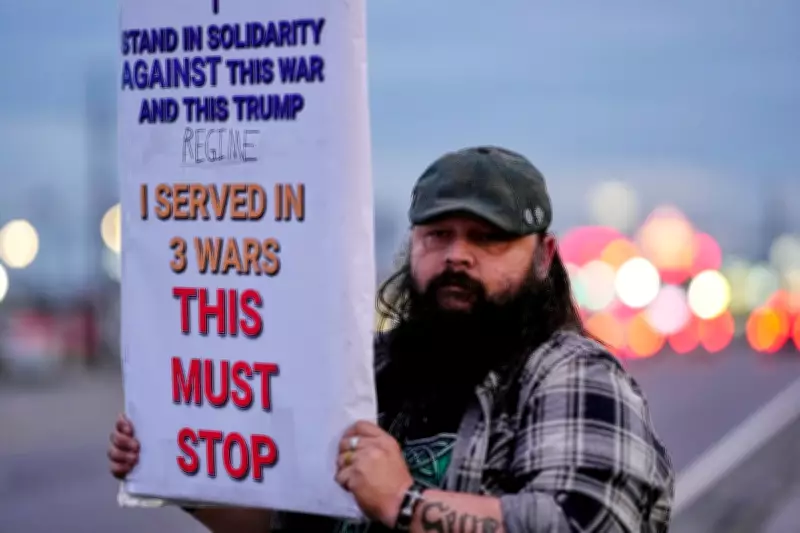
In contrast, some veterans openly oppose the military action. Chris McFarland, a veteran who served out of Fort Campbell with deployments to Kuwait, Iraq, and Afghanistan, has been protesting the war since its inception. He quickly had a sign made declaring "No more wars" and has been holding it daily on a major Clarksville thoroughfare. McFarland, who leads the nonprofit Veterans for All advocating for veteran healthcare, has encountered both hostility and curiosity from passersby. Many, he says, are "in shock, confused, concerned" and seeking more information. He condemns the attack as "100% unnecessary" and "unconstitutional," noting, "Literally, our own Congress didn’t even approve of this. This was done without anyone’s acknowledgement at 3:00 in the morning to murder people over in Iran." For combat veterans like himself, the prospect of a new war triggers painful memories, "It just puts us right back in, right back at ground zero."
The diverse reactions within the Fort Campbell area reflect a complex tapestry of emotions, where unwavering support for service members coexists with profound anxiety and, in some cases, outright opposition to the conflict. As the situation evolves, these military families continue to navigate the delicate balance between pride in duty and fear for the future.