Macron to Revise French Nuclear Doctrine Amid European Doubts Over US Guarantees
French President Emmanuel Macron is set to update France's nuclear deterrence doctrine, a move that comes as Europe grapples with heightened anxieties about Russian aggression and growing uncertainty over the reliability of United States protection under President Donald Trump. This strategic recalibration underscores the shifting geopolitical landscape and France's pivotal role as the European Union's sole nuclear-armed member.
Reassessing Nuclear Posture in a Volatile World
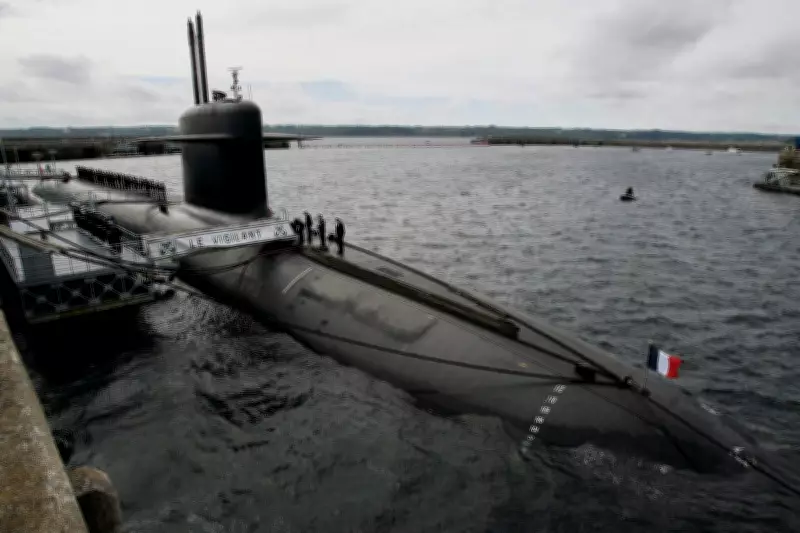
On Monday, Macron will deliver a keynote speech at the Île Longue base, home to France's four nuclear-armed submarines, marking his second major address on deterrence since his 2017 election. The location symbolises the formidable nuclear muscle at the disposal of French presidents, with each submarine capable of carrying 16 M51 intercontinental ballistic missiles armed with multiple warheads. This visit to the top-secret facility highlights the gravity of the moment, as Macron seeks to articulate a revised stance that addresses contemporary threats.
The world has transformed dramatically since Macron's initial nuclear policy speech in 2020. The full-scale Russian invasion of Ukraine, now in its fifth year, has brought conflict to the EU's doorstep, accompanied by repeated nuclear threats from Russian President Vladimir Putin. Concurrently, China and North Korea are expanding their nuclear arsenals, while the United Kingdom plans to restore nuclear airstrike capabilities with US-made F-35A fighter jets. These developments have eroded old certainties, prompting a reassessment of security frameworks.

European Skepticism Towards US Commitments
For decades, Europe has relied on a protective umbrella of US nuclear weapons, stationed on the continent since the mid-1950s to deter Soviet and now Russian aggression. However, doubts are mounting among European politicians and defence analysts about Washington's willingness to deploy such force if needed, particularly under the Trump administration. Rasmus Jarlov, chair of the Danish parliament's Defence Committee, expressed these concerns starkly, stating, "If things got really serious, I very much doubt that Trump would risk American cities to protect European cities."
This skepticism has led some European nations to look towards France for reassurance. Jarlov argues that, in the longer term, other European countries may need to develop their own nuclear weapons, though he acknowledges this is a distant prospect. "The Nordic countries have the capacity. We have uranium, we have nuclear scientists. We can develop nuclear weapons," he noted, adding that in the short term, reliance on France is essential. This sentiment reflects a broader search for "a second life insurance" against potential US withdrawal, as described by Etienne Marcuz, a nuclear defence specialist at the Paris-based Foundation for Strategic Research.
Potential Shifts in French Nuclear Policy
Macron's speech is expected to introduce substantial developments in France's nuclear doctrine, with allies and adversaries alike closely monitoring for hints of change. Héloïse Fayet, a nuclear deterrence specialist at the French Institute of International Relations, anticipates "real changes," possibly including a clearer French commitment to protecting allies through its nuclear arsenal. In 2020, Macron indicated that France's "vital interests" have a European dimension, suggesting that nuclear defence could extend beyond national borders.
France maintains fewer than 300 warheads, a stable number since 2008, which Macron has deemed sufficient to inflict "absolutely unacceptable damage" on any aggressor. However, nuclear specialists will be watching for any indication that this stockpile might need to grow in response to evolving threats. The language of deterrence, often shrouded in ambiguity to keep enemies guessing, adds complexity to these deliberations. Officials from Macron's office, speaking anonymously, confirmed that "there will no doubt be some shifts," emphasising the strictly presidential nature of such decisions.

European Engagement and Future Implications
European nations are increasingly engaging with France on nuclear matters, seeking to bolster collective security. German Chancellor Friedrich Merz has held "initial talks" with Macron and publicly theorised about German Air Force planes potentially carrying French nuclear bombs. This collaboration underscores a pragmatic response to geopolitical risks, as countries like Germany explore avenues for enhanced deterrence without pursuing independent nuclear capabilities.
As Macron approaches the final 14 months of his presidency, with elections slated for 2027, the revisions to France's nuclear deterrence policy could rank among his most consequential decisions. The adjustments reflect not only immediate concerns about Russia and US reliability but also broader shifts in defence technology and global power dynamics. In an increasingly unstable world, Macron's efforts to bare France's nuclear teeth serve as a stark reminder of the high stakes involved in safeguarding European security.