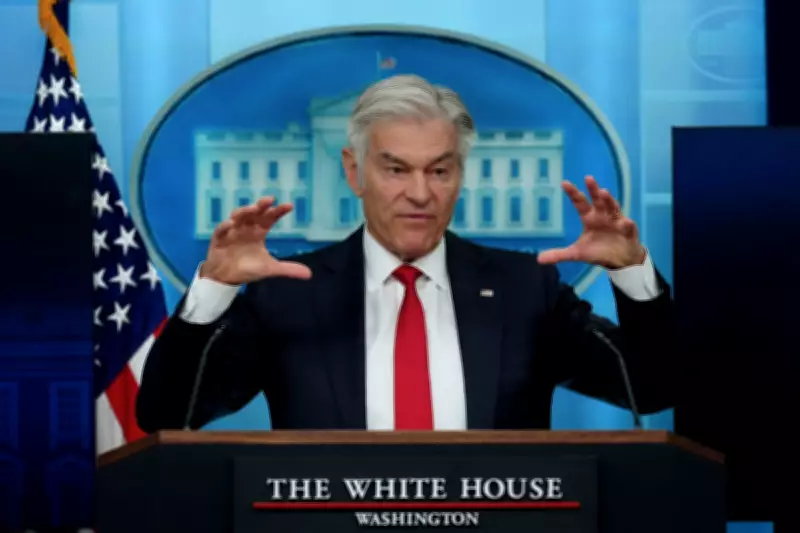
Centers for Medicare and Medicaid Services Administrator Dr. Mehmet Oz sparked controversy on Tuesday by dismissing Americans who oppose President Donald Trump or his administration as 'stupid' and 'lost' during a raucous appearance at the White House briefing room lectern. The former heart surgeon and television personality turned Medicare boss made the remarks as Press Secretary Karoline Leavitt continued her maternity leave.
Briefing Room Exchange
Oz was nearing the end of a nearly half-hour long appearance before the White House press corps when Lindell TV personality Cara Castronueva asked if he had 'medical advice' for Americans with 'Trump Derangement Syndrome.' Oz replied that he was 'concerned' about those who have 'focused their entire life's energy' on the president, calling it 'disheartening to see people lost that way.' He then added, 'But you know, treating stupid is really hard and it becomes a real problem.'
Context and Criticism
The attack on what most polls show to be a majority of Americans was prompted by Castronueva's invocation of the fake condition coined by MAGA-aligned media figures to malign anyone who takes issue with the Trump administration's policies or the president's conduct. The term 'Trump Derangement Syndrome' is an adaptation of 'Bush Derangement Syndrome,' coined by conservative columnist Charles Krauthammer during the George W. Bush administration in 2003. Krauthammer, a Harvard-trained psychiatrist turned political commentator, had defined the fake condition as 'the acute onset of paranoia in otherwise normal people in reaction to the policies, the presidency — nay — the very existence of George W. Bush.'

Political Implications
Two decades later, the 'TDS' line has been frequently deployed against Democrats or anyone not in lockstep with Trump's political positions as a way of delegitimizing and denigrating opposition by intimating that Trump's opponents are incapable of rational political discussions. Oz's comments have drawn sharp criticism from political opponents and free speech advocates, who argue that such rhetoric further polarizes an already divided nation. The incident underscores the ongoing tensions between the Trump administration and its critics, with Oz's remarks likely to fuel further debate about the state of political discourse in the United States.