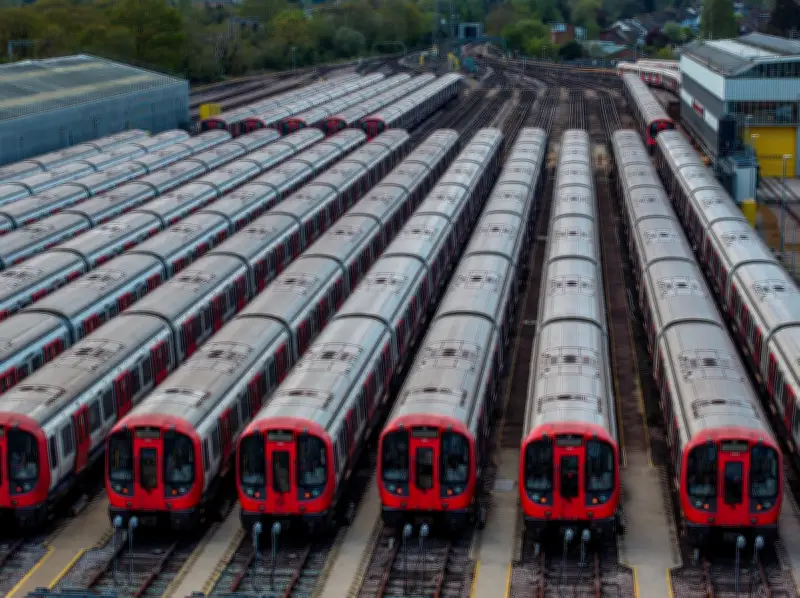
The RMT union, which caused major disruption on the London Underground with industrial action in April and June, appears unlikely to call further walkouts this summer as talks with Transport for London (TfL) progress constructively.
Previous Strikes and Their Impact
Walkouts in April and June led to disruption on most Tube lines, with TfL warning of no service on the Circle and Piccadilly lines. However, Londoners adapted by using alternative transport. During the early June strikes, Elizabeth Line usage rose about 18%, London Overground saw a 12% increase in morning Oyster and contactless taps, DLR usage was up 9%, bus boarding taps increased by 2%, and cycling jumped 22% compared to a year ago, according to TfL data. Many others worked from home to avoid delays.
Core Dispute: The Four-Day Week
The row centres on a move to a four-day week for Tube drivers, who earn around £74,000 a year. TfL says the new four-day week would be voluntary, but the RMT has branded it a “fake” four-day week, arguing it compresses five days of work into four, raising concerns over driver fatigue, late notice of shifts, and the roll-out of iPads to drivers. The union has also challenged TfL’s pledges that the four-day week is voluntary and that no driver would be forced to accept it.

Signs of Progress
However, there are signs the dispute may be nearing resolution. A TfL source said: “We are having constructive discussions with the RMT and work is continuing.” The RMT has a strike mandate until late August, but further walkouts now look unlikely.
The RMT’s stance has been significantly undermined by the Aslef train drivers’ union, which strongly backs the reforms, hailing them as offering the best working conditions on the mainline rail network. Additionally, about six out of ten Tube drivers, including some RMT members, turned up to work during the last strike. TfL noted that this included 91% of Jubilee drivers, 80% of Bakerloo drivers, and 75% of Metropolitan drivers.