
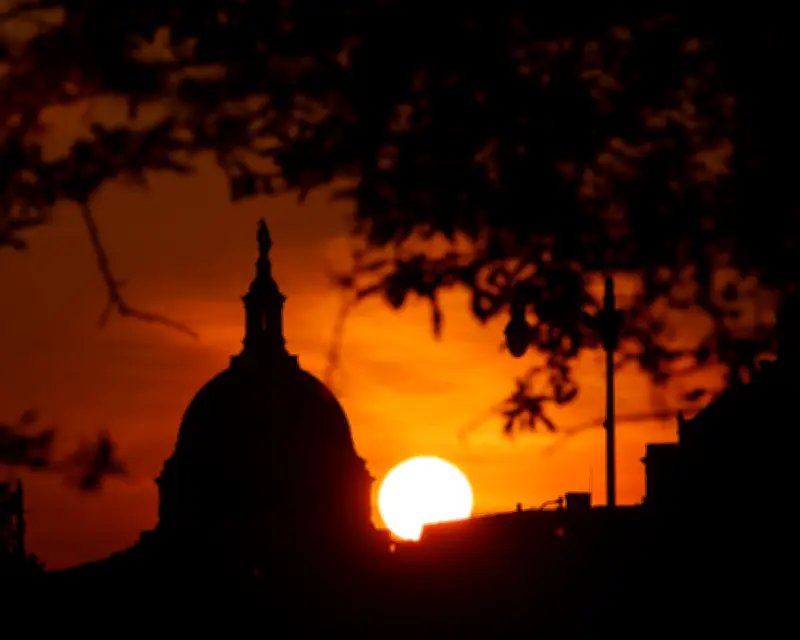
The US Senate approved a war powers resolution preventing Donald Trump from continuing hostilities against Iran, delivering the president a significant but symbolic rebuke over a conflict that has proven unpopular with the American public.
Senate vote details
The resolution passed by a 50-48 vote, with four Republicans – Susan Collins of Maine, Lisa Murkowski of Alaska, Bill Cassidy of Louisiana and Rand Paul of Kentucky – breaking with their party to support its adoption. John Fetterman, of Pennsylvania, was the sole Democrat to vote against the resolution.
The measure, which passed the House of Representatives earlier this month, would require the president to seek Congress’s authorization to use military force against Iran. It comes after Trump dispatched JD Vance to Switzerland to negotiate a settlement that would resolve the conflict the US began alongside Israel in February.
Constitutional questions and political impact
The resolution does not require the president’s signature, and Trump and his Republican allies have questioned the constitutionality of the 1973 War Powers Act under which it was passed. Nonetheless, its success underscores the discontent among Republicans over a conflict that has grown deeply unpopular with voters ahead of the November midterm elections, in which Republicans will be defending their control of Congress.
The resolution’s passage in the Senate was enabled by the absences of two Republicans: Dave McCormick of Pennsylvania and Mitch McConnell of Kentucky, who was admitted to the hospital last week. Neither has supported previous war powers resolutions, which Democrats have been forcing votes on regularly since the war with Iran began.
Other Trump administration news
US Secretary of State Marco Rubio said no country, including Iran, would be allowed to charge tolls for shipping in the Strait of Hormuz, as he sought to reassure Gulf allies of a firm US line in peace negotiations with Tehran.
A group of Texas protesters convicted of terrorism charges received unusually harsh sentences of at least 50 years in prison on Tuesday, in a case seen as a test of the Trump administration’s efforts to crack down on dissent.
Donald Trump acknowledged that repairs to the algae-stricken reflecting pool in Washington DC may not be completed in time for the Fourth of July, when the president plans a big celebration on the National Mall for the country’s 250th birthday.
A Washington DC resident arrested near the reflecting pool plans to fight an obscenity charge, as Trump continues to blame vandals for the botched renovation. The Trump administration spent $14.2m renovating the pool, which has since been beset with algae blooms and peeling liner.
Several staff members have reportedly been fired from the US Office of the Director of National Intelligence, less than a week after Trump appointed Bill Pulte as acting director after Tulsi Gabbard left the post in late May.
Global and domestic developments
A tech sell-off shook global markets on Tuesday, shifting attention from the US war with Iran to the future of AI companies and chipmakers. While big tech and the Trump administration have pushed AI in education, some parents and experts argue there is little evidence it helps children and may harm cognitive development.
The US Supreme Court refused to let a Rastafarian man sue Louisiana state prison officials after guards held him down and shaved him bald in violation of his religious beliefs.
Eight Americans quarantined for six weeks in Nebraska after exposure to a deadly hantavirus outbreak were released on Monday, including one who accused the government of holding her against her will.
Democratic Congressman Dan Goldman of New York said it was “sad” that a Brooklyn coffee shop banned him over his views on Israel, a move that put the cafe under investigation by the Trump administration’s Justice Department.




