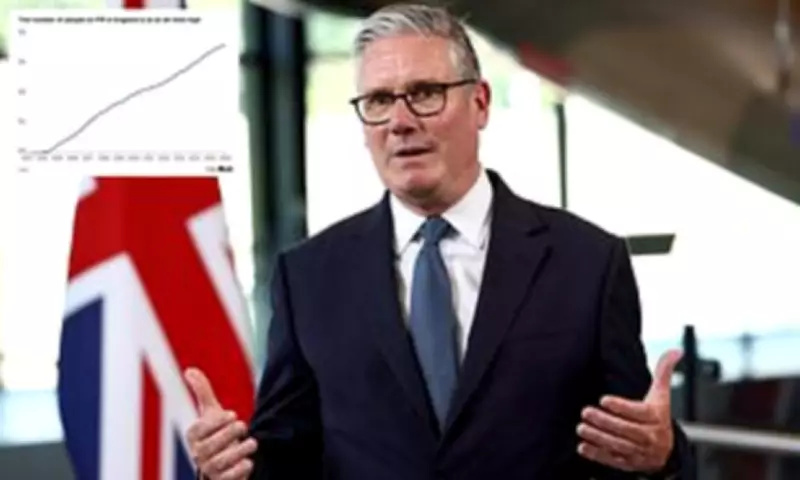
Sir Keir Starmer has been accused of significantly watering down disability benefits checks that come into effect today, which will allow recipients to go years before follow-up assessments. Personal Independence Payment (PIP) recipients aged 25 and over will now receive their cash for four years after an initial assessment, up from the current nine months. After a second review, those relying on PIP will get a further six years without a review of whether they still require the benefit. The changes come into force from today.
What is PIP and Who Qualifies?
PIP is intended to help people with everyday tasks and extra living costs if someone has a long-term physical or mental health condition or disability. The payment gives between £121.20 and £778.40 every four weeks to more than 3.9 million claimants. There are two parts to PIP: a daily living part, if you need help with everyday tasks, and a mobility part, if you need help with getting around. The Department for Work and Pensions assesses how difficult you find daily living and mobility tasks, looking at whether you can do them safely, how long it takes, and whether you need help from a person or extra equipment.
Government Justification and Criticism
The Government has warned that without the changes to assessment periods, the welfare system could collapse under a record backlog of mental health cases. The taxpayer bill for mental health-related benefits is soaring, but the changes sparked fury among those warning the UK's welfare system is already too generous. The Conservatives' shadow work and pensions secretary Helen Whately said: 'Reviews are the only way we can check whether an award is still correct. Fewer reviews mean more people receiving handouts for longer, at greater cost to the taxpayer. People who could work will instead be left on payments for years without anyone asking whether that is right for them or fair to the taxpayer.' Shimeon Lee from the Taxpayers' Alliance added: 'Taxpayers will be concerned that ministers appear to be reducing checks and extending awards for longer periods. With the welfare bill already ballooning, fewer reviews risk making it harder to ensure support reflects claimants' current circumstances. The Government should get a grip on the assessment backlog and tackle the soaring cost of welfare, not quietly reduce scrutiny.'

Watchdog Concerns
The Government's own independent welfare watchdog, the Social Security Advisory Committee, has already raised major concerns about the decision to widen the gap between PIP reviews. Official minutes show that the watchdog demanded officials come back with a 'clearer, written legal explanation' of why the change was necessary, and that ministers provide an 'explanation of the policy intent'. Minutes from the same meeting saw the Government argue that without the change, 'the central concern is that the assessment system will 'fall over' if capacity pressures are not addressed'. It added: 'While longer-term reforms are being developed, there is an immediate need to act.'
Rising Costs and Claimant Numbers
At present, mental health conditions make up 39 per cent of all PIP claims, by far the largest category. Spending on disability benefits is forecast to rise from £39.1 billion in 2023/24 to £58.1 billion in 2028/29, according to the Office for Budget Responsibility. This total would represent around 4 per cent of total public spending, and 2 per cent of GDP. PIP recipients received an average of £6,900 each in 2023/24. Plans by the Government to change the eligibility criteria for PIP had to be put on hold last year after a rebellion by MPs in the House of Commons. Work and pensions minister Sir Stephen Timms instead launched a review into PIP, which is expected to report this autumn. Government data released in March showed the number of people in England and Wales claiming PIP had hit a new record high of nearly four million. Some 3.93 million people in England and Wales were claiming personal independence payments in January 2026, up by 233,080, or 6 per cent, from 3.69 million a year earlier. The number of claimants has almost doubled since comparable figures began seven years ago in January 2019, when the total stood at 2.05 million.

Demographic Shifts
Teenagers and young adults account for a growing proportion of those getting PIP. Some 16.6 per cent of claimants in January this year were aged 16-29, up from 14.6 per cent in January 2019. There was a similar rise for the 30-44 age group, which accounted for 21.0 per cent in January this year, up from 19.0 per cent in 2019. By contrast, 45-59 year-olds made up 29.2 per cent of claimants in January, down from 37.4 per cent in 2019. The figure for 60-74 year-olds rose slightly over the period, from 29.0 per cent to 31.0 per cent. The total number in England alone stands at 3.63 million.
Political Reactions
On Sunday, the Work and Pensions Secretary Pat McFadden rejected calls to cut employers' National Insurance contributions to help young people into work. Despite a landmark report last week revealing that over one million young people are now 'Neets' - not in education, employment or training - Mr McFadden insisted in an interview with Sky News on Sunday that the UK's employment rate is 'pretty good'. A spokesperson for the Department for Work and Pensions said: 'These changes will help save the UK taxpayer £1.9 billion over the parliament and allow us to deliver personalised employment support.'