
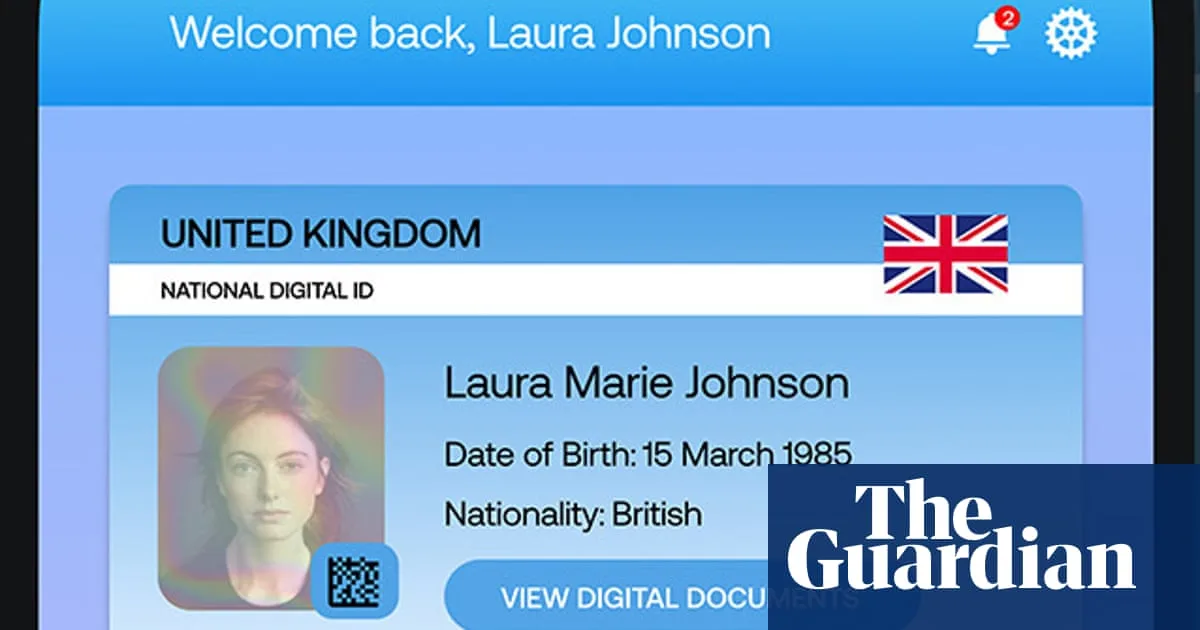
Keir Starmer's plan for mandatory digital IDs risks creating "an enormous hacking target", a cybersecurity expert has warned, as technology companies prepare to bid for contracts that could run into billions of pounds. The prime minister said the digital ID, including citizens' photos, names, dates of birth, nationalities and residency status, would come into use by July 2029.
The government has said the ID would be stored in a digital wallet on smartphones using state-of-the-art encryption. However, Alan Woodward, a professor and cybersecurity expert at the University of Surrey, warned that if the data is also held on a vast database to allow cross-referencing, "it's painting a huge target on something to say 'come and hack me'". The government has not yet provided details on how the system would work, sparking calls for greater transparency.
The warning comes amid rising public concern about criminal data breaches, including the leak of infant photos from a chain of nurseries onto the dark web and a continued cyberattack on Jaguar Land Rover. Ministers said the digital ID, dubbed "Britcard", would tackle small boat crossings by making it tougher to work illegally in the UK, and could also be used for welfare, driving licences, childcare and tax records.
The plan has been criticised by civil liberties campaigners and leaders of the Liberal Democrats, Sinn Féin and the SNP. The government said the ID would be held on phones in the gov.uk wallet, drawing inspiration from schemes in Australia, Estonia, India and Denmark. Starmer called digital ID "an enormous opportunity for the UK", saying it would make borders more secure and allow citizens to prove their identity swiftly.
Companies including Deloitte, BAE Systems, PA Consulting and Hinduja Global Solutions already hold government contracts worth a combined £100m for the scheme's IT systems, with total cost estimates ranging from £1.2bn to £2bn. Experts noted that much of the data is already held in government databases, but warned that storing it centrally with companies like Amazon or Google would increase security risks. Peter Chamberlin, who helped develop the scheme's digital architecture, stressed that "transparency is absolutely crucial", while Liberty warned that digital IDs could become "a nightmarish surveillance system".




