
Boston voted harder for Brexit than anywhere else in Britain, yet a decade on, its farmers have lost the EU subsidies and much of the migrant labour that sustained them. Now they survive on solar energy, their own Reform MP fights against the very policies keeping them afloat.
A Fifth-Generation Farmer's Dilemma
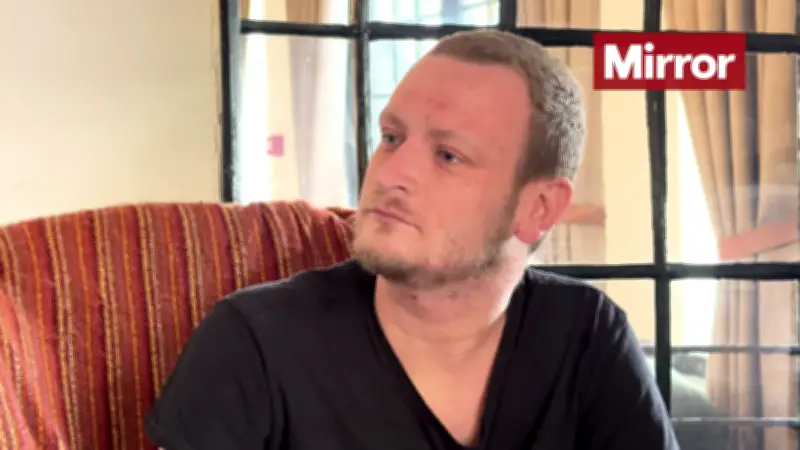
Chris Wray stands on land his family has farmed for five generations and says something that would have been unthinkable when Britain voted for Brexit. "I can't afford to employ my own kids," he says. For most people, it would be a statement about money. For a farming family, it sounds more like the opening line of an obituary. Not because the farm is about to disappear, but because it raises a question that would once have seemed absurd on land worked by the same family for more than a century: whether there will be a sixth generation at all.
His great-grandparents farmed these fields. His grandparents expanded the business. His parents handed it on, believing their son would do the same. Yet ten years after Brexit, standing in a rain-soaked yard outside Boston and looking across 700 acres that have sustained his family through wars, recessions and changing governments, Wray can no longer say with confidence that his children will inherit not just the land but a viable living from it.
"My life was all planned out for me," says the 46-year-old father of four. "But I can't say the same for my children."
Boston's Brexit Mandate
When Britain voted to leave the European Union in June 2016, Boston delivered the strongest Leave vote in the country. More than 75 per cent of residents backed Brexit, turning this Lincolnshire market town into the symbol of a political revolt built on frustration, anger and a belief that the country had lost control of its borders, its economy and its future.
For years beforehand, Boston had become shorthand for Britain's immigration debate. Following the expansion of the EU in 2004, workers from Poland, Lithuania, Romania, Latvia and elsewhere arrived in large numbers to fill labour shortages across agriculture, food processing and logistics. The pace of change was dramatic. Different languages became commonplace on the high street, new businesses opened, and neighbourhoods shifted rapidly, leaving many residents feeling their town was changing faster than they could influence.
The resentment was real, as was the sense that Westminster neither understood nor cared. Into that frustration stepped Nigel Farage, UKIP and the wider Leave movement with a message that was simple and relentlessly repeated. End free movement. Take back control. Put British workers first. Britain would prosper. Boston went all in.
Unfulfilled Promises
Ten years later, the gap between what was promised and what was delivered has become impossible to ignore. The irony is sharpest in agriculture. The workers who became the focus of so much political anger were also sustaining the industries Boston depended on. They picked vegetables in the surrounding fields, worked in food processing plants, and filled vacancies that local employers repeatedly struggled to fill. Without them, much of the local economy would not have functioned.
Wray recognised that before the referendum and remains convinced of it now. He says: "When you talk to Eastern Europeans, they've got that old-school work ethic you remember your parents having. They work crazy hard, all day, every day. British people just don't want that work." That view remains deeply contentious in a town where immigration is still the defining political issue.
"A lot of people are unhappy with the migration," says Jacques Perdeaux, who was too young to vote in 2016 but has lived with the consequences ever since. "You walk down the street now, and it's rare you'd find someone from the town shopping because everyone's going elsewhere. There is a lot of intimidation for people going into certain shops."
"We need to monitor them when we let them in. Just last night, I was walking home, and there were people robbing the charity bins. We wouldn't do that. It's just common courtesy." Unemployed Perdeaux, 27, says he would vote for Farage tomorrow and agrees with Reform's position on welfare and immigration. Yet even he struggles to argue that things have worked out as promised. "Everyone blames the government," he says. "The system is flawed."
A few streets away, Iga Bontoft sees the same town through an entirely different lens. Originally from Poland, she has lived in Boston for 16 years, paid taxes throughout and runs Lincs-EU, which supports migrant communities across Lincolnshire. She holds indefinite leave to remain. By any reasonable measure, she should feel secure. She does not. "None of us really feels settled," she says. "There is so much uncertainty. I always believe that you can't give and take. If you gave it, it's ours."
Bontoft is wary of immigration being treated as though every migrant belongs in the same category. She knows a 66-year-old lorry driver working 72-hour weeks. Recognises there are mothers with many children who have never worked a day in Britain. She knows refugees who arrived fleeing war and are not legally permitted to work. All of them get bundled into the same political debate. "You can talk about immigration for hours. You can put me in it, working here and paying taxes for 16 years, and you can put the mother of six, who never worked here a day. It's immigration, immigration, immigrant, immigrant. Foreigner, foreigner."
She understands the frustration in Boston. She will not accept its conclusion. She then blasts those who are too ready to criticise those migrants who work hard in the area. Bontoft adds: "If you're unhappy, you're going to be looking for the reason for your own unhappiness. If I were born in the UK and I'm struggling with work and housing, and I look at someone from a different country with a nice house, a car and nice clothes - that immigrant is the reason why I am unhappy. But that person doesn't look at how many hours that immigrant is working. People coming here and taking your job? You want my job? Take it, please. I will give it to you. But work the hours I work and then tell me that I am privileged."
Financial Reality of Brexit
For farmers, the labour shortage was only part of the problem. The most damaging consequence of Brexit came once the celebrations had ended and the financial reality of leaving the EU arrived. For decades, British agriculture had depended on the EU's Common Agricultural Policy. To those outside farming, it appeared an obscure bureaucratic arrangement. To farmers, it was often the difference between profit and loss. Across Britain, around £3.5 billion a year flowed into agriculture through direct support payments. For many businesses, the money was not a cushion. It was essential to survival.
Wray is blunt about its importance. "Our subsidy figure was essentially our profit figure," he says. That single sentence explains more about modern farming than anything heard in a parliamentary debate. Remove the subsidy, and the profit largely disappears with it. That reality never featured in referendum slogans.
Since Brexit, those payments have been wound down and replaced by environmental schemes that reward habitat management rather than food production. Meanwhile, European competitors remain subsidised and undercut British farmers in global markets. Fuel costs have surged. Fertiliser prices have soared. Machinery, energy and insurance have all climbed sharply. Every year brings fresh financial pressure, including now inheritance tax on farms, with no corresponding support to offset it. "Your product is now seen as expensive because you don't have the subsidy you once had," Wray says. "The margin under Brexit has just gone."
Across Lincolnshire, the story is the same. Businesses that once invested and expanded now manage decline. Savings built over decades are being eroded. The question farmers ask themselves is no longer what will make money, but what will lose the least. "Nothing makes any money," says Wray. "It's about what you're going to lose the least on. There are a lot of farmers out there eating into their savings and hoping something changes."
That is what led Wray, like many farmers across Lincolnshire, to solar energy. His farm sits close to a major grid connection point, making it attractive to energy developers. He has already committed 100 acres to panels and would give over more if he could. "It could put me in profit," he says. "I could draw more money from solar than from farming." A fifth-generation farmer making more money from covering fields with solar panels than from producing food. Let that settle for a moment.
Then consider who represents this constituency. Richard Tice, elected as Reform UK's MP for Boston and Skegness in 2024, is among the most vocal opponents of Net Zero in Parliament. Reform wants solar farms removed from agricultural land, has called them "Chinese-manufactured eco deserts", and would dismantle the government's clean energy agenda entirely. Yet the farmers who handed Brexit its biggest mandate and sent Tice to Westminster are converting their fields to solar because it is the only way to stay in business.
Boston is now dependent on the two things Reform campaigns hardest against - migrant labour and renewable energy. One kept farming viable for years. The other is keeping it alive now. Reform helped take both away. Now it campaigns against what little remains.
Wray is no cheerleader for Net Zero. "It's hard to go net zero when you're poor," he says. "It'll bankrupt us if we're not careful." But he is installing the panels regardless. There is no other option.
On the high street, fruit shop owner Sayid Kutan, 35, says he questions whether his business can survive. "The streets are very quiet," he says. "There appears to be a divide in the town."
Driving out of Boston, past now waterlogged fields, solar farms, Polish delis and shuttered market stalls, one conclusion is hard to avoid. This town voted more heavily for Brexit than anywhere else in Britain because it believed the promises being made. Stronger industries. Greater prosperity. A brighter future. Instead, its farmers have lost the subsidies that kept them profitable, the workforce that kept them productive, and now rely on the green energy their own MP tells them to oppose.
The politicians who sold Brexit have moved on. The slogans have faded. The campaign buses are long gone. What remains are the consequences. For Wray, they come down to a single question: whether his children will make a living from the same land that sustained every generation before them. And if his words sound like the opening line of an obituary, perhaps that is because they are. Not for farming. Not for Boston. But for the Brexit promise, this town embraced more than anywhere else in Britain, and which, ten years on, has not delivered what it said it would.




