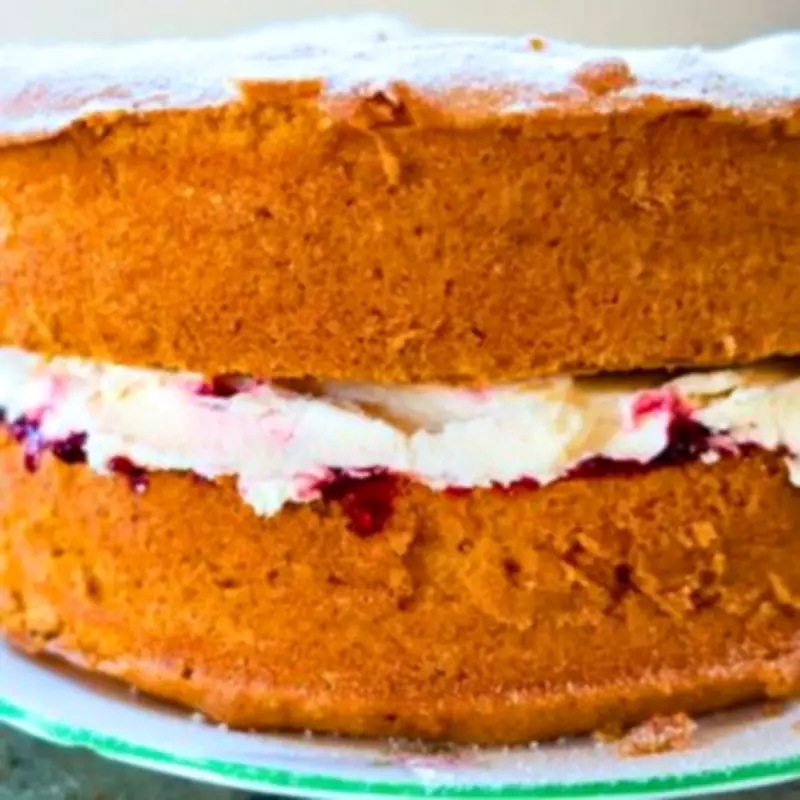
Few things beat enjoying something sweet in the fresh air on a sunny day, and spring offers the perfect chance to whip up a homemade treat that will go down a storm at any picnic. Victoria sponge cake is a classic British favourite, filled with jam, and so simple to make that all you need is a free afternoon to get stuck in.
You do not need to be an experienced baker to produce a decent cake, but Rachael Matthews, founder of Tea with Mum, has warned that a Victoria sponge is frequently ruined when people reach for the wrong ingredients. It is surprisingly common to simply grab whatever is lurking in the kitchen, but using old eggs or self-raising flour in a sponge cake will leave it flat and tasteless.
Rachael said: 'If your eggs are older than about one week, your cake will be flat. Self-raising flour will not give you the rise you need and the crumb will not be as nice.'

The longer eggs sit in your kitchen, the more they start to deteriorate, gradually becoming runnier, losing moisture and growing less capable of holding air effectively. Trapping air inside a sponge cake is absolutely essential to achieving a light, airy texture, and using eggs that are a week old will result in a dense cake with a slightly stale taste. Though self-raising flour might seem like the obvious option when baking a cake, it is actually too heavy for a sponge and can make the batter dense, preventing it from baking properly in the oven.
To ensure the most mouthwatering cake imaginable, use fresh eggs and swap self-raising flour for cornflour, as this produces a lighter, more airy texture. Rachael said: 'A little cornflour (aka cornstarch) helps make the cake crumb softer. It also expands to about six times its volume when baking, which helps your cake rise.'
Ingredients
For the cake:
- 225g of butter
- 225g of caster sugar
- Four large eggs
- Two teaspoons of vanilla paste
- 200g of plain flour
- 25g of cornflour
- Three teaspoons of baking powder
- Four tablespoons of milk
For the filling:
- 200g of double cream
- Two tablespoons of icing sugar
- One teaspoon of vanilla essence
- Three tablespoons of raspberry jam
- 125g of fresh raspberries
Method
To make the cake:
Start by heating the oven to 170°C (fan oven), then grease the bases of two cake tins and line them with baking paper. Place the caster sugar and butter in a large bowl, beating together for roughly four minutes until you achieve a pale yellow, creamy consistency. Either a wooden spoon or an electric mixer can be used.
Next, add the eggs one at a time into the butter mixture, stirring until just combined after each addition. Blend in the vanilla until fully incorporated. Be careful not to overwork the batter, as this is the easiest way to ruin a cake and end up with a heavy, stodgy texture.
Using a sieve, sift the plain flour, cornflour, and baking powder into the butter mixture, then carefully fold in using a silicone spatula. Gradually pour in the milk, one tablespoon at a time, until the batter reaches a consistency that falls easily from a spoon. Divide the cake batter equally between the two tins and smooth the surfaces flat. Pop them into the preheated oven and bake for 20 to 25 minutes until both cakes are a lovely golden colour.
To make the filling and decorations:
Once the cakes are ready to come out of the oven, leave them in their tins for five minutes before carefully turning them out and removing the baking paper. Make sure the cakes are entirely cool before you start decorating. Pour the double cream into a small bowl and sift one tablespoon of icing sugar over it through a sieve. Add the vanilla extract and gently stir to combine.
Choose one cake for the base and, if it has risen unevenly, trim a little from the top to create a flat surface. Spread a generous layer of raspberry jam across it. Spoon the cream mixture over the jam, then carefully place the second cake on top, with the domed side facing upwards. To finish, dust the top with icing sugar, arrange the raspberries on top, and your delicious homemade cake is all ready to enjoy.