They are often described as the digital generation, seemingly glued to their smartphones. Yet, a new study reveals that Gen Z is increasingly setting aside their devices to look upwards. Research commissioned by the RSPB indicates a staggering 10-fold increase in the number of 16 to 29-year-olds who regularly engage in birdwatching since 2018, representing a 1088 per cent rise.
The findings show that nearly three-quarters of a million members of Gen Z across Great Britain now partake in this pastime. As the number of young birdwatchers continues to climb, it has become one of the fastest-growing obsessions for this age group, second only to jewellery making. Additionally, there has been a 216 per cent increase among Millennials and a 66 per cent rise among Generation X birdwatchers.
Molly Brown, a wildlife expert at the RSPB, commented: 'People of all ages are discovering the joy that connecting with nature brings. It's brilliant to see so many young people choosing to get into birdwatching. This new research shows that watching birds is no longer a niche or old-fashioned pastime and is attracting a younger, more diverse crowd.'

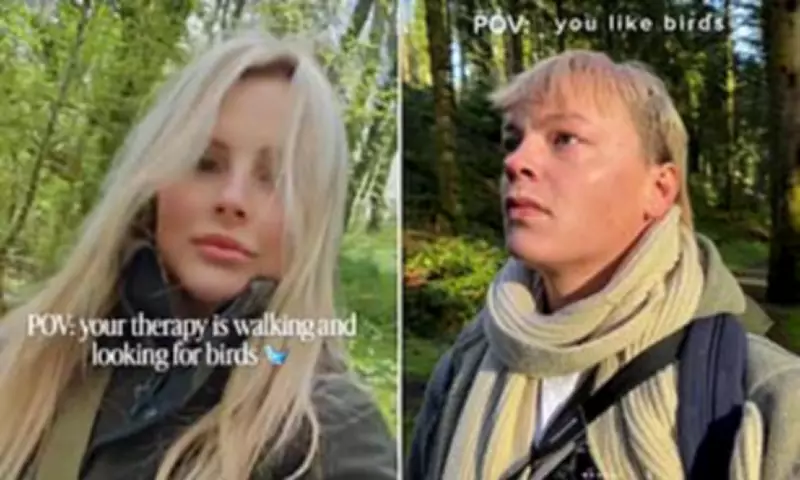
Social media platforms like TikTok are now brimming with young enthusiasts sharing birdwatching tips. Research indicates that listening to birdsong offers numerous benefits for mental and physical wellbeing, and observing birds may even slow age-related cognitive decline. Jess Painter, 24, from the RSPB's Youth Council, noted: 'I've noticed more and more young people birdwatching – and I love how this is shifting it into a hobby that's more accessible, less jargonistic and cool. On social media in particular, people are redefining what it is to be into birdwatching, sharing knowledge and passion.'
She added: 'When I'm watching birds, I'm not thinking about anything else – it's a moment of peace and a way to reconnect with nature, and with myself. By taking a moment to be curious, to watch, listen and learn, you open yourself up to endless small moments of wonder.'
TikTok user @beththebirdnerd posted: 'My therapy isn't expensive…it's just me, a walk and whatever birds I can find.' Beth revealed she has driven up to four hours in search of a single bird and even hosts birdwatching retreats for women that include skincare sessions. Another TikTok user stated: 'Never thought I'd enjoy bird watching so much.'
Tips for 'birding beginners' shared online include using your ears before your eyes, letting birds come to you, and starting small and local. On a Reddit post about birdwatching, one person wrote: 'I've gone from absolutely no interest in birds to running round recording them like they're Pokémon. It's so satisfying and interesting.'
The hobby is believed to have surged in recent years as it offers an escape from daily stress and social media. A range of smartphone apps now allow novice birdwatchers to identify species easily. Dr Amir Khan, an NHS GP, TV doctor, and President of the RSPB, explained: 'As a GP, I talk to many of my patients about what can happen when we go outside, into our gardens, local green spaces, parks or nature reserves. It helps lift our mood, actively stimulating serotonin, a brain chemical which makes us feel happier. Hearing birdsong, especially during the dawn chorus when they're at their loudest and most beautiful, can produce more serotonin and make us feel good.'
He continued: 'For millennia, humans have evolved alongside nature, so it's inherent that we want to connect with it. There's even a scientific term for this theory, the biophilia hypothesis, which means we actively seek out nature, and a perfect example of this is listening to birdsong – hearing a blackbird or a song thrush singing is one of the purest joys of life. When we connect with nature, we not only feel an urge to protect it – we also take care of ourselves.'
The new findings have been released ahead of International Dawn Chorus Day, which takes place on Sunday. This event marks the peak of the spring dawn chorus, when birds sing to find mates or defend territories. Despite warnings that the dawn chorus is becoming quieter due to declining bird numbers, the RSPB encourages people to set their alarms a little earlier to enjoy the joy of birdsong at dawn.