Bleach is a common household disinfectant, but it cannot remove limescale stains from toilet bowls and many people dislike its strong odour. Kristin Marr, founder of Live Simply, recommends using hydrogen peroxide or vinegar instead for a cleaner, fresher toilet without harsh chemicals.
Why Bleach Falls Short
Bleach kills germs rapidly, but it is ineffective against limescale—a mineral deposit left when hard water evaporates. Limescale often appears as dark stains in the toilet bowl, and because standard cleaners cannot break it down, the buildup encourages bacterial growth. Additionally, bleach has a pungent smell and requires careful handling.
The Natural Alternatives
Kristin Marr explains: “When it comes to toilet bowl disinfecting, I only use one ingredient: hydrogen peroxide or vinegar.” Vinegar is highly acidic, which softens and breaks down calcium carbonate—the resilient mineral in limescale—making it much easier to remove. However, vinegar has only mild antibacterial properties, so it cleans stains but does not fully disinfect.

Hydrogen peroxide acts as a bleaching agent that breaks down into hydrogen and oxygen after use, making it eco-friendly. It is potent against bacteria, germs, fungi, and viruses, effectively disinfecting the toilet. It also outperforms bleach as a deodoriser, leaving the bathroom smelling fresher.
How to Use Them Safely
Never mix vinegar and hydrogen peroxide, as they create peracetic acid, which is hazardous to inhale. Use vinegar for stain removal and hydrogen peroxide for routine disinfection. They can be used consecutively if the toilet is thoroughly rinsed with water between applications; otherwise, use them at separate times.
Simple Cleaning Steps
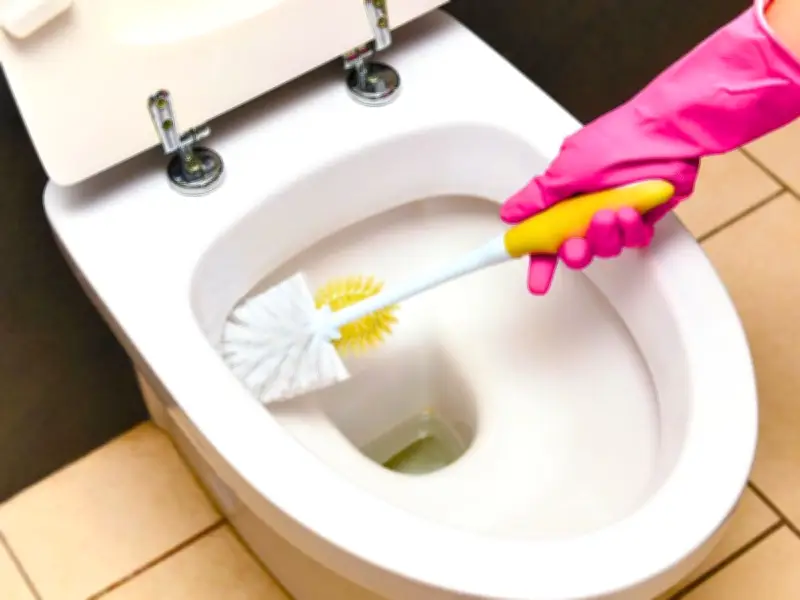
Pour one product into the toilet bowl and leave it for 30 minutes. Longer sitting time allows it to break down limescale and bacteria more effectively. Then scrub with a toilet brush and flush. The entire process takes about five minutes and leaves the toilet gleaming without any bleach.