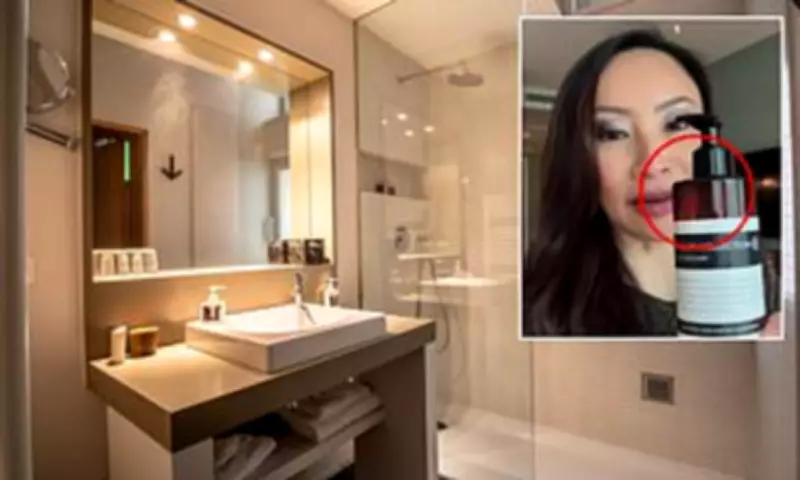
Complimentary toiletries in hotels have long been part of the overnight accommodation guest experience. While some hotel visitors delight in using, and perhaps even pocketing, the free mini bottles of body wash or shampoo, one Australian dermatologist has advised thinking twice before using these courtesy products.
Dermatologist's Warning on Combined Products
Dr Leona Yip, a consultant dermatologist at Skin Partners in Brisbane, was recently on an overseas work trip when she spotted a combined two-in-one body wash and shampoo product supplied in her hotel bathroom. 'My dermatologist travel rule: Don't trust the random hotel body wash,' she said. Accordingly, the skin and hair expert shared a timely video reminder about why people should reconsider automatically using these hotel product freebies for the sake of their hair and skin health.
'I'm staying at a hotel in Amsterdam and I found this in the bathroom. It's a combined shampoo and body wash - so a two-in-one,' she explained in a recent video shared to her Instagram account. 'Would I use it? Well, respectfully, if I put my dermatologist hat on - no.'

Why Combined Products Are Problematic
Dr Yip explained that the reason she would not suggest using combined wash products is because, ultimately, 'they're designed for convenience,' and that one formula trying to cater to cleansing both skin and hair is inevitably a 'compromise.' 'It can be more stripping to your skin barrier than what is actually ideal,' she said. The expert added that using this type of product when traveling can be additionally problematic because your skin is already in a more vulnerable state. 'Particularly when you're travelling, your skin barrier already tends to be weakened with travel environments,' Dr Yip said. 'And if you've used these combined products before, you would have noticed that it often leaves your hair feeling quite dry and quite tangled.'
Fragrance and Individual Needs
Dr Yip also observed that many hotel-supplied wash products tend to be 'quite heavily fragranced,' which is a common culprit of skin irritation. She noted that while some hotels provide separate shampoo, conditioner, and body washes, she would still suggest preferencing use of your own products that are more likely to be tailored to your hair and skin type, whereas hotel toiletries are generally designed to be 'one size fits most.' 'Most people have very different requirements - so bring your own, when you can.' The caption accompanying the video echoed this message: 'As a dermatologist, one of my most consistent travel habits is bringing my own shampoo, conditioner and body wash. Not because hotel toiletries are "bad", but because skin, scalp and hair are incredibly individual. Most hotel products are designed to work reasonably well for the majority of guests, whereas I know how my own skin and hair respond to certain cleansers, fragrances and conditioning ingredients - especially after flights, air conditioning and climate changes.'
Bacterial Risks from Refillable Dispensers
Dr Yip's video has been viewed thousands of times, with fellow Australian dermatologist Dr Lisa Byrom saying she '100 percent agrees' with the message. The latest hotel toiletry advice comes off the back of other recent cautionary messages advising against the use of wall-mounted hotel wash product dispensers. Lori Greiner, an entrepreneur best known for her appearances on Shark Tank, who travels extensively for work, recently urged fellow travellers to avoid the 'wall-mounted refillable containers with soap and shampoo,' which are nowadays commonly found in hotel bathrooms. 'Yes, they look safe, clean and sealed. But when researchers tested the refillable soap dispensers in 20 hotels, 75 per cent had bacterial levels way above what's considered safe for your skin,' she said in a recent video. 'And most of the time, they're just refilled, not cleaned out, which means bacteria can build up inside.'

Study Findings and Other Hotel Items
In recent years, many hotel chains have switched from mini bottled toiletries to large wall-mounted, refillable bottles or dispensers. This change is often promoted as environmentally friendly, helping to reduce unnecessary plastic waste, but it is also a savvy cost saver for hotels. However, as summarised by public health professor Dr Alex Sundermann in a TikTok video, a study analysing these dispensers revealed the alarming statistic that over 70 per cent of samples contained bacteria. The study looked at samples from 40 rooms across 20 hotels, all rated three or four stars. The US-based Associate Professor in Epidemiology also noted that bacteria may thrive due to cross-contamination when these dispensers are refilled, since new product is constantly being topped up rather than dispensers being thoroughly cleaned. The soap dispenser was not the only supplied hotel bathroom item Lori suggested avoiding for health reasons; she also recommended skipping the hotel hair dryer. 'It's one of the most handled and least disinfected items in the entire room,' she explained. 'Guests touch it with unwashed hands, place it on bathroom counters, and it rarely gets deep cleaned between stays. When researchers tested them, bacterial levels were significantly higher than personal hair dryers used at home,' she concluded. The Shark Tank investor ended the video with a final word of caution: 'Think twice before using what looks clean. Share this with someone who travels a lot.'