
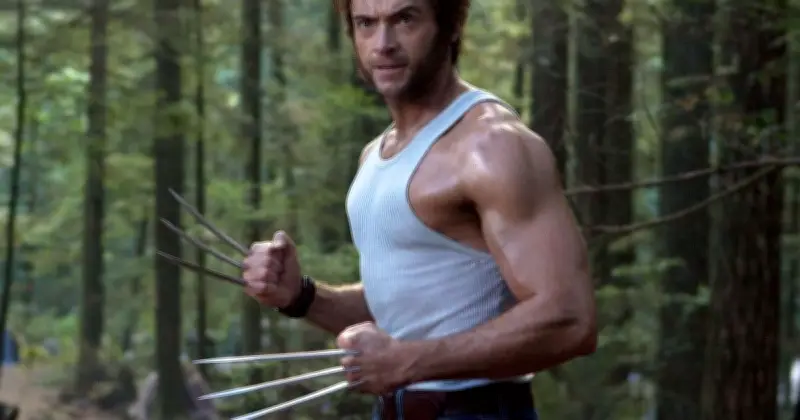
Humans may possess hidden healing powers similar to Marvel superhero Wolverine, according to scientists who believe our bodies could have an untapped ability to regenerate damaged tissue. For centuries, the inability to regrow lost limbs and body parts has been seen as one of the defining limitations of humans and other mammals. While creatures such as salamanders can regenerate entire limbs, people usually heal injuries by forming scar tissue.
But researchers at Texas A&M University's College of Veterinary Medicine and Biomedical Sciences believe humans may still retain dormant regenerative abilities that have simply been switched off. Their findings, published in the journal Nature Communications, suggest the body's own healing cells can be reprogrammed to rebuild damaged tissue rather than create scars.
Groundbreaking Research on Regeneration
Professor Ken Muneoka said: "Why some animals can regenerate and others, particularly humans, can't is a big question that has been asked since Aristotle." In experiments on mice, scientists developed a two-stage treatment that successfully regenerated bone, ligaments and joint structures following amputation. The regenerated tissue was not a perfect replacement, meaning humans are still a long way from matching Wolverine's comic-book ability to instantly regrow body parts.
However, researchers say the findings suggest regeneration in mammals may be far more achievable than previously believed. Normally, injuries in mammals trigger fibrosis, a process in which fibroblast cells rapidly close wounds and create scar tissue. While this helps protect the body, it also prevents missing structures from being rebuilt.
How the Treatment Works
In regenerative species such as salamanders, similar cells instead form a structure known as a blastema, which acts as a platform for tissue regrowth. Scientists used two naturally occurring growth factors to persuade mouse cells to follow this regenerative pathway. The first treatment encouraged the formation of a blastema-like structure after the wound had healed. A second treatment then instructed those cells to begin building new tissue.
Prof Muneoka said: "It's as if these cells can move in two different directions. They could either make a scar or make a blastema." Researchers say one of the most significant discoveries is that the necessary stem cells already appear to exist within the body. Prof Muneoka added: "You don't have to actually get stem cells and put them back in. They're already there - you just need to learn how to get them to behave the way you want."
Challenging Long-Held Assumptions
Professor Larry Suva, who also worked on the study, said the findings challenge long-held assumptions about the limits of mammalian healing. He stated: "The capacity is not absent - it's just obscured." Although still at an early stage, scientists believe the research could eventually lead to treatments that reduce scarring and dramatically improve healing after serious injuries.
Rather than a lost biological ability, the team believes regeneration may be a dormant power that remains hidden inside mammals - including humans. Suva concluded: "This changes the way we think about what's possible. Once you show that regeneration can be activated, it opens the door to asking entirely new questions."




