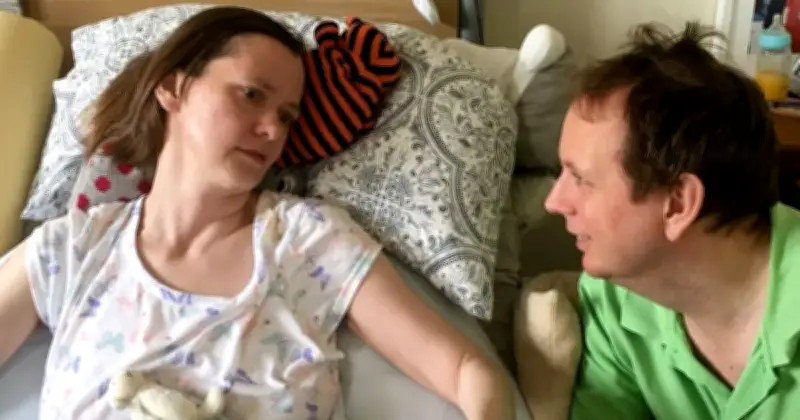
John Camidge, 60, from Wokingham, Berkshire, has witnessed the devastating impact of Gerstmann-Straussler-Scheinker disease (GSS), a rare and fatal prion disorder that claimed the lives of his grandmother, mother, sister, and two uncles. Now, he is urgently appealing for £10 million to fund clinical trials of a groundbreaking treatment that could offer hope not only for prion diseases but also for Alzheimer's and Parkinson's.
Family History of Tragedy
John's grandmother died of GSS in the 1970s, followed by his mother in 1980 when John was just 13. His two uncles passed away in 1975 and 1997. The most devastating loss was his sister, Diana, who inherited the gene mutation and died in 2016 at age 46. John described the ordeal: “It has devastated the family. These loved ones passed away through no fault of their own, it's just unlucky. My mother was one of four siblings — three died from the illness.”
Diana's symptoms began in early 2016 with weight loss, clumsiness, and difficulty following conversations. Her speech slurred, and she experienced brain fog, mood swings, and anxiety. The diagnosis was confirmed in April 2016, and her disease progressed rapidly. In her final month, she suffered from difficulty swallowing, seizures, and pain. She died peacefully on September 4, 2016, with John and her best friend by her side.
Genetic Risk and Personal Sacrifice
GSS is caused by a mutation in the prion protein gene, and a person with the mutation has a 50% chance of passing it on. John underwent genetic testing in 2005 and discovered he had not inherited the mutation. However, the fear of passing on the disease led him to decide against having children. “I didn't want to bring children into this world with the illness. It really dictates how you live your life,” he said.
Hope for a Cure
Prion diseases, including Creutzfeldt-Jakob disease (CJD) and variant CJD (the human form of mad cow disease), are currently incurable and cause up to 150 UK deaths per year. However, a small trial of a world-first treatment, PRN100, showed “very encouraging” results four years ago. Six CJD patients at University College London Hospitals NHS Foundation Trust received the drug, which was found to be safe and able to reach the brain. Disease progression appeared to stabilise in three patients when dosing levels were in the target range, but larger trials are needed to confirm efficacy.
Professor John Collinge, director of UCL’s MRC Prion Unit, said: “CJD and other prion diseases are relatively rare, but devastating, causes of dementia. They are invariably fatal, usually in a few months from diagnosis, with no treatment at present. But there is now a unique opportunity. After over two decades of world-leading scientific research, PRN100, a groundbreaking antibody treatment that has shown extremely promising early-stage results in patients with CJD, could now make a cure possible. With the scientific and clinical expertise in place and the regulatory environment clear, all that is stopping us progressing is the financial commitment to carry PRN100 through to full clinical trials.”
Fundraising Efforts
John is now fundraising director for the Cure CJD campaign, which aims to raise £10 million for the next phase of PRN100 testing. He has raised £60,000 through the Diana Camidge Foundation, established in his sister's memory. “It feels frustrating. We are close but we just need £10m to fund the trial. If it could be funded through government, fantastic, but we all understand that money's short. If not, we're hoping that there's a donor, somebody out there that can help us, or pharmaceutical companies that can help us run the trial,” John said.
The charity hosted an event in Parliament earlier this month to highlight the urgent need for funding. Campaigners believe that further development of PRN100 could also benefit patients with Parkinson’s and Alzheimer’s disease, as the mechanisms of protein misfolding are similar.