

Scientific Breakthrough: Bonobo Demonstrates Capacity for Pretend Play
For decades, the ability to engage in pretend play has been considered a uniquely human trait, fundamental to creativity and abstract thought. Now, a landmark experiment suggests this cognitive capacity might extend beyond our species. Researchers have documented compelling evidence that an ape can distinguish between reality and imagination, challenging long-held assumptions about animal cognition.
The Imaginary Tea Party Experiment
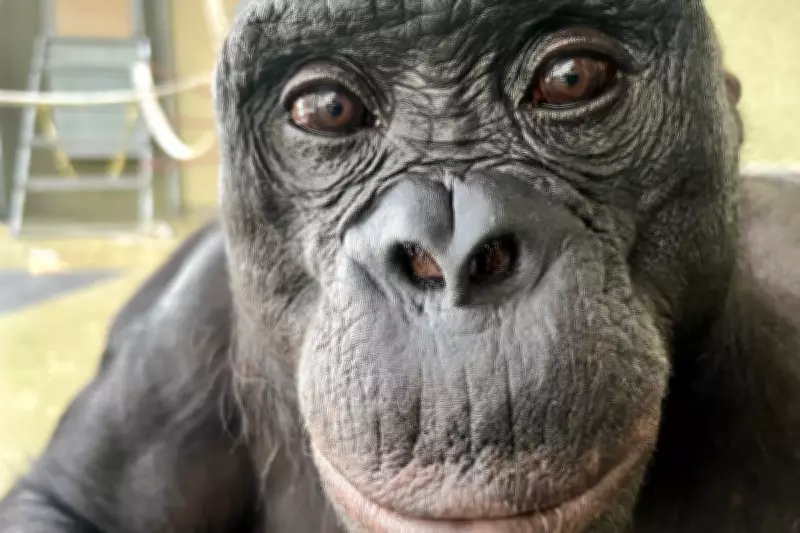
Scientists adapted methodologies typically used to study young children to investigate whether apes possess imaginative capabilities. The research focused on Kanzi, a bonobo raised in laboratory conditions who had previously demonstrated remarkable communication skills using graphic symbols and tool-making abilities. The central question was whether Kanzi could comprehend and participate in pretend scenarios.
Researchers staged an imaginary juice party, pouring pretend liquid from a pitcher into two cups and then pretending to empty just one container. When asked to choose which cup he wanted, Kanzi consistently pointed to the cup containing the imaginary juice approximately 68% of the time. This suggested he could track the pretend scenario despite the absence of actual liquid.

Distinguishing Reality from Imagination
To eliminate the possibility that Kanzi was simply confused or imitating researchers, scientists conducted control experiments with real juice. In these tests, Kanzi chose the actual juice over the pretend alternative nearly 80% of the time. "This demonstrates he genuinely understands the difference between real and imaginary substances," explained study co-author Amalia Bastos from the University of St. Andrews.
Additional experiments involving fake grapes placed in jars yielded similarly positive results, strengthening the evidence that Kanzi could maintain mental representations of absent objects. These findings suggest apes may possess cognitive architectures capable of supporting imaginative thought processes previously believed exclusive to humans.
Scientific Debate and Limitations
Not all experts are fully convinced that Kanzi's behavior constitutes pretend play in the human sense. Michael Tomasello, a comparative psychologist at Duke University, noted there's a significant distinction between recognizing pretend scenarios created by others and actively generating pretend scenarios independently. "To be fully convinced, we would need to observe Kanzi initiating pretend actions himself, such as pretending to pour water," Tomasello commented.
Researchers acknowledge important limitations in their study. Kanzi's unique upbringing among humans makes it difficult to determine whether his abilities reflect broader ape cognition or result from specialized training. Additionally, Kanzi passed away last year at age 44, preventing further direct investigation with this particular subject.
Broader Implications for Understanding Animal Cognition
"What's truly exciting about this research is that it suggests the roots of imagination may not be unique to our species," said study co-author Christopher Krupenye of Johns Hopkins University. The findings open new avenues for understanding the evolutionary origins of creative thinking and abstract representation.
Previous anecdotal observations had hinted at imaginative capacities in apes, including wild chimpanzees carrying sticks as if they were infants and captive chimps dragging imaginary blocks. However, these behaviors could potentially be explained by imitation or confusion rather than genuine pretend play. The current study provides more controlled evidence supporting imaginative capabilities.
With many great ape species facing critical endangerment in the wild, this research underscores the urgency of studying their cognitive capacities before opportunities are lost. "Kanzi has pioneered a path for numerous future studies exploring the boundaries of animal imagination," Bastos emphasized. The research, published in the journal Science, represents a significant step toward understanding the shared cognitive heritage between humans and our closest primate relatives.






