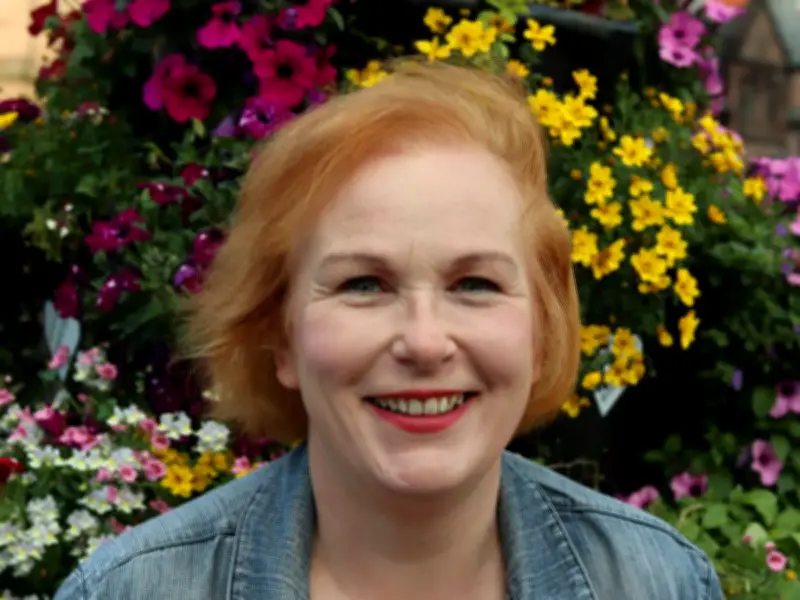
Cath Holland, 57, from Birkenhead, describes the death of her husband Andy as feeling like a physical assault. She expected to feel sad but was unprepared for the overwhelming force of grief that followed his death from bowel cancer in August 2019 at age 53.
Meeting Through Music
Cath met Andy in Liverpool's vibrant music scene in June 1994. She was a music writer, and he was a musician. They shared a love of live music and record collecting and were married seven months later. They bought a home in Birkenhead and lived happily for nearly 25 years.
“He was a very quiet, gentle man, very cultured, very well-read,” said Cath. “Everyone who met him said he's just a really nice man.”
The Diagnosis
In December 2017, Andy had been experiencing stomach problems initially thought to be irritable bowel syndrome (IBS). When the discomfort persisted, he underwent a colonoscopy. Two days before Christmas, doctors told them they were 80% sure there was a tumour in his bowel.
A further scan confirmed bowel cancer. Doctors were optimistic about treatment, describing a “rocky few months” but saying the cancer was treatable. Andy underwent radiotherapy, which significantly shrank the tumour in his bowel. However, smaller tumours appeared on his liver.
Chemotherapy followed to shrink the liver tumours for potential surgery. A year after diagnosis, a scan showed good news: all tumours had shrunk, and surgery was possible. But a week later, the consultant called them back.
“He said, unfortunately, we've looked at your scans again and we can't operate. We can't remove the big tumour because of where it is,” said Cath. They were told only palliative care remained.
“When you get married to someone, or you buy a house with someone, you expect it to be for the rest of your life,” said Cath. “We got together in our twenties, we expected to be growing old together. It's like a bit of a cliché, but that was what had been taken from us. I always say our future was robbed from us.”
End-of-Life Care
Andy was placed under hospice care and supported by district nurses. During his final months, the hospice team guided them through difficult conversations, including a DNAR (Do Not Attempt Resuscitation) decision.
Cath recalls the GP asking Andy where he wanted to die. “Andy said straight away, I want to die at home. It's one of those questions that no one ever wants to be asked, where do you want to die? But it was very, very important to him and to me that our wishes were being taken into account.”
As Andy's health declined, he became confused during infections. “We were in the hospital once because he had to be taken in the middle of the night with a really bad temperature. He didn't know who I was. He said, 'You know you and me. Are we married?' I said yes. He said, 'Oh, I thought we were.'”
A male district nurse explained the reality of resuscitation. “It's not like the Hollywood movies where people are resuscitated, and then they cough and sit up, and they're awake. There's lots of consequences to resuscitation that we don't usually think about, especially with someone as poorly as Andy.”
The Grief
Andy died at home on August 16, 2019, aged 53. Until his death, only family and close friends knew he was ill. As Cath told more people, she was surprised by the force of her grief.
“I expected to feel sad, and just feel really, really sad,” said Cath. “I did not expect it to be like a physical assault. I did actually feel like I'd been physically assaulted, because when you read all the websites about bereavement, or the books, they never mention this. I had severe memory loss. I couldn't remember anything.”
She experienced night terrors and panic attacks, but memory loss frightened her most. “I couldn't remember anything. I remember I got on a bus once and got off at the wrong stop, and I was like, 'Where am I?' It is a natural thing, but I just wish I'd known about it.”
Finding Support
Five months after Andy's death, Cath reached what should have been their silver wedding anniversary. She turned to bereavement support and the hospice chaplain who officiated Andy's funeral.
“I used to speak to her a lot. And I don't think you need to have faith to get good support from the chaplain. She was absolutely fantastic. The bereavement support was interesting because it's not official counselling, but you could talk about things, how you're feeling and then what your plans for the future are.”
Cath became involved with charities Widowed and Young and The Widowed Collective. “The good thing about both of those organisations is that you meet other widows, and the fact that you're widowed could be the only thing you've got in common. But it's one heck of a thing to have in common.”
She adds: “You can talk to people in your personal life, but they don't really understand it unless they've been through it.”
Keeping His Memory Alive
Seven years after Andy's death, his ashes remain in an urn at their home. Cath has built a Beatles shrine for him, as he was a big fan. “I think, so soon after he died, I wouldn't have thought that was a good idea, but it really works for me. Some people prefer to just dispose of the ashes and move forward, but I actually really like having his ashes here.”
Grief, she says, is always present. “It always flares on significant days, like yesterday was the anniversary of our first date, so that was a bit bumpy. You've got your wedding anniversary, your first date, the anniversary of his death, his birthday, so you get these anniversaries that are all the way through the year. And sometimes they're easier to cope with than others, but it's never predictable. You can't say every year it gets easier because I don't think it necessarily does... in some ways it can be more challenging because you think he's moving further into the past.”
Rebuilding Life
Since Andy's death, Cath has changed jobs to work in communications, which she says has been a healthy move. Regular exercise and not shutting herself away have also helped. She stresses the importance of continuing to talk about a loved one after they die.
“I'll always be sad because I do have this mindset that we had our future stolen from us – but I've still got mine,” said Cath. “And I know he would be really proud of how far I've come, and the things that I'm doing now. I've got that to hold on to.”