
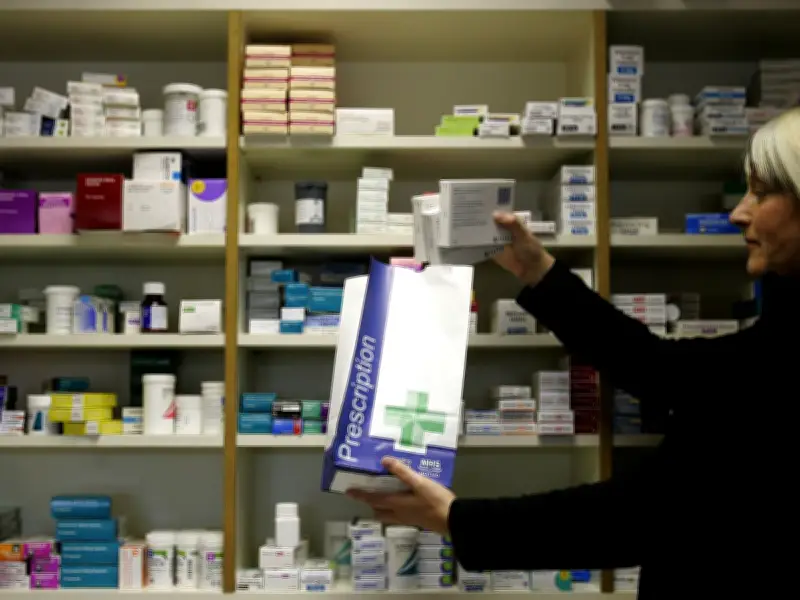
Health leaders have issued an urgent warning that medicine shortages across England are among the "most severe" ever experienced in the UK. Patients risk "life-threatening consequences" if they miss even a single dose of medication, particularly those with conditions such as epilepsy, pancreatic cancer, cystic fibrosis, and menopause symptoms.
Pharmacists and GPs Report Worsening Shortages
Pharmacists and GPs report that shortages of commonly prescribed medicines, including painkillers, blood pressure drugs, and epilepsy medications, are becoming more frequent and lasting longer. The National Pharmacy Association (NPA), representing around 6,000 independent community pharmacies, warns that these shortages now pose a "serious risk to patient safety."
A new NPA survey reveals that 96 per cent of pharmacies believe shortages pose a serious risk to patient safety, while 89 per cent are unable to dispense medicine at least once a day due to supply problems. Additionally, 98 per cent of pharmacies have encountered patients who visited multiple pharmacies in a single day trying to source a prescription, and 83 per cent have experienced abuse from frustrated patients.
Patients Rationing Medicines and Skipping Meals
Pharmacists report that patients are rationing medicines and, in some cases, skipping meals because they cannot access treatment. One pharmacist told the NPA they were "experiencing the most amount of shortages I have known for the past 30 years." Olivier Picard, chair of the NPA, stated: "This data confirms what pharmacists and GPs have been experiencing for many months; medicine shortages are becoming more frequent, lasting longer and causing increasing disruption for patients. These shortages are some of the most severe the UK has experienced."
Picard added: "It is deeply distressing to find patients who have travelled from pharmacy to pharmacy to find the medicines they need without success. Although medicine shortages are frustrating and worrying, we are clear that in some instances they pose a serious risk to patient safety."
Call for Emergency Taskforce
The NPA is urging the government to convene an emergency taskforce to tackle the issue. Pharmacists in Greater Manchester say shortages continue to affect patients, resulting in missed medication and uncertainty. TV pharmacist Thorrun Govind, based in Manchester, said: "It's very difficult seeing patients breaking down in front of you because they have come and their medication isn't there."
Specific Cases: Creon and Epilepsy Drugs
Among the most concerning cases is Creon and other brands of Pancreatic Enzyme Replacement Therapy (PERT), used for pancreatic cancer and cystic fibrosis. A Serious Shortage Protocol has been in place since May 2024 and extended until July 10, 2026, meaning supply disruption will last over two years. Charities representing vulnerable patients have raised concerns. Alice Billin, head of policy at Cystic Fibrosis Trust, said access to medicines is "critical," and shortages have had a "huge" impact on patients' physical and mental health. Anna Jewell from Pancreatic Cancer UK noted difficulties obtaining PERT cause "significant distress and anxiety."
Shortages also affect epilepsy medications. Clare Pelham, chief executive of Epilepsy Society, said: "Epilepsy is a cliff-edge condition which means that missing even a single dose can have life-threatening consequences. We are calling on the UK Government to ensure their essential medicine supply chains are robust and water-tight."
Calls for Legislative Changes
The NPA is calling for changes to legislation preventing pharmacists from making simple substitutions when prescribed medicines are unavailable. Currently, patients often have to return to their GP for an amended prescription, causing further delays. Professor Victoria Tzortziou Brown, President of the Royal College of GPs, supports allowing pharmacists to make limited changes with appropriate safeguards.
These warnings follow NHS England chief executive Sir Jim Mackey's recent comments that he was "really worried" about medicine supply issues linked to rising costs and global disruption. The UK imports 75 per cent of its medicine, leaving it vulnerable to international supply chain problems. Despite growing concern, NHS leaders advise patients to order repeat prescriptions as normal and not to stockpile medicines.




