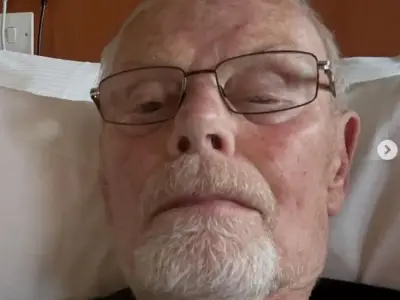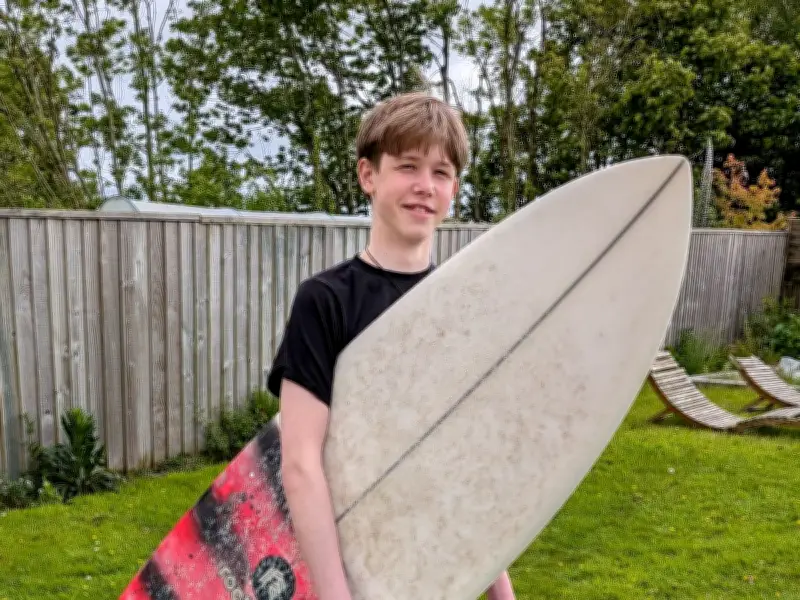
Ruben Shears, a 14-year-old from Cornwall, England, survived a catastrophic stroke just one week after a seemingly innocuous fall on a trampoline. He was found collapsed on his bathroom floor by his parents on June 15, 2025, after suffering a major stroke caused by a torn carotid artery.
The Fall and Initial Symptoms
On June 4, 2025, Ruben fell heavily on a trampoline during a two-day basketball residential trip, injuring his neck. He appeared to faint during a cross-country run on June 10, but scans five days later revealed he had already experienced a mini stroke. He stayed off school for the rest of the week with headaches and faintness.
His father Andy Shears, a carpenter, said the active teenager—who dedicated eight hours a week to basketball, jujitsu, and surfing—might have sustained the injury through these sports as well.

The Stroke and Emergency Response
On June 15, Ruben's parents Andy and Chantal Shears returned from walking the dog to find him semi-conscious on the bathroom floor. He was shaking, the left side of his face had drooped, he couldn't move the left side of his body, and his speech was slurred. They called an ambulance, and Ruben was rushed to the Royal Cornwall Hospital in Truro.
A CT scan confirmed a stroke caused by a tear in a carotid artery, which carries blood to and from the brain. Medics believed the tear resulted from a high-impact incident, with Ruben recalling the trampoline fall a week earlier.
Nine Mini Strokes in Two Hours
At the hospital, Ruben suffered nine mini strokes—called transient ischaemic attacks (TIAs)—in two hours. He was transferred to Southmead Hospital in Bristol for specialist treatment. Doctors gave him blood thinners and blood pressure medication, but two days later he suffered 10 more mini strokes. The main clot, 2.5 centimeters long, was removed in a four-and-a-half-hour operation called a thrombectomy.
During the procedure, a camera and tiny tools were inserted through his femoral artery in his thigh and traveled to his neck to remove blood clots and place a two-inch stent to strengthen the damaged carotid artery. Seven smaller clots broke off during the operation, and one had to be removed from his brain.
Recovery and Rehabilitation
Ruben spent five weeks at Bristol Royal Hospital for Children relearning how to move. He had to lie flat for ten days after surgery. When he woke, he had no movement on his left side, but two days later, his father felt his left hand squeeze his. "It was such an emotional moment," Andy said.
Ruben has since regained full movement but tires easily and cannot engage in sports as intensely as before. His speech is slightly slower, and he continues to struggle with tiredness.
A 'Miracle' Survival
Andy described the ordeal as "horrendous" and "such a shock." He said: "We're so lucky he's alive. It was like being brought to the edge of an abyss. You don't know what's going to be on the other side. We were overwhelmed with fear."
Doctors noted that a small blood vessel in Ruben's brain was feeding the right side from the left, keeping him alive. Andy called this "a miracle." He added: "I watch him playing with his brothers and feel so lucky. This has really woken me up to how lucky we are to have the NHS."
Understanding Carotid Artery Dissection
Ruben's major stroke was caused by carotid arterial dissection, where blood gets caught between the layers in a torn artery lining and clots, causing a blockage called an occlusion. Around 400 children in the UK are diagnosed with a stroke each year, according to the Stroke Association.
Mini strokes, or TIAs, were caused by bits of the clot breaking off and traveling to his brain. Warning signs of a stroke can include headaches, neck pain, and faintness. Carotid arterial dissections can be caused by high impact, including vigorous sports, or arterial wall weakness.
Family's Gratitude
Andy expressed gratitude to the medical teams: "We honestly can't thank the medical teams enough. I watch him playing with his brothers and feel so lucky." He also acknowledged the parent guilt he felt: "I tore myself up with parent guilt—I've always pushed them to do sport. You think you're doing the right thing by them but you just never know what's going to happen."

He credited Ruben's competitive nature for aiding his recovery: "I think that competitive nature helped him with his recovery because he's good at setting goals for himself to meet. It blows my mind how fully he has recovered, he's amazing!" The family's faith also played a role: "We have a strong faith as a family, and prayed together throughout this, and that really helped to get us through."