
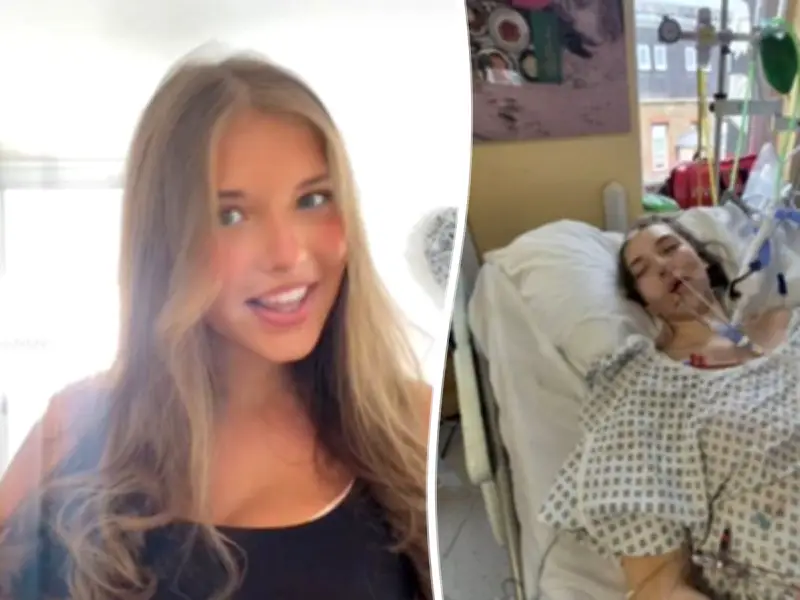
A 17-year-old from London who dismissed her headaches as dehydration during a heatwave was diagnosed with a ruptured brain tumour. Danielle Andersen experienced severe pain for five days before attending A&E in July 2025.
Misdiagnosis and Discovery
At Princess Royal University Hospital in Locksbottom, a consultant noticed unusual eye tracking. A CT scan revealed a dermoid cyst, a benign slow-growing tumour present from birth. Doctors initially suspected a migraine.
Danielle, a student and dancer since age seven, had just secured a place at a London performing arts college. She delayed surgery to settle into her first term. "I didn't want to go in as the person with a brain tumour," she said. "I just wanted people to know me."
Surgery and Complications
She was referred to King's College Hospital at Denmark Hill. The family was told the operation carried odds of 100 to one against anything going wrong. Danielle attended every class without missing a day and danced the week before admission on December 15, 2025.
During the craniotomy, surgeons cut three blood vessels, causing a stroke. When Danielle came round, her left arm did not rise to remove her breathing mask. Four days later, she was completely paralysed down her left side, with her right eye shut and head drooping. "We had been told she'd be home by the 22nd of December," said her father Justin. "We didn't leave the hospital until February 19."
Recovery Through Neuroplasticity
Doctors doubted she would ever dance again or regain full use of her left hand. The family rejected that prognosis. Recovery relied on neuroplasticity—rebuilding neural pathways. Family members physically moved her toe, foot, knee, and arm, repeating each movement a hundred times a day, alongside NHS and private neurological physiotherapists.
"The physios said Danielle is only getting through this so quickly because her whole family is on board," Justin said. Six months on, Danielle has started running, jumping, and picking up dancing again. She dropped out of her first year but is restarting in September alongside her younger sister Charlotte, 16, who also secured a place at the same college.
Fundraising and NHS Response
The family is fundraising via GoFundMe for intensive private neurological physiotherapy. Standard NHS stroke rehabilitation targets everyday functional recovery, but specialists say a dancer needs six hours of rehabilitation daily—beyond NHS capacity.
A spokesperson from King’s College Hospital NHS Foundation Trust said: "We were very sorry to hear that Danielle is unhappy with the care she received. We have responded to the family’s complaint, but we are also keen to meet with them to discuss their concerns further. Skull base neurosurgery is a highly complex procedure, and as a result, it carries potential risks. Providing the safest and most appropriate surgical care is a balance between managing those risks, and the benefits of treatment. This approach is explained in detail to patients during the pre-operative stage of their care. It is a vital part of the consent process, and is fully documented as having occurred in Danielle’s case."




