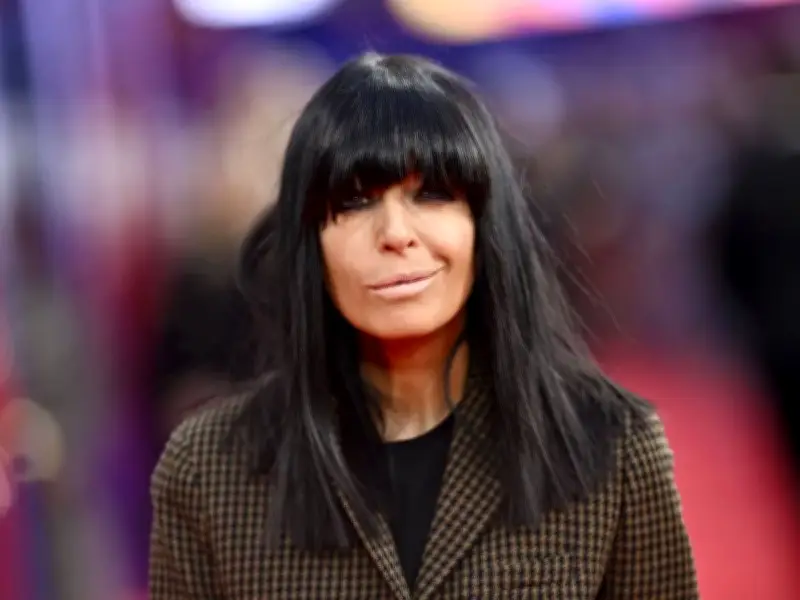
Concerns have been raised about Celebrity Traitors host Claudia Winkleman's health after an eye surgeon highlighted a potential issue linked to her long-standing myopia, or short-sightedness. The condition, which affects around one in three people in the UK, is becoming increasingly common, and the surgeon warns it could impact nearly five billion people globally by 2050.
Surgeon's warning on rising myopia rates
Consultant ophthalmic surgeon and founder of Blue Fin Vision, Mr Mfazo Hove, said short-sightedness is on the rise, particularly among children across the UK. He explained that the main symptom is the same at any age: distance vision becomes blurred, while nearer objects usually remain clearer.
"Adults usually spot it quickly, because road signs, the television or faces across a room start to look soft. Children may not complain. They often assume everyone sees the way they do, so parents and teachers have to watch for clues," Hove said. These clues include squinting, sitting close to the TV, holding a tablet near the face, losing interest in the board at school or in ball sports, and eye rubbing or headaches.
Winkleman's candid admission
The 54-year-old presenter has been open about her struggles with the condition, revealing it has led to her walking into walls, stopped her from driving, and made reading a challenge. Even after two operations to improve her sight, she admitted certain problems remain, especially with reading.
In 2021, Winkleman told The Sun: "I can't even begin to tell you how blind I am. It's embarrassing. I can't read the autocue. My eyes have deteriorated so badly, I'm not meant to drive. I am doing the wrong job."
Impact on children and adults
Hove noted that in children, myopia typically worsens as the eye continues to elongate during development. "The earlier it starts, the higher it usually ends up. Higher myopia carries a greater lifetime risk of retinal detachment, myopic macular degeneration and glaucoma," he cautioned.
He added: "That is why we monitor eye length alongside their prescription, so we can assess progression rather than simply update their glasses. In adults, myopia is usually more stable. A new or sudden change in short-sightedness in adulthood should always be checked by an eye specialist, because it can be an early sign of cataract or changes in blood sugar."
Hove also highlighted the "growing burden" of short-sightedness among adults. Roughly a quarter of the world's population was myopic in 2000, with forecasts indicating this could climb to approximately half the global population by 2050—nearly five billion people. "Much of this reflects short-sighted children growing into short-sighted adults, because myopia that starts in childhood does not go away," he said.
"Some adults also develop myopia for the first time, while others continue to become more short-sighted, particularly during their twenties. That is why the focus is increasingly on childhood. Slowing progression early is an important way to reduce the number of adults living with high myopia and its complications."