
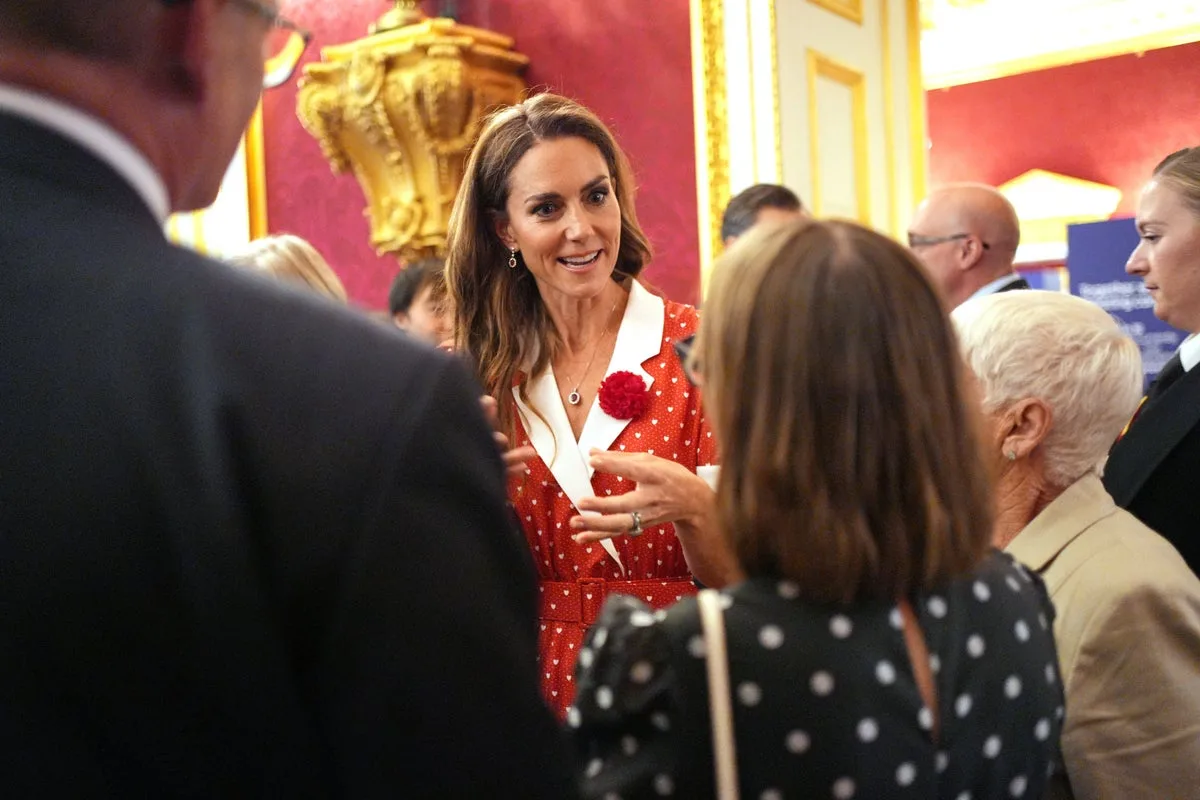
The King, Queen and Princess of Wales have attended a reception at St James’s Palace in London to mark the 125th anniversary of Cancer Research UK. Charles, who is patron of the charity, hosted the event, which brought together researchers, clinicians, volunteers and partners involved in the charity’s work on cancer prevention, diagnosis and treatment.
Immersive installations showcasing the charity’s work and visual representations of how technological innovation is transforming research into the disease were on display. The Duke and Duchess of Gloucester also attended, with the duke serving as joint president of Cancer Research UK.
Kensington Palace announced Kate’s attendance on Tuesday morning. The princess was diagnosed with an undisclosed form of cancer early in 2024, underwent chemotherapy, and revealed she was in remission 16 months ago in January 2025. She returned to international travel last month with a solo working trip to Italy as part of her early years work.
The King, who is still receiving treatment for an undisclosed form of cancer, previously said he was “so proud” of Kate for her courage in speaking out about her diagnosis. The charity’s work dates back to the founding of its predecessor organisations, the Imperial Cancer Research Fund (1902) and the Cancer Research Campaign (1923).
Latest NHS England statistics show that 72.8% of patients began their first definitive treatment for cancer within 62 days of an urgent referral in March, up from 68.6% in February but below the 75% target. However, 79.4% of patients urgently referred for suspected cancer were diagnosed or had cancer ruled out within 28 days, above the 75% target.




