
The Department for Work and Pensions (DWP) has confirmed that people could still qualify for a Blue Badge even if they do not receive Personal Independence Payment (PIP) or other disability benefits with a mobility component. Many people assume a Blue Badge is only available to those with physical mobility problems or those claiming PIP or Adult Disability Payment (ADP), but under a rule change in 2019, local councils in Scotland, England and Wales can award a Blue Badge following an individual assessment - even where no disability benefit is in payment.
The change means people with hidden conditions, including autism, dementia and severe anxiety, may qualify for a Blue Badge if travelling causes overwhelming psychological distress or serious safety risks.
Minister Confirms Eligibility Beyond Benefits
Minister for Social Security and Disability Sir Stephen Timms explained in a recent written response to Lib Dem MP Will Forster that “eligibility for a Blue Badge is not limited to benefit awards”. He added: “While some people qualify automatically through certain mobility payments, others can apply directly through their local council and be assessed on how their condition affects their ability to make a journey.”
With more than three million Blue Badges in circulation across England and Wales plus over 235,700 in Scotland - awareness of the non-benefit route remains low, leaving some families unaware they could be entitled to support.
Two Ways to Qualify for a Blue Badge
Automatic eligibility applies for certain mobility benefit awards with no further council assessment needed. You automatically qualify if you:
- are under 16 and have a letter confirming your eligibility from your visual impairment care team
- are 16 or over and registered or certified as severely sight impaired
- get the higher rate of the mobility component of Disability Living Allowance (DLA)
- get PIP or ADP and scored 8 points or more in the 'moving around' area of your assessment
- get PIP or ADP and scored 12 points in the 'planning and following a journey' area of your assessment
- get PIP or ADP and used to get the higher rate of the mobility component of DLA on an indefinite or lifetime basis
- get PIP or ADP, used to get the higher rate of the mobility component of DLA, and your PIP or ADP decision is being appealed
- get ADP and have been awarded either 8 points or more in the moving around activity or 12 points in the planning and following a journey activity or enhanced rate mobility without reference to points
- get the higher rate of the mobility component of Child Disability Payment
- get War Pensioners' Mobility Supplement
- got a lump sum payment from tariffs 1 to 8 of the Armed Forces Compensation Scheme and have been certified as having a permanent and substantial disability
Further assessment is required if you do not have a qualifying benefit. The council reviews medical evidence and decides based on how your condition affects travel. If travelling causes overwhelming distress, panic or serious safety risks, you may still be eligible even if you do not claim disability benefits.
Other People Who May Qualify for a Blue Badge
If you are not automatically eligible, you may be able to get a Blue Badge in certain circumstances if you:
- have a substantial disability lasting at least 12 months that means you cannot walk at all
- have a substantial disability lasting at least 12 months that means you're virtually unable to walk
- regularly drive and cannot use parking meters because of a severe disability in both arms
- are responsible for a child under 3 years old who needs to be kept close to a vehicle for medical treatment
- are responsible for a child under 3 years old who uses bulky medical equipment that cannot be carried around
- have a mental health condition that means you lack awareness about the danger of traffic when making journeys
How to Apply for a Blue Badge
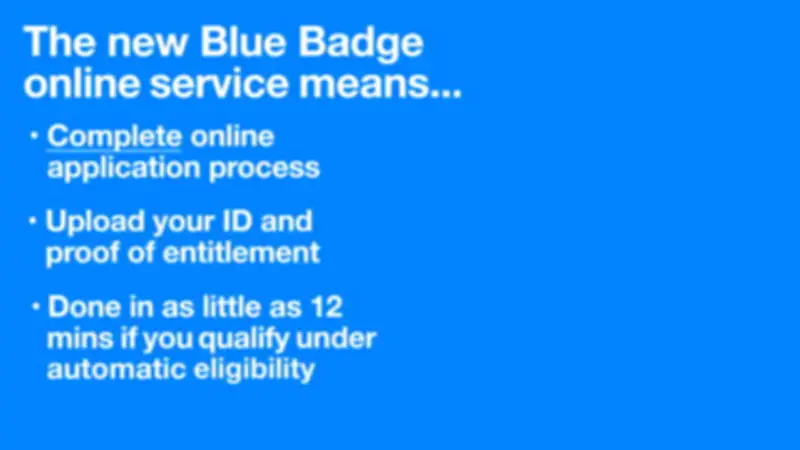
Applications are made online to your local council and you’ll need a recent digital photo showing your head and shoulders - you can take this picture yourself. You will also need a photo or scan of your: proof of identity (such as a birth certificate, passport or driving licence), proof of address such as a Council Tax bill or government letter (you can also choose to have your local council check the Electoral Register instead), and proof of benefits if you get any. You will also need to know your National Insurance number and the details of your current Blue Badge if you’re reapplying. Once you apply, your local council will process your application and give you a decision.
If Your Application Is Turned Down
Your local council should tell you why you’re not eligible. You can ask them to reconsider their decision if you think they haven’t taken into account some important information. You can also reapply if your disability or health condition becomes more serious. Apply for a Blue Badge on the mygov.scot website.




