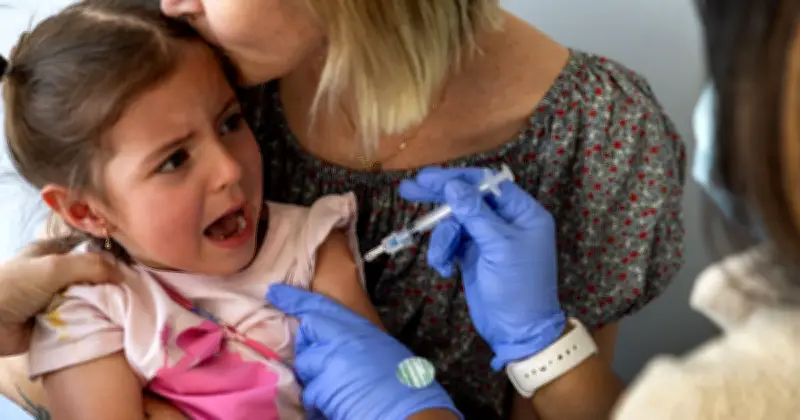
Labour's decision to axe funding for polio vaccines risks creating a pandemic that could hit the UK, experts have warned. Sarah Champion, Labour chair of the International Development Committee, is leading calls for Andy Burnham to reverse the decision, which was made under former Prime Minister Sir Keir Starmer and is due to come into force in December.
Polio detected in London sewage
It comes after the Polio virus was detected in London sewage on two occasions this year, despite being officially eradicated from Europe since 2003. The virus is highly contagious and while symptoms are often mild or non-existent, it can lead to permanent disability or death.
Cases have fallen from 350,000 worldwide in 1988 to fewer than 2,000 recorded each year, largely due to vaccinations.
UNICEF warning
However, United Nations agency UNICEF has warned that the UK’s decision to stop funding vaccinations could be disastrous. Ms Champion told the Sunday Express: “It’s deeply worrying that the UK is risking what UNICEF calls ‘a major global public health disaster’ by pulling out of this programme to eradicate polio.
“This cut will not kick in until the end of the year - so there is still time for ministers to reverse this decision, as part of what must be a wider rethink of the aid cuts by Andy Burnham’s new government.”
UK's contribution to GPEI
The UK has contributed £1.4 billion to the Global Polio Eradication Initiative (GPEI) since 1995. Foreign Office Minister Stephen Doughty told Parliament last year: “This has enabled GPEI to reduce wild poliovirus cases by over 99 per cent.”
However, the Government announced in March that it was axing this funding as part of cuts to the aid budget designed to allow more money to be spent on defence.
Global spread risk
UNICEF’s Representative in Afghanistan, one of the few countries where polio remains prevalent, has warned MPs that this could allow the virus to return. Asked about the impact of the UK withdrawing funding, Dr Tajudeen Oyewale said: “A withdrawal by any major donor from that partnership will weaken the whole system and it will lead to a global spread of world polio virus. Nobody wants that.”
He told Ms Champion’s committee: “That would be a major global public health disaster because all the progress we have made in eradicating a world polio virus that is now limited to just two countries, Pakistan and Afghanistan, it will spread because people are moving every day.”
Monitoring and vaccination rates
Wastewater from sewage plants around England is checked for the presence of polio regularly, and the latest finding was in March. More than nine in ten children in England are vaccinated against polio, as part of a “6-in-1 vaccine” protecting against a range of viruses, but takeup is lower among some ethnic minority communities.
Government response
A Foreign Office spokesperson said: "The UK is proud to be a leading donor to the Global Polio Eradication Initiative (GPEI), contributing over £1.4 billion since 1995 and helping to cut global polio cases by more than 99%. Our support has enabled over 20 million people to walk who might otherwise have been paralysed by polio.
"In a changing global landscape, the UK is making tough but necessary choices to sharpen its focus and leadership, focussing investment where we carry a significant burden‑share and can make the greatest contribution to global health outcomes. As part of this, we will continue to support GPEI through to the end of 2026. Beyond that point, the UK will continue contributing to global polio outcomes through our investments in WHO and Gavi."