
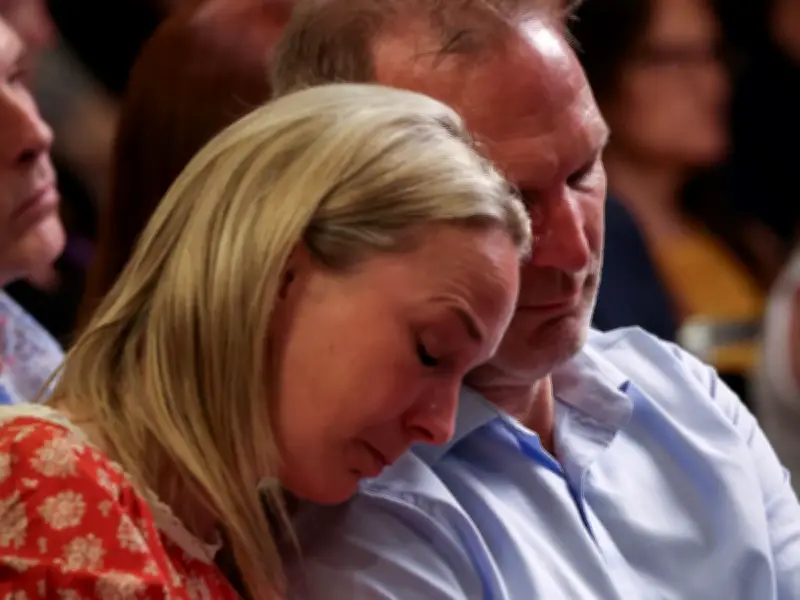
Grieving families have spoken out after a landmark report exposed how hundreds of mothers and babies were harmed by the NHS, with campaigners saying they "never wanted to be campaigners" but were forced to act because maternity staff and leaders failed to listen.
At a press conference on Wednesday, parents relived the worst moments of their lives in the hope of preventing similar tragedies. The inquiry, led by top midwife Donna Ockenden into Nottingham University Hospitals NHS Trust (NUH), is the biggest of its kind in NHS history. It found that 520 mothers and babies suffered potentially avoidable harm or death due to poor care.
Around 2,500 families agreed to take part, with about 2,000 consenting to be interviewed about events that shaped their lives. Many are now demanding a full statutory public inquiry.
‘We knew the system – the cover-up was horrific’
Senior physiotherapist Sarah Hawkins and her husband Jack, a hospital consultant, were both working at NUH when they were expecting their first child, Harriet, in 2016. They trusted their colleagues would look after them. As her labour stretched on for days, the couple made 10 calls to the maternity unit and visited twice, but were repeatedly told to stay at home and relax despite concerns that Mrs Hawkins could not feel the baby moving.
When she was eventually admitted on the sixth day of labour, midwives struggled to find Harriet’s heartbeat, and a scan revealed she had died. The trust initially said their daughter had died due to an infection, but Dr Hawkins, an infections expert, was sure there was no sign of this. An external inquiry eventually found 13 failings in the care provided and said Harriet’s death was “almost certainly preventable.”
Sarah said: “After Harriet died – the cover-up was horrific, we knew this because we knew the system.” Dr Hawkins said it is “appalling” that some staff at the trust chose not to participate in Donna Ockenden's review. Directly addressing former NUH colleagues, Mr Hawkins said: “We recognise that some of you have been expected to work in a constant state of crisis within a culture where bullying, intimidation and the fear of speaking up … too often felt normal.”
He added: “The fact that a significant number of senior staff chose not to participate in this review is appalling. You have demonstrated that maternity safety doesn't matter to you, that self-preservation does. It shouldn't have taken us as harmed and bereaved families to campaign for years and years, a decade, to be able to get some answers. And now we need accountability. And that's why we need the public inquiry.”
‘If you’d listened, hundreds of babies would still be alive’
Gary and Sarah Andrews lost their daughter Wynter in 2019, just 23 minutes after birth. NUH was fined £800,000 in 2023 after admitting failings in Wynter's care in a criminal prosecution brought by the Care Quality Commission (CQC). A “catalogue of failings” exposed Wynter and her mother to a “significant risk of harm.” Wynter died from a loss of oxygen flow to her brain that could have been prevented had staff delivered her earlier.
Gary, 38, told the press briefing: “If you'd listened to concerns, there would be hundreds of babies still alive. Wynter would still be here – and her brother would not be looking at a gravestone.” Sarah spoke of finding other campaigning families, saying it is “a club that nobody wants to be in,” but added she “couldn't think of better people to be in it with.”
‘We were advised to terminate our healthy baby due to testing error’
The report referenced the case of Carly Wesson, 43, and Carl Everson, 47, who terminated their pregnancy at 14 weeks after being wrongly told the foetus had Patau's Syndrome, a rare genetic condition often resulting in miscarriage, stillbirth, or early death. They were advised to consider termination by a foetal care consultant who said their baby, nicknamed “Ladybird,” would have severe care needs and might not survive the pregnancy.
Investigations later showed that Ladybird had been a healthy baby. The Ockenden report said: “For Carly and Carl, the weight of their loss is inseparable from the fact that decisions made were based on misinformation.” When they asked if their daughter would have survived, the doctor told them: “Well, you could have miscarried anyway.” The first test result had been a false positive, which a later investigation said is “a well-recognised hazard of early CVS results.”
‘The worst physical pain I’ve ever felt’
Emmie Studencki, 37, and Ryan Parker, 39, from Barrowby, Lincolnshire, lost their son Quinn in 2021. During Emmie's second pregnancy, she experienced bleeding and went to hospital three times but was sent home. During a fourth bleed, she lost more than two pints of blood and was taken to Nottingham by ambulance, but her notes were lost by maternity staff. Their requests for a caesarean section were denied.
No one informed them that she was suspected of having a placental abruption. A heart rate monitor showed Quinn’s heart fluctuating, a sign of distress, and Emmie developed severe pain. Although a doctor pressed the emergency button, a nurse refused an emergency C-section, encouraging Emmie to go for a walk instead. When a doctor finally broke her waters, it triggered a massive haemorrhage. Emmie rapidly lost seven pints of blood.
When she woke up from surgery, the couple were told Quinn was “very poorly.” Staff kept them apart for more than 10 hours, saying it was “not a good time” to see him, before finally acknowledging he would not survive. Emmie said: “They robbed our time with him from us. We will never forgive them for that.” Quinn died in their arms at two days old. An inquest in 2022 found a “series of errors” in their care. NUH was fined £1.6 million last year after admitting criminal charges of causing avoidable harm to Quinn and exposing his mother to significant risk of avoidable harm.
‘My daughter’s now expected to die in childhood’
Caitlin Stringer was born prematurely in 2021 at Nottingham City Hospital. At 30 days, she developed necrotising enterocolitis (NEC), a life-threatening gastrointestinal emergency. Her parents said staff failed to treat her quickly, leading her to collapse and suffer a severe brain injury. An external review found an X-ray had diagnosed NEC about 15 hours before she collapsed, and she should have been given antibiotics within an hour, which did not happen.
Mother Emily Stringer said Caitlin is now expected to die in childhood. She has cerebral palsy and has had multiple respiratory arrests at home. Emily told the Guardian: “She was in paediatric intensive care 13 times last year. We know that one day one of these will be fatal. It’s horrendous.” At the media briefing, Emily said the families “recognise there were good staff” working in a “bad environment.” She added: “They were also victims. Only accountability can incentivise that culture change in maternity services.”




