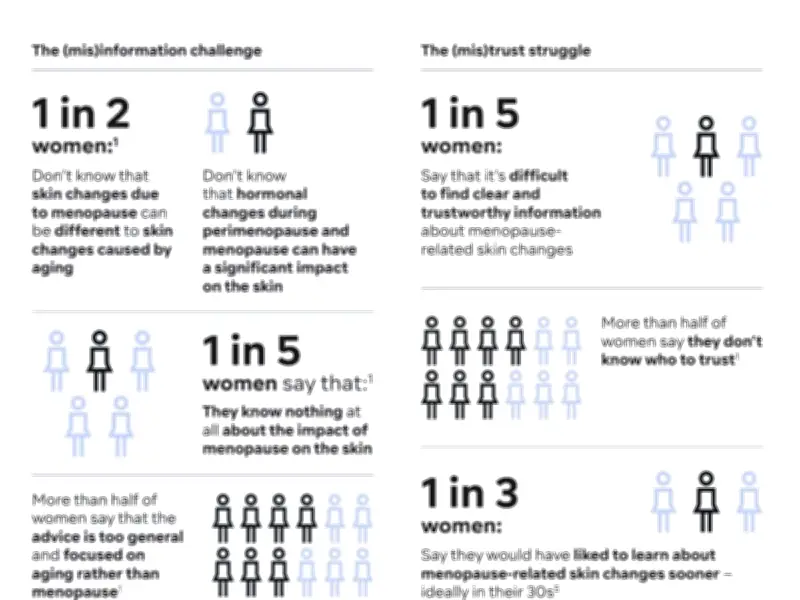
More than half of women mistake menopause-related skin problems for signs of ageing, according to new global research from dermatology company Galderma. The study found that 56% of women initially attributed these skin changes to ageing, while fewer than a third (29%) recognised the true link to menopause.
Knowledge Gap in Menopause Skin Changes
Galderma's research, which it calls 'The Menopausal Skin Misread', highlights how menopause-linked skin changes are being misunderstood and mislabelled. The company says even half of women remain unaware that hormonal fluctuations during perimenopause and menopause can significantly impact the skin.
The study included 5,090 women who have experienced or are experiencing perimenopause or menopause across the UK, US, Brazil and China this year. In light of World Menopause Month, Galderma aims to draw attention to the misunderstood impact of menopause on the skin.
Impact on Skincare Purchases
The research suggests this misread is influencing purchasing decisions, with 70% of women having bought products designed to address signs of ageing during perimenopause or menopause. Additionally, 62% of women reported feeling overwhelmed by skincare advice during this time, and almost half of those struggling to find clear information said advice was too general and focused on ageing rather than menopause.
According to Galderma, 82% of women agree that knowing the difference between these changes and general ageing would help them feel more informed and in control of their skincare decisions.
Treatment Study Findings
Galderma supported an eight-month trial conducted by Dr. Andreas Nikolis, a board-certified plastic surgeon in Montreal, Canada. The trial, which involved treating both the face and décolletage, examined the combination of Restylane Skinboosters and Sculptra in menopausal women.
Patients were divided into two groups: one treated with Restylane Skinboosters first followed by Sculptra, and the other with Sculptra first followed by Restylane Skinboosters. The study reported that women treated with Restylane Skinboosters first demonstrated an earlier visible clinical response and greater dermal remodeling, with facial dermal thickness increasing by 27.3% compared with 15.7% in the other group.
Dr. Nikolis said: "This first-of-its-kind clinical study provides compelling evidence that sequencing treatments can deliver significantly greater benefits than either approach alone in menopausal skin." Both groups achieved meaningful hydration improvements and high satisfaction levels, with 98% reporting natural-looking results. Additionally, 96% said they would recommend the treatments and 92% said they would undergo treatment again.
New Campaign Launched
Anne-Cecile Chevrier, global head of injectable aesthetics at Galderma, said: "Too many women are navigating skin changes without recognising that menopause may be playing a role. Our research shows the scale of this knowledge gap and the need to move beyond a one-size-fits-all narrative."
Galderma has launched a new campaign, 'Rewriting the Future of Your Skin, Own your Menopause Story', as part of its commitment to support women during this transition. The campaign aims to bring together science and real experiences of women to shine a light on menopausal skin and help close the knowledge gap revealed by the research.