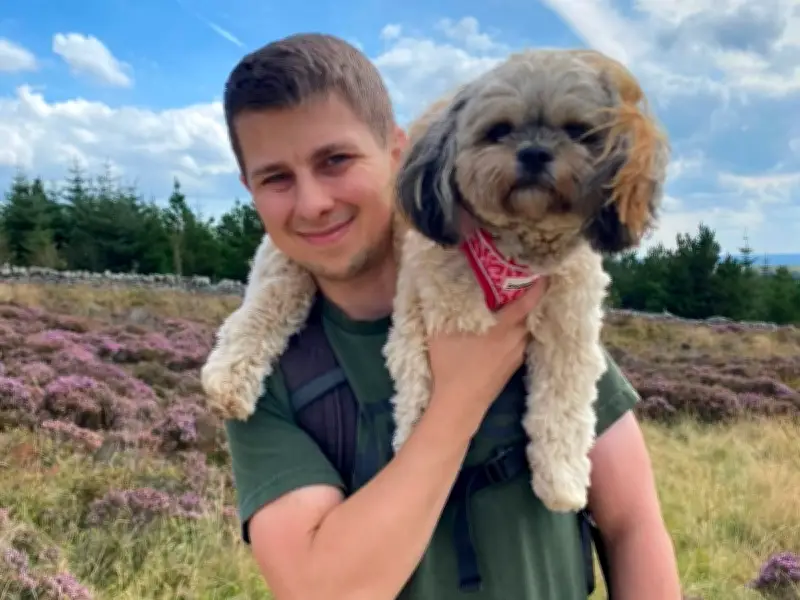
Joshua Smith, a 34-year-old machinist from Wrexham, Wales, visited his GP multiple times complaining of headaches and confusion, only to be sent home and told there was nothing to worry about. His wife Kelly, however, persisted, insisting something more serious was wrong. In January, Joshua was diagnosed with a glioblastoma—an aggressive, incurable brain tumour with a prognosis of 12 to 18 months.
Red flags dismissed by doctors
Kelly described the onset of symptoms: “In January, Joshua started complaining of what seemed like brain fog. Then one night he developed an excruciating migraine and said it felt like his head was going to explode. The pain lasted for days.” She took him to the GP, where she raised red flags, but they were told there was nothing to worry about. Days later, she took him to A&E at Wrexham, where they were sent home with morphine and told to return only if things deteriorated.
Wife's insistence leads to diagnosis
Despite being discharged, Kelly remained deeply concerned. In the early hours of the next morning, she insisted Joshua return to hospital instead of going to work. This time, a CT scan revealed a 4.5cm mass on his brain. Kelly said: “Hearing those words was terrifying. You know something is wrong, but you never expect it to be that.” Initially told it wasn't cancer, they felt hopeful, but the next day doctors apologised and confirmed it was cancer. “We were devastated. It felt like we'd been lifted up and then completely crushed.”

Surgery and treatment
Joshua was referred to The Walton Centre in Liverpool, where surgeons confirmed the mass was a glioblastoma. Despite risks including paralysis, personality changes, and death, they opted for surgery. On February 24, surgeons successfully removed around 95% of the tumour. Joshua then underwent six weeks of radiotherapy alongside chemotherapy and will continue treatment. Kelly said: “When Josh woke up from surgery, the first thing he did was ring me and ask for a KFC Bargain Bucket. I told him he could have whatever he wanted.” Remarkably, he was walking and talking within 24 hours and was home within three days.
Dreams put on hold
The couple had been trying to start a family and loved exploring the country in their self-converted campervan. Kelly said: “At the moment, those plans have had to be put on hold while we focus on Joshua's treatment, but we still make the most of every opportunity to create special memories together. Those moments mean even more to us now.”
Campaigning for change
Now, Joshua and Kelly are working with Brain Tumour Research during Glioblastoma Awareness Week to campaign for increased government investment into brain tumour research. Every year, around 3,200 people in the UK are diagnosed with a glioblastoma, and just one-third survive beyond 12 months. The charity’s manifesto for Wales, It’s Time to do Things Differently, highlights that no brain cancer patients were recruited to clinical trials in Wales between 2019 and 2024. Kelly raised over £2,000 by walking 200km in May to support the charity's work at the Brain Tumour Research Centre of Excellence at the University of Nottingham.
Kelly said: “There are options and emerging treatments that give families hope, but they aren't always available here in the UK. That's incredibly frustrating. Joshua's story is still being written and we're holding on to every bit of positivity we can.” Dr Karen Noble, director of research policy and innovation at Brain Tumour Research, said: “Joshua’s story reflects the devastating reality faced by so many families across the UK. We are calling on the Government to increase the national investment in research into brain tumours, including glioblastoma. We need to also see an increase in the number of clinical trials, and access to them, in the UK, and we want to end inequalities in access to whole genome sequencing that could inform access to trials and emerging treatments.”