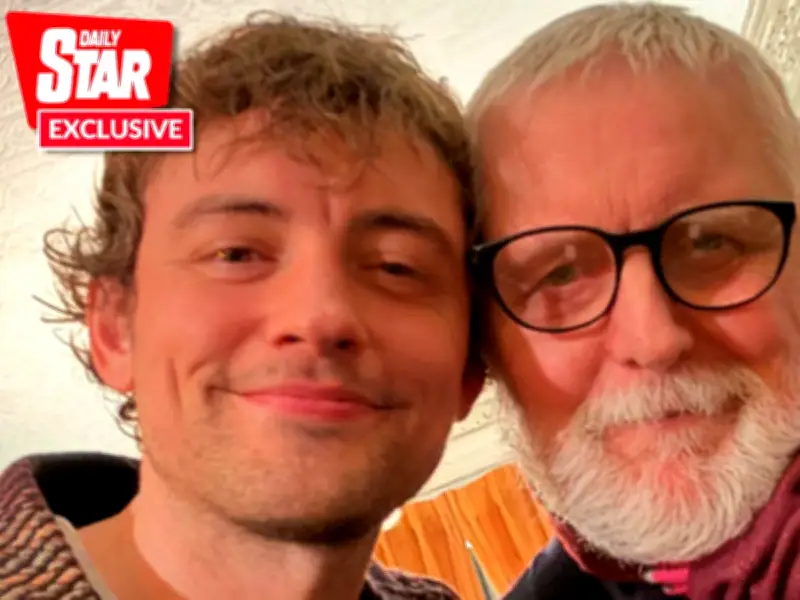
Actor Josh Whitehouse has warned that strokes should be on everyone's radar, revealing how his father's life changed overnight when he suffered a devastating stroke 20 years ago. In an exclusive interview with the Daily Star, the actor and filmmaker spoke about the moment his family was turned upside down, the long recovery that followed, and why he created a new animated short film, Aphasia, released on Thursday (October 29) for World Stroke Day.
Dad's stroke changed family dynamic overnight
Josh, now 36 and known for appearing in the BBC One series Poldark, was just 16 when his father, poet John Whitehouse, had the stroke in his mid-50s. "I mean that was 20 years ago," Josh told the Daily Star. "I was 16-years-old. Obviously, it was enormously life-changing and it completely changed the dynamic of our family."
The impact rippled through every part of their lives, particularly for his mum, who was about to begin a new career. "You know my mum was just about to start becoming a teacher at the time and she had to kind of give up that career and become a carer and learn what on earth you do in that circumstance."
The early stage was harrowing, leaving his dad unable to talk or manage basic tasks. "The moment dad had a stroke, he couldn't talk, he couldn't tell the time. He couldn't do the alphabet. He was in a wheelchair. He couldn't walk."
Poet voices animated version of himself
In the movie, the poet voices an animated version of himself, describing the twists and turns, sometimes dark and poignant parts of living with a stroke. While Mr Whitehouse's speech is noticeably slow, the way he enunciates his poem with such beauty, in the backdrop of touching images, is a testament to years of rehabilitation and determination.
It took years of speech therapy for Josh's dad to claw back any independence. "He's come a very very long way," Josh confirmed. The actor says the stroke was particularly cruel because his dad had been a lecturer and a "doctor of English language" - a man whose life revolved around words.
The dad Josh remembers from childhood was charismatic and funny. "The flashes of memory that I have from my childhood were always of him hosting or telling jokes around the table or telling me bedtime stories." After the stroke, that easy flow of language disappeared, replaced by a condition called aphasia - an acquired language disorder most commonly caused by stroke - that can affect speaking, reading, writing and comprehension, without harming intelligence. In the UK, more than 350,000 people live with aphasia.
Film adapted from father's poems
The film is adapted from poems written by his father in a collection titled After a Short Illness, published by Broken Sleep Books. Josh admitted: "I kept reading these poems all about aphasia and what it's like to deal with it. And it just struck me that that's such a painful irony… somebody who doesn't have language anymore physically, but still has their mind intact."
Of the work behind the animation, Josh shared: "The narration over the video is edited. So, I edited out all of [my dad's] errors. I included the clips at the end to show how much he really struggles with it." Some moments were simply too painful for his dad to relive. "There were points where I put him in a wheelchair because that's how I remember the day when he was taken away but he didn't like those shots so they didn't make the cut."
Josh wants families going through similar situations to know there is support out there. "A phrase that I've used in regards to that is just that you are not alone and that there is help out there, they can help in all stages of recovery, not just the person who's had the stroke, but the family of the people."
Strokes can happen to anyone
Now, he is using his platform to hammer home one simple point: strokes don't just happen to the elderly. "I found out that you can have a stroke in the womb," Josh said. "I met a little girl the other day who had a stroke when she was eight years old." He also met survivors in their 20s, including one who was 25 and another 29 when they had a stroke. That is why he believes strokes "should be on everyone's radar".
He exclaimed: "Hearing that that little girl had had a stroke should be on everybody's radar." Josh added: "If people can be aware that strokes can kind of happen to anybody at any time… it might make people more appreciative of the time that they have with their friends, family and loved ones while they're healthy."