
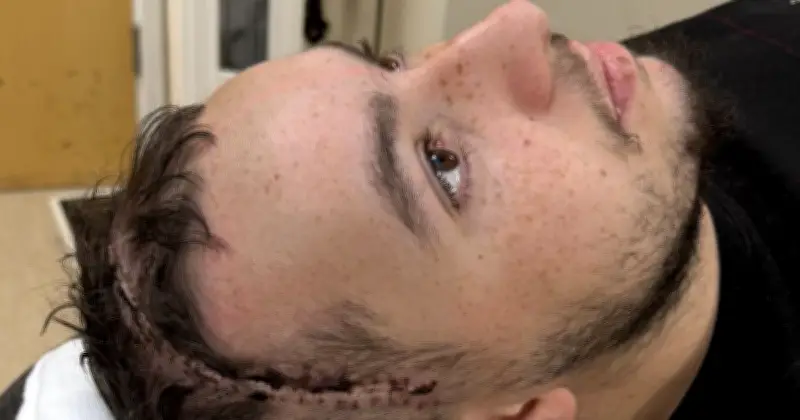
Conor Harding, a 21-year-old from Chingford, has been told he has an incurable brain tumour after battling leukaemia four times since the age of five. He was diagnosed with a glioblastoma in September 2025 following persistent headaches, and doctors have said the condition is life-limiting.
Half a lifetime fighting cancer
Conor said: "I'm 21 and I've spent half my life battling cancer. I'd never got to a point where I thought cancer was a thing of the past, but I had got to a point where I actually felt healthy for once. I had a four-year period of feeling good. I was just living life like a normal teenager should be - playing rugby, going out with my mates and building close friendships - but then I went downhill."
After his fourth leukaemia diagnosis, Conor underwent a bone marrow transplant and enjoyed a four-and-a-half-year cancer-free period, during which he started an apprenticeship as a bricklayer.
Devastating glioblastoma diagnosis
When Conor received the brain tumour diagnosis in September 2025, he underwent surgery requiring 65 staples, followed by chemotherapy and radiotherapy. His most recent MRI scan in February revealed three tumours had returned. Conor said: "After being diagnosed with glioblastoma, the consultant said it will probably be the reason I pass. That was really hard to hear, but I think it was harder on mum and dad. I've just got to be strong for my family and those around me. I struggled a bit when I was first diagnosed with leukaemia, but by the third and fourth time, it was different, because there was hope that I could get better. But there is no cure for glioblastoma."
Alarming statistics and funding gap
Each year, approximately 3,200 people across the UK receive a glioblastoma diagnosis. Just one third survive beyond a year, only 4% survive five years or more, and the average survival is 12-18 months. There is no cure, and treatments have not improved in more than 20 years. During the 1970s, 10-year survival rates for brain tumours and leukaemia were comparable at 7% and 9% respectively. Since then, leukaemia survival has soared to nearly 50% due to research funding, while brain tumour survival remains below 20%.
Father's marathon fundraising
Conor's father, Trevor, a client executive for an investment bank, said: "Being told that Conor's condition was life-limiting was devastating. I can't comprehend it. We've been on this journey so often, but now it feels final. We know there isn't going to be a positive outcome here, that Conor unfortunately is going to lose his life to this, and I think that's really hard to bear." In April, Trevor ran the London Marathon, raising over £17,000 for Brain Tumour Research, with two more marathons planned for 2026. He added: "I think it's shocking, that with the medical advances that have been made for other diseases, we haven't made more progress with brain tumours. What astounded me when I started looking into this is that brain tumours continue to kill more children and adults under the age of 40 than any other cancer yet, just 1% of the national spend on cancer research has been allocated to this devastating disease since records began in 2002. That, for me, was eye-opening. That's why I'll do whatever I can to help fund the vital research taking place at the Brain Tumour Research Centres of Excellence. People facing this diagnosis deserve so much better."
Research and campaign for change
Conor and his family are joining Brain Tumour Research during Glioblastoma Awareness Week (July 13-19) to push for increased investment. The charity's Centre of Excellence at Queen Mary University of London has created a platform to compare glioblastoma stem cells with healthy brain stem cells from the same patient, aiming to personalise treatment. Dr Karen Noble, director of research and policy at Brain Tumour Research, said: "Comparing the survival rates of people with leukaemia and those with brain tumours is a stark illustration of the need for more research into brain tumours. Conor's story reflects the devastating reality faced by so many families across the UK. We are calling on the Government to increase the national investment in research into brain tumours, including glioblastoma. We need to also see an increase in the number of clinical trials, and access to them, in the UK, and we want to end inequalities in access to whole genome sequencing that could inform access to trials and emerging treatments." The charity is advocating for a national annual investment of £35 million to improve survival rates and patient outcomes.




